Sign up via call center
Department
Remove a nerve from a tooth in Kyiv | Oxford Medical

Dental inlay

Significant tooth damage caused by caries, enamel wear, or trauma does not always require crown placement. In many situations, modern prosthetic dentistry makes it possible to preserve the natural tooth tissues and restore its function using more conservative methods. One of such solutions is a dental inlay — a microprosthesis that is individually fabricated and precisely reproduces the anatomical shape of the chewing surface. Today, inlays in dentistry are considered an effective alternative to large fillings. They allow for better sealing and, accordingly, long-term durability of the result.
What Is an Inlay in Dentistry?

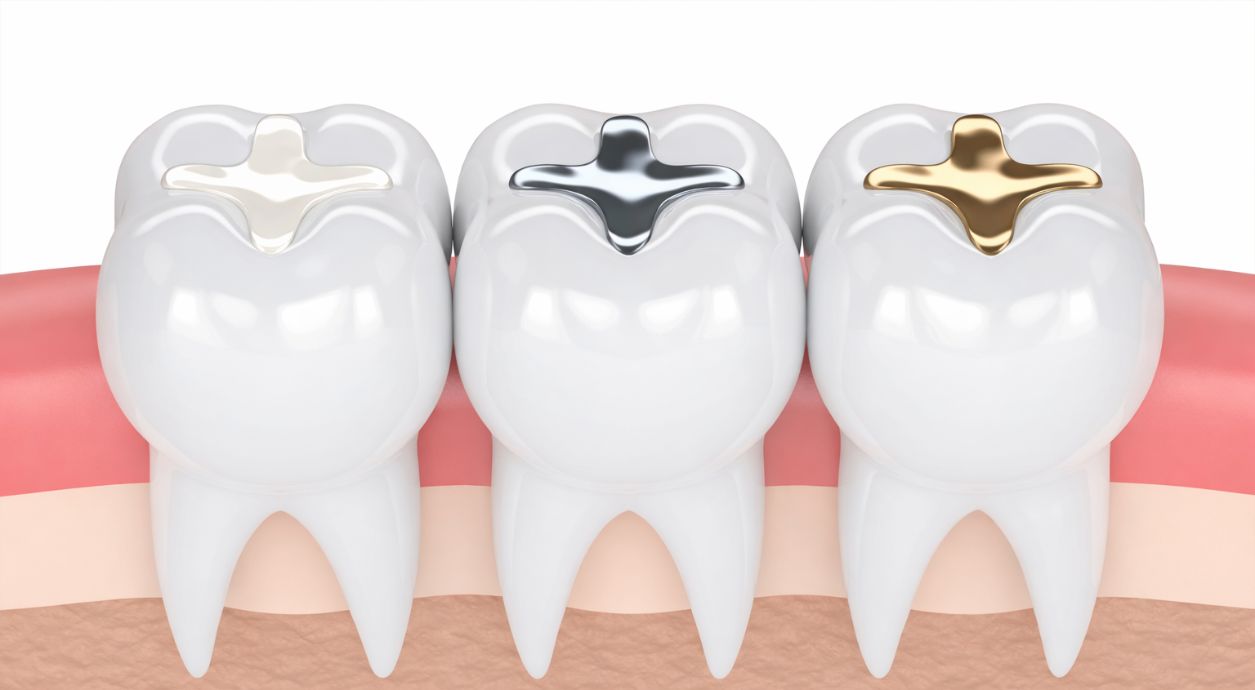
A dental inlay is a modern method of tooth restoration used when a conventional filling is no longer sufficient, but a crown is not yet required. Unlike a filling, which the dentist shapes directly in the oral cavity, dental inlays are fabricated in a laboratory based on individual impressions or using digital scanning technology.

An onlay allows restoration of the tooth’s function while preserving a greater amount of natural tooth structure. This is especially important if the tooth is weakened after caries treatment or root canal therapy but can still be preserved without crown placement.

What Is an Inlay in Dentistry?

Types of Dental Inlays

Inlays in dentistry are classified according to their purpose, material of manufacture, and the extent of hard tissue coverage.

By purpose:

  • Restorative. Used to restore the chewing surface when it is significantly damaged, but the remaining tissues allow treatment without a crown. Such dental inlays are fixed in the coronal part, ensuring proper distribution of chewing load.
  • Post-and-core (core build-up). Used when the coronal part is almost completely destroyed. The structure is fixed in the root canal and serves as a foundation for subsequent crown placement. This is an element of comprehensive prosthetic treatment.

By material:

  1. Ceramic. The most common modern option. Ceramic inlays have a natural appearance, closely match the color of enamel, and withstand chewing load well.
  2. Metal. Manufactured from special alloys. They are characterized by high strength and durability; however, due to their less aesthetic appearance, they are used less frequently today.

By coverage extent:

  • inlay — restores the internal part of the chewing surface without covering the cusps;

  • onlay — covers part of the chewing surface and one or several cusps, additionally strengthening weakened walls;

  • overlay — covers almost the entire chewing surface, providing maximum tissue protection without full crown preparation.

Indications for Dental Inlay Placement

Inlays are used when a tooth is significantly damaged
but can still be preserved and restored without a crown.

Main indications:

significant destruction of the coronal part when a conventional filling will not provide sufficient strength;

root canal treatment requiring additional reinforcement of hard tissues;

presence of a large old filling with compromised sealing or cracks in the walls;

the need for durable and anatomically precise restoration of the chewing surface.

List of diseases

Contraindications to Dental Inlay Placement

Dental inlays are not suitable in all clinical situations. In some cases, their placement is inappropriate or requires prior treatment.

Main contraindications:

  • significant tooth destruction with root damage or insufficient hard tissue volume for proper fixation of the restoration;

  • active inflammatory processes in the root canals or around the root;

  • pronounced tooth mobility due to periodontal diseases;

  • uncontrolled bruxism (constant grinding);

  • individual intolerance to the materials from which the restoration is made.

After thorough diagnostics, the dentist determines whether inlay placement is possible or recommends another method of smile restoration.

How Is a Tooth Prepared for an Inlay?

Before fabrication and placement of an inlay, the hard tissues are prepared. The quality of this stage determines the accuracy of fixation and the durability of the restoration.

Main preparation stages:

  • clinical examination and radiographic diagnostics to assess the condition of the root and surrounding tissues;

  • removal of caries-affected tissues and old fillings;

  • shaping of the cavity for the onlay taking into account the future restoration;

  • taking an impression or performing digital scanning for laboratory fabrication;

  • placement of a temporary restoration for the period of inlay fabrication.

After the restoration is fabricated, try-in and fixation are performed. This sequence ensures precise inlay prosthetics and a stable long-term result.

Advantages and Disadvantages of Inlay Prosthetics

Restoration of teeth with inlays has its strengths and certain limitations.

Advantages:

  • precise adaptation to hard tissues, providing better sealing compared to a large filling;

  • high strength and resistance to chewing load;

  • preservation of a greater amount of natural tooth structure compared to crown preparation;

  • durability of the restoration with proper hygiene and regular check-ups;

  • natural appearance, especially when ceramic materials are used.

Disadvantages:

  • the need for two dental visits (preparation and placement);

  • higher cost compared to a conventional filling;

  • inability to use in cases of excessive tissue destruction.

Problems Solved by Dental Onlays

Modern dental onlays are used not only to “cover a defect” but to comprehensively restore function and strength.

The main problems they help address:

  • significant defects of the chewing surface after caries treatment or replacement of large fillings;

  • weakening of the walls after endodontic treatment;

  • disruption of anatomical shape and improper distribution of chewing load;

  • risk of further destruction or cracks in weakened tissues;

  • the need to preserve the tooth without full crown coverage.

In many cases, this makes it possible to use dental onlays instead of crowns, provided that the remaining tooth structure is sufficient for reliable fixation of the restoration.

Dental Inlay: Price in Kyiv at the Private Clinic «Oxford Medical»

The price for restoring a tooth with an inlay depends on several factors: the type of construction, the material of manufacture, the complexity of the clinical case, as well as the need for prior treatment.

You can preliminarily familiarize yourself with the prices for medical services in Kyiv at the Oxford Medical dentistry here. The final cost can be determined by the dentist after the examination and drawing up an individual treatment plan.

If you are recommended to install an inlay or need a consultation, you can make an appointment at a convenient time for you by phone or using the online appointment form on the website.

Frequently asked questions

What Is the Difference Between an Inlay and a Crown?

An onlay restores only the damaged part of the tooth and is fixed within the coronal portion, preserving a greater amount of natural tooth structure. A crown completely covers the tooth on all sides and is used in cases of significant destruction. In other words, an inlay is a conservative restoration option, while a crown is a full prosthetic coverage for a severely weakened tooth.

Can a Prosthesis Be Placed on a Tooth That Has an Inlay?

Yes, if a post-and-core inlay has been placed, it is specifically designed to serve as a foundation for a crown. In the case of a restorative onlay, additional prosthetic treatment is usually not required, as it already restores the shape and function of the tooth. The final decision is made by the doctor after evaluating the strength of the tissues and the chewing load.

( Rating: 4.67 , Votes: 27 )
Dentistry
Our services
Consultations
Dentist consultation
1.00 ₴
Add Added
Services
Combined inlay (metal + OPAC) with installation
4000.00 ₴
Sign up by the call center
Cast (detachable) stump insert (with installation)
2100.00 ₴
Sign up by the call center
Cast die insert (with installation)
4000.00 ₴
Sign up by the call center
Removable zirconia core insert (with installation)
8000.00 ₴
Sign up by the call center
Zirconia core inlay/onlay with installation
7400.00 ₴
Sign up by the call center

Advantages of Inlay Prosthetics at «Oxford Medical» Clinic

Individual treatment planning. Before placing an inlay, the doctor performs detailed diagnostics and selects the optimal method of tooth restoration.

Modern diagnostics. The use of radiological methods and digital technologies allows accurate assessment of the tooth’s condition.

High-quality materials. Proven biocompatible materials that combine strength and aesthetics are used for inlay fabrication.

Comprehensive approach. A wide range of services at the private clinic in Kyiv allows the patient to undergo all necessary procedures in one place.

Reviews
Ганна 22.01.2026
Дуже вдячні лікарю, адміністрації, всій команді. Приїхали у Київ на операцію з Запоріжжя. У день операції у клініці було відсутнє живлення через масовані обстріли на енергосистему. Колектив з порозумінням сприйняв нашу ситуацію, приїзд за важких умов, професійно організували оперування в іншій кліниці. Ви команда професіоналів! Дякуємо!
Star Star Star Star Star
Катерина 15.01.2026
Віталіна Павлівна дуже уважно поставилася до моєї ситуації. Працює дуже акуратно, не було жодного відчуття страху. Після лікування нарешті зник дискомфорт, за що їй щиро вдячна.
Star Star Star Star Star
Current information
All Articles
Sign up via call center
in the clinic
online
This site is protected by reCAPTCHA technology, and the Google Privacy Policy and Terms of Service apply.
Hello!
Let's take care
about your health:
Sign up via call center

We use cookies and other technologies to remember your preferences and find out exactly how you use and interact with the site.

By using our site, you also agree to the terms of the "User Agreement" and "Regulation on the processing and protection of personal data". By clicking "I AGREE", you consent to the processing of your data.