Sign up via call center
Department
Treatment of urolithiasis at the Oxford Medical Kiev private clinic

Treatment of urolithiasis

Urolithiasis is a condition characterized by the formation of stones (concrements) in the kidneys and urinary tract (ureters, bladder). The exact cause of urolithiasis is still not clearly established, but there are several diseases associated with this process. Urolithiasis can provoke pyelonephritis and a number of other kidney diseases.

Causes of Urolithiasis

Urolithiasis often develops against the background of thyroid disorders, metabolic imbalances, and congenital anomalies of the urinary tract. The development of urolithiasis (another term for urolithiasis) is caused by hypercalciuria (an excess amount of calcium in the urine, triggered by osteoporosis — the leaching of calcium from bones), chronic infectious and inflammatory processes in the urinary tract, impaired urodynamics (urine stagnation in the bladder or kidneys), and constant insufficient fluid intake.

As a result of these factors, stones are formed, which can be organic or inorganic. Inorganic stones may consist of crystals of uric acid (urates), phosphoric acid (phosphates), or oxalic acid (oxalates).

Symptoms of Urolithiasis

The initial signs of the disease are mild and infrequent, so patients often ignore them and only see a doctor when the duration and severity of symptoms become evident. The main manifestations of urolithiasis include:

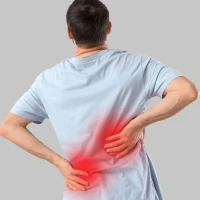
  • Pain in the lower back – may be sharp, cramping, or constant and aching;

  • Urinary disturbances – frequent urges to urinate, releasing a small amount of urine inconsistent with the intensity of the urge;

  • Renal colic – an attack of sudden, severe pain in the lower back.

The main symptom triad may be accompanied by nausea, vomiting, chills, fever, abdominal bloating and tension of the abdominal muscles, and blood in the urine.

The severity and nature of the symptoms depend on the location and size of the stone. Large concrements are usually associated with dull, less intense pain and may cause blood to appear in the urine. Small stones can move from the kidney to the ureter, causing sharp attacks of lower back pain radiating to the groin or abdomen. This usually happens after consuming a large amount of fluid or during intense physical exertion.

Risks of Urolithiasis

Urolithiasis is a disease that, without timely treatment, can lead to severe problems with urination and attacks of acute pain Furthermore, disease progression threatens with such complications as:

  • Chronic pyelonephritis;

  • Pyelonephrosis;

  • Increased renal blood pressure;

  • Renal failure and other disorders.

To prevent complications, it is necessary to consult a urologist at the first signs of the disease. In the early stages, when the concrements are small, treatment can be much easier.

Diagnosis of Urolithiasis

If urolithiasis is suspected, the patient undergoes a diagnostic evaluation, which includes:

  • General and biochemical blood tests;

  • General urine analysis;

  • X-ray diagnostics or computed tomography;

  • Kidney ultrasound to detect concrements.

Based on diagnostic results, patients with urolithiasis often show hematuria (blood in the urine), leukocyturia (increased white blood cells in the urine), and dysuria (difficulty urinating).

Treatment of Urolithiasis

Therapy can be medical and surgical.

Medical treatment for renal colic consists in relieving the pain attack. For this purpose, antispasmodics are prescribed, which relieve spasm and facilitate the possible advancement of the stone, and painkillers.

Surgical treatment is necessary to remove large stones. In especially severe cases, the stone can be removed even with the kidney. In other cases, lithotripsy is used - crushing the stone for its subsequent natural excretion from the body. Lithotripsy can be remote (the stone is crushed by a focused ultrasonic wave) or contact (instruments for crushing the stone are inserted into the kidney through the ureter).

A separate type is percutaneous laser lithotripsy, in which the surgeon gains access to the kidney through the lumbar region. In this case, a laser fiber or ultrasound emitter is inserted into the kidney, the energy of which destroys the stone.

At Oxford Medical, urological surgery is based on modern minimally invasive approaches that allow for the most accurate elimination of the cause of the disease and shorten the recovery period. Surgical treatment is performed by experienced urologists who work according to modern clinical protocols and provide the patient with safe and predictable treatment.

Treatment of urolithiasis in children is fundamentally no different from treatment of adults. Urolithiasis is generally a rare disease among children, occurring only in the case of malformations of the urinary tract or under the influence of genetic factors.

If urolithiasis is diagnosed in a pregnant woman, she is recommended to regularly visit a urologist to monitor the course of the disease and exclude complications of the disease.

For patients with urolithiasis, a dietary nutrition system is being developed, the composition of which depends on the type of stones diagnosed in them. One of the important aspects of such nutrition is sufficient fluid intake.

Prevention of Urolithiasis

To prevent the disease, urologists recommend:

  • Eating a balanced diet;

  • Drinking enough fluids (1.5–2 liters of water for an adult);

  • Avoiding bad habits;

  • Engaging in regular physical activity;

  • Timely treatment of all urogenital diseases.

Following these recommendations helps reduce the risk of stone formation and maintain normal urine flow, which is key to preventing recurrence of urolithiasis.

Advantages of Urolithiasis Treatment
at Oxford Medical

Oxford Medical is a high-tech medical center. It is equipped with new expert-class diagnostic equipment, allowing for accurate diagnosis and effective treatment. In particular, methods of remote and contact lithotripsy are used to fragment stones, and laparoscopic surgeries are performed when necessary. Thanks to this and the involvement of a team of experienced, highly qualified specialists, each patient receives medical care according to the highest quality standards.

Advantages of Oxford Medical:

  • Highly qualified and experienced doctors of various specialties.

  • Expert-class equipment.

  • Use of the most advanced methods of urolithiasis treatment, including minimally invasive techniques.

  • High-tech surgical facility with intensive care unit.

  • Comfortable atmosphere in the clinics.

  • Loyalty program for regular patients.

To schedule a consultation with a urologist, call our contact center or leave a request on the website.

Services of a Private Clinic in Kyiv: the Price of Kidney Stone Disease Treatment at “Oxford Medical”

The treatment approach for kidney stone disease is selected individually after an examination and depends on the size and composition of the stones, their location, whether urine flow is obstructed, the presence of associated inflammation, and the patient’s overall condition. Therefore, the price of treatment may vary, as the final cost is determined by the scope of diagnostic tests, required procedures, and the chosen treatment method.

You can view current prices for medical services in Kyiv at “Oxford Medical” here. The doctor will provide more detailed guidance on treatment options and the cost of care during the initial consultation after reviewing the diagnostic results.

To book an appointment with a urologist, please use the online booking form on the website or contact the call center using the listed phone numbers.

FAQ

How does urolithiasis manifest?

With dull or sharp pain in the lower back, difficulty urinating, renal colic, blood in the urine. Symptoms vary and are similar to those of many other diseases, so diagnosis can only be made by a qualified doctor.

How long does urolithiasis treatment take?

It depends on the disease stage, stone type, size, quantity, and location. The treatment plan and duration are determined individually by the attending physician.

Can you drink alcohol with urolithiasis?

Alcohol negatively affects the excretion of uric acid from the body, which exacerbates urolithiasis symptoms. Therefore, alcohol in any form is not recommended. The widespread belief in the benefits of beer for kidney stones is false. Despite its mild diuretic and relaxing effect, alcohol in beer harms the mucous membranes of the urinary tract.

Can you play sports with urolithiasis?

Intense physical activity can cause the stone to shift in the kidney, so many sports involving jolts and jumps (horse riding, jumping, etc.) are not recommended. At the same time, exercise is beneficial, necessary, and not contraindicated in urolithiasis.

Is a diet necessary for kidney stone disease?

Yes. A diet for KSD is an important part of treatment and relapse prevention because it affects urine composition and the risk of recurrent stone formation. Recommendations depend on the stone type (uric acid stones, oxalate stones, phosphate stones), urinary salt levels, and associated metabolic disorders. Typically, clinicians adjust fluid intake, limit excess sodium, and restrict foods that promote a specific stone type (for example, those high in purines or oxalates), based on examination results.

Why is kidney stone disease dangerous?

KSD is a condition that can cause urinary tract obstruction, episodes of renal colic, and create conditions for infection. Possible complications include hematuria, acute or chronic pyelonephritis, hydronephrosis (dilation of the collecting system due to impaired urine outflow), and gradual loss of kidney function up to kidney failure. The risk of complications increases if a stone blocks urine flow for a prolonged period or if inflammation recurs.

How can women tell cystitis from kidney stone disease?

Cystitis more often presents with burning/pain during urination, frequent urges to urinate, and pain or pressure in the suprapubic area. Kidney stone disease typically causes flank or lower back pain (often on one side) that may radiate to the groin or lower abdomen, as well as episodes of renal colic and blood in the urine. A stone can also trigger bladder inflammation, so symptoms may overlap. The most accurate differentiation is based on urinalysis, ultrasound of the kidneys and bladder, and, when indicated, additional tests (for example, CT).

( Rating: 4.81 , Votes: 27 )
Our services
Consultations
Consultation with a leading urologist
1989.00 ₴
Add Added
Consultation with a urologist
1100.00 ₴
Add Added
Online consultation with a urologist
1100.00 ₴
Add Added
Urology services
Laser contact lithotripsy of bladder stone, category I complexity
24889.00 ₴
Sign up by the call center
Laser contact lithotripsy of bladder stone, category II of complexity
29889.00 ₴
Sign up by the call center
Laser contact lithotripsy of bladder calculus, category III of complexity
39889.00 ₴
Sign up by the call center
Laser contact ureterolithotripsy of the ureter of category I complexity
18489.00 ₴
Sign up by the call center
Laser contact ureterolithotripsy of the ureter of the II category of complexity
20689.00 ₴
Sign up by the call center

Advantages of the Urology Department "Oxford Medical" in Kyiv

Experienced doctors. Urologists with many years of practice who constantly improve their qualifications.

Modern diagnostic equipment. The latest ultrasound machines, endoscopic studies, expert-level laboratory.

Individualized approach to treatment. Treatment programs are developed taking into account all the patient's individual characteristics.

High-tech surgical inpatient facility. Minimally invasive surgeries are performed in the comfortable conditions of a modern inpatient facility.

Our doctors

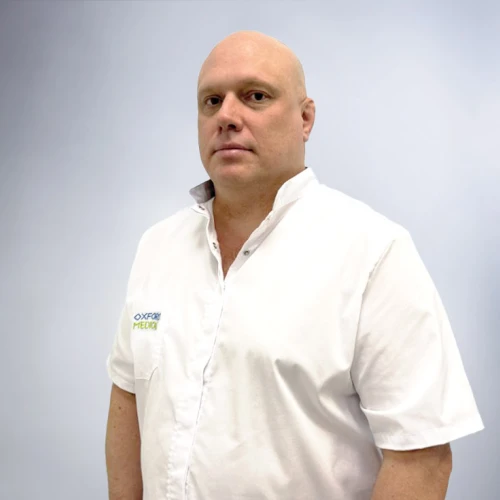
Aksyonov Pavlo Valeriyovych – urologist, andrologist, genital surgeon of the private clinic Oxford Medical Kyiv
4.85
rating (13)
23+
Years of experience
Urologist-andrologist, sexologist, genital surgeon, candidate of medical sciences, leading specialist of the Oxford Medical clinic
23+ Years of experience
Consultation 1100
Make an appointment
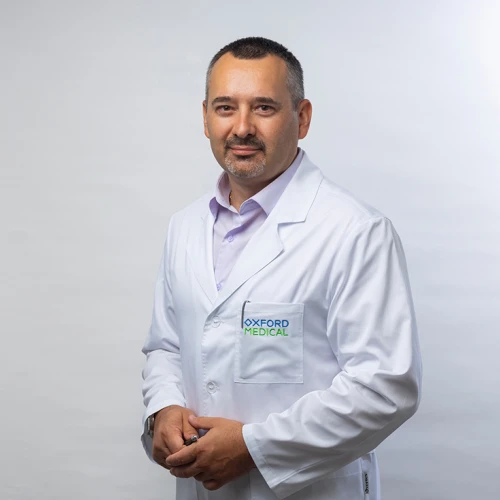
Guk Andriy Valeriyovych
4.9
rating (29)
20+
Years of experience
Urologist-andrologist of the highest category, Candidate of Medical Sciences
20+ Years of experience
Consultation 1100
Make an appointment
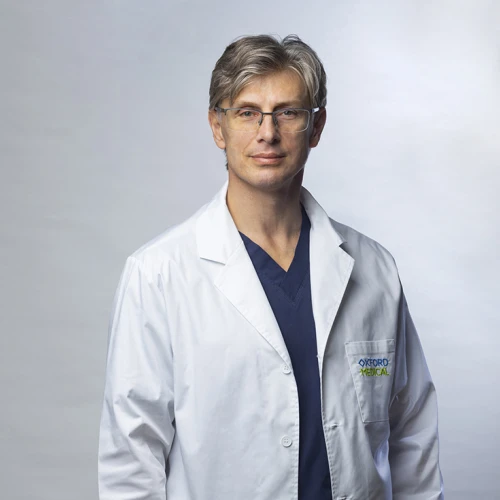
Kohut Viktor Viktorovych
4.88
rating (16)
27+
Years of experience
Leading specialist of the urological hospital, Oncologist, Urologist of the highest category, Candidate of Medical Sciences
27+ Years of experience
Consultation 1989
Kyiv, st. Bereznyakivska, 30b
Make an appointment
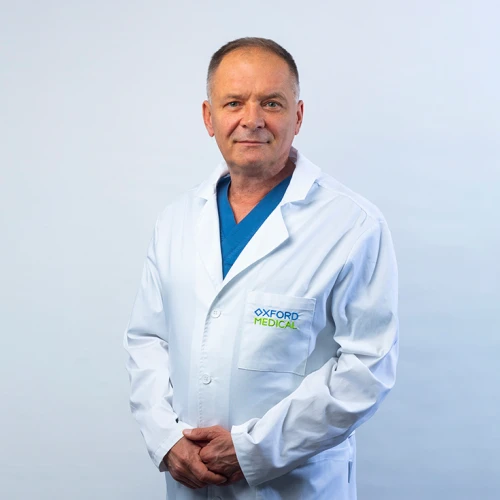
Shapran Andriy Borisovych
4.87
rating (23)
31+
Years of experience
Online consultation
Urologist of the highest category
31+ Years of experience
Consultation 1100
Kyiv, Mykhayla Hryshka St., 1
Make an appointment
All doctors
Reviews
Анонімний користувач 20.01.2026
Пообіцяв залишити відгук, якщо все буде добре. Довго замислювався над проведенням вазектомії. Ті хто в темі, ті зрозуміють. Лікаря порекомендували наші друзі, які вже через це пройшли. Операція тривала хвилин 15. Як для мене, зовсім безболісно. Під час операції, Павло Валерійович попереджав, що буде робити, і коли буде неприємно, а саме коли будуть уколи зі знеболюючим. Після операції нічого не боліло, не турбувало, сам доїхав до дому за кермом. Лікар підтримував весь час, та надавав всі необхідні поради. Десь тиждень, дружина обробляла шви. На сьогоднішній день взагалі не помітно де була операція. Через місяць здав сперматограму, і там все як я хотів. Хто ще вагається з вибором лікаря для вазектомії, рекомендую Аксьонова Павла Валерійовича, це дійсно фахівець в цій справі.
Star Star Star Star Star
Андрій 22.12.2025
Дуже вдячний Волошину Володимиру Вікторовичу за коректне та уважне ставлення! Лікар одразу викликає довіру. Обстеження пройшло комфортно, без поспіху. Після прийому зрозумів свою ситуацію і подальші кроки лікування. Рекомендую як досвідченого уролога.
Star Star Star Star Star
Current information
Sign up
in the clinic
online
This site is protected by reCAPTCHA technology, and the Google Privacy Policy and Terms of Service apply.
Hello!
Let's take care
about your health:
Sign up via call center

We use cookies and other technologies to remember your preferences and find out exactly how you use and interact with the site.

By using our site, you also agree to the terms of the "User Agreement" and "Regulation on the processing and protection of personal data". By clicking "I AGREE", you consent to the processing of your data.