

 Adults Adults Adults Adults Adults Adults Adults Adults Adults
  Children Children Children Children


 Hotline:
 Adults Adults Adults Adults Adults Adults Adults Adults Adults Children Children Children Children



Treatment of dyskinesia of bile ducts
Biliary Dyskinesia
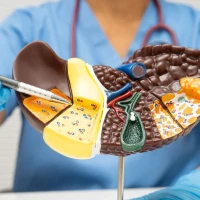
Biliary dyskinesia is a disorder of bile excretion. Bile is a fluid produced by the liver. Its primary functions are to improve the absorption of fats and to stimulate the movement of food through the intestines.
Causes of Biliary Dyskinesia
The onset and progression of biliary dyskinesia—and, consequently, problems with bile outflow—are typically provoked by the following factors:
-
irrational diet (irregular eating patterns, consumption of unhealthy foods);
-
various gastrointestinal diseases (gastritis, duodenitis, peptic ulcer disease, pancreatitis, etc.);
-
hormonal disorders, menopause;
-
parasites (helminths);
-
allergies;
-
nervous strain, frequent stress.
Symptoms of the Disease
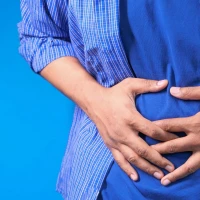
The main characteristic symptom for different forms of the disease is persistent pain in the right side. In the hypertonic-hyperkinetic form of the disease, the pain is cramping and occurs in short episodes (about an hour), especially intensified after eating, as well as during running or brisk walking. In the hypotonic-hypokinetic form of dyskinesia, the pain is dull and long-lasting, often accompanied by nausea and vomiting. The pain frequently radiates to the shoulder blade, right shoulder, and heart area, and is associated with sharp and intense sweating, pallor, nausea, headache, tachycardia, etc.
In addition to pain, characteristic symptoms of bile outflow problems also include:
-
bitterness in the mouth in the morning;
-
persistently low mood;
-
weakness;
-
stomach upset;
-
insomnia;
-
loss of appetite;
-
menstrual irregularities.
Diagnosis of Biliary Dyskinesia
At the "Oxford Medical" clinic, the diagnosis of biliary dyskinesia is carried out by gastroenterologists based on the patient's symptoms and the results of instrumental diagnostic methods. To accurately assess gallbladder function, doctors perform special diagnostic tests, including liver function tests and measurement of pancreatic enzyme levels. For reliable and comprehensive information, ultrasonography and esophagogastroduodenoscopy are used.
If necessary, the patient may be referred for:
-
ultrasonography;
-
cholecystography;
-
cholescintigraphy;
-
gastroscopy, etc.
In the hypotonic form of dyskinesia, ultrasound or contrast studies are conducted to detect gallbladder enlargement and prolapse.
Treatment Methods for Bile Duct Dyskinesia
Comprehensive treatment of biliary dyskinesia includes:
-
diet therapy;
-
physiotherapy procedures;
-
hydrotherapy;
-
adherence to proper work and rest schedule;
-
medication therapy;
-
treatment in health resorts.
To treat bile outflow problems caused by biliary dyskinesia, a strict diet is prescribed (meals should be taken 4–6 times a day in small portions) along with a balanced lifestyle. Additionally, the doctor prescribes an individualized course of medication therapy aimed at restoring the normal flow of bile.
Gallbladder Dyskinesia
The gallbladder and bile ducts are referred to as the biliary tract. Therefore, the diagnosis of biliary dyskinesia also includes dyskinesia of the gallbladder and its ducts. This is a condition in which the motility of both organs is impaired, leading to an excessive flow of bile into the duodenum. As a result, the digestion process is disrupted, and disease symptoms appear.


Advantages of the Department of Gastroenterology at Oxford Medical

The latest diagnostic technologies that allow you to obtain the most accurate results;
Appointment of a course of modern drug therapy using high-quality drugs;
Performing minimally invasive or endoscopic surgery using advanced technology (if necessary);
Individual selection of a comprehensive treatment course for each patient.

Our doctors

 5
5  22+
22+ 
 22+ Years of experience
  Kyiv, Hlybochytska St., 40x
 4.93 22+ 22+ Years of experience Kyiv, 9 Ivana Kramskoho Street
  4.94 8+ 8+ Years of experience m. Irpin vul. University, 2/1, building 3
  4.91 13+ 13+ Years of experience Kyiv, Mykhayla Hryshka St., 1



 in the clinic
  online

 Hello!
Let's take care
about your health:

