Sign up via call center
Department
Kidney MRI ➤ price of MRI of the kidneys in Kyiv | Oxford Medical

Knee MRI

The knee joint has a complex structure: it is formed by the articular surfaces of the femur and tibia and the patella, and its stability is ensured by the menisci, ligaments, and articular cartilage. That is why even minor injuries can cause pain, swelling, or impaired function. To accurately determine the nature of the changes and the degree of their severity, a detailed examination of the internal structures is required.

One of the most informative methods is MRI of the knee joints. The examination makes it possible to assess the condition of the menisci, ligament apparatus, cartilage, and bone tissues without radiation exposure. It is prescribed to clarify the diagnosis and determine further treatment tactics.

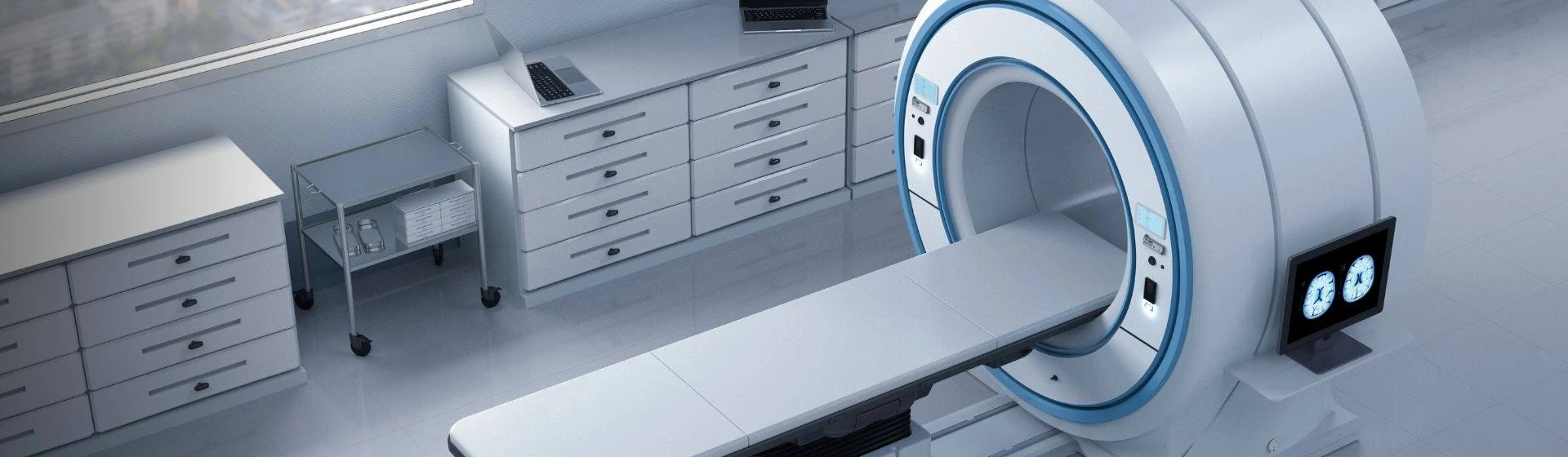
At the medical center “Oxford Medical,” it is possible to have an MRI of the knee joint on a modern GE SIGNA Champion scanner with AI Recon DL technology, which provides high image detail and accuracy of results.

You can book an MRI of the knee joint in Kyiv at the “Oxford Medical” clinic at a convenient time for you by phone or through the feedback form.

What an MRI of the knee joint shows

Magnetic resonance imaging of the knee joint makes it possible to assess in detail all the internal structures of the knee that may be the source of pain, swelling, or limitation of movement. The method provides layered images of tissues and helps detect injuries that are not always identified during an X-ray examination.

During the examination, it is possible to assess:

  • the menisci — to detect tears, degenerative changes, or their displacement;
  • the anterior and posterior cruciate ligaments, as well as the collateral ligaments — to determine partial or complete injuries;
  • the articular cartilage — to assess its thickness, integrity, and degree of wear;
  • the joint capsule and synovial membrane — the presence of inflammation or excess fluid;
  • the bone structures — in particular bone marrow edema, microdamage, or the consequences of injuries;
  • the tendons and muscles around the knee;
  • neoplasms and other pathological changes.

The examination is especially informative in degenerative processes in the joint. For example, in the development of arthrosis, MRI makes it possible to assess the condition of the articular cartilage, changes in the bone surfaces, the presence of bone edema, and accompanying soft tissue injuries.

Magnetic resonance imaging helps not only to establish the presence of an injury, but also to determine its nature and extent. This is important for choosing a treatment method — conservative or surgical — and for predicting the restoration of joint function.

MRI of the knee joint:
indications for diagnostic evaluation

MRI of the knees is prescribed when it is necessary to clarify the cause of pain, impaired mobility,
or other symptoms.

Indications may include:

prolonged or intense pain in the knee;

swelling, signs of inflammation in the joint;

limitation of movement or stiffness;

injuries — falls, blows, sudden turns of the lower leg;

suspicion of a meniscus tear or ligament injury;

degenerative changes in the joint;

preparation for surgical intervention;

monitoring of the condition after treatment.

List of diseases

In some cases, the doctor may recommend an additional examination of adjacent structures of the lower limb. For example, in combined injuries or chronic overload, not only an MRI of the knee but also an MRI of the ankle joint may be needed for a comprehensive assessment of the condition of the ligaments and tendons.

Main contraindications

Magnetic resonance imaging of the knee joint is a safe examination method, since it does not involve radiation exposure. However, there are conditions in which its performance is contraindicated or requires prior assessment.

The main contraindications include:

  • the presence of a pacemaker or other electronic implants incompatible with the magnetic field;
  • metal structures or foreign metal bodies in the body that may interact with the magnetic field;
  • implanted neurostimulators, insulin pumps, or other devices sensitive to the magnetic field;
  • allergic reactions to contrast agents (if an examination with contrast enhancement is planned);
  • severe renal function impairment when administration of a contrast substance is necessary.

In most cases, MRI of the knee can be performed without restrictions. Before the examination, it is important to inform the doctor about the presence of implants, previous surgeries, and chronic diseases.

Preparation rules

Standard diagnostics — MRI of the knee joint without contrast — does not require special preparation. You should come to the examination in comfortable clothing without metal elements. Before the procedure begins, you need to remove jewelry, a watch, and other metal objects. If surgeries were previously performed or implants were installed, this should be reported to the specialist.

If an examination with contrast enhancement is planned, it is necessary to first take a blood test to assess kidney function (creatinine level or calculation of the glomerular filtration rate — as prescribed by the doctor). On the day of the procedure, food should not be consumed for 4–6 hours before the examination.

How an MRI of the knee is performed

Before the examination begins, the patient lies down on the tomograph table. The leg is fixed in a comfortable position to ensure immobility during scanning. This is necessary to obtain clear images.

After that, the table smoothly moves inside the machine, and the examination begins. The tomograph creates a series of layered images of the knee joint in different projections. During the operation of the machine, characteristic rhythmic sounds are heard — this is a normal part of the process.

The procedure is painless. It is important to remain motionless throughout the entire examination, since even minor movements can affect the quality of the images. Usually, the examination lasts 20–30 minutes. If an examination with contrast enhancement is performed, it lasts longer: first, a standard series of images is taken, after which a contrast agent is injected intravenously and scanning is repeated.

After the examination is completed, the images are analyzed by a radiologist, after which the patient is given a report for a further consultation with a traumatologist or another doctor.

How much does an MRI of the knee joint cost in Kyiv at the private clinic “Oxford Medical”

The cost of the examination depends on whether contrast enhancement is needed. For a standard MRI of the knee joint, the price is lower than for an examination with contrast. An examination with contrast enhancement involves the administration of a special agent and the performance of an additional series of images, so its cost is somewhat higher.

Current prices for medical services can be viewed here. You can book a magnetic resonance imaging of the knee joint in Kyiv at the private clinic “Oxford Medical” at a time convenient for you.

Frequently asked questions

Where can an MRI of the knee joint be done in Kyiv?

It is possible to undergo magnetic resonance imaging of the knee joint in Kyiv at the medical center “Oxford Medical.” The clinic is located in the Shevchenkivskyi district not far from the “Dorohozhychi” metro station, which provides convenient access both by public transport and by car. Free parking is provided for patients.

What is the difference between CT and MRI of the knee joint?

CT is mainly used to assess bone structures, in particular when fractures are suspected. MRI visualizes soft tissues in detail — the menisci, ligaments, cartilage, tendons, and signs of inflammation. In addition, magnetic resonance imaging does not use X-ray radiation. The method is chosen depending on the symptoms and the clinical situation.

How long does an MRI of the knee take?

A standard examination lasts approximately 20–30 minutes. If the examination is performed with contrast enhancement, the duration may increase to 30–40 minutes, since after the administration of the agent an additional series of images is performed. During the procedure, it is important to remain motionless in order to obtain high-quality and accurate images.

Do you need to undress for an MRI of the knee?

There is no need to undress completely. It is enough that there are no metal elements in the knee area — for example, fasteners, decorative inserts, or other metal parts, since they may affect the quality of the images.

Can an MRI be done with a knee joint endoprosthesis?

In most cases, modern endoprostheses are compatible with the magnetic field, so MRI is possible. Before the examination, it is necessary to inform the doctor about the presence of the implant and its model. It should be taken into account that metal structures may create artifacts on the images, which complicates the assessment of tissues near the prosthesis.

What is the difference between ultrasound and MRI of the knee joint?

Ultrasound makes it possible to assess superficial structures, the presence of fluid, and inflammation, and it may be performed dynamically. MRI provides deep and detailed visualization of the internal structures of the knee, in particular the menisci and ligaments. Ultrasound is often used as a primary method, and MRI — to clarify the diagnosis.

( Rating: 4.91 , Votes: 82 )
Our services
Services
MRI of one joint
3400.00 ₴
Sign up by the call center
MRI of one joint (with contrast)
5100.00 ₴
Sign up by the call center

Advantages of MRI of the joints at the «Oxford Medical» clinic

Modern expert-class tomograph. The GE SIGNA Champion device provides high image detail and accurate visualization of the structures of the joint.

Artificial intelligence technologies. The AI Recon DL system increases image clarity, reduces noise level, and makes it possible to obtain more informative results.

Experienced radiologists. The images are analyzed by specialists with many years of experience in radiation diagnostics, which ensures a correct and well-founded conclusion.

Comfortable conditions for undergoing the examination. Prior appointment allows you to undergo MRI at a convenient time without long waiting.

Comprehensive medical services. Based on the results of the examination, it is possible to receive a consultation with a specialized doctor and determine the further treatment tactics.

Convenient location. The medical center is located near the «Dorohozhychi» metro station, which allows easy access both by public transport and by car.

Reviews
Антон 03.02.2026
Звертався для проходження МРТ хребта. Сподобалася організація процесу. Перед обстеженням відповіли на всі запитання, під час процедури почувався нормально. Обладнання сучасне, умови комфортні. Висновок підготували оперативно, що було важливо для подальшої консультації з лікарем.
Star Star Star Star Star
Марія 03.02.2026
Проходила МРТ, залишилися дуже хороші враження. Обстеження пройшло спокійно, спеціаліст уважно все пояснив перед початком процедури. У кабінеті комфортно, запис був на конкретний час, тож не довелося чекати. Результати отримала швидко, висновок зрозумілий і детальний. Загалом сервіс на високому рівні.
Star Star Star Star Star
Current information
All Articles
Sign up via call center
in the clinic
online
This site is protected by reCAPTCHA technology, and the Google Privacy Policy and Terms of Service apply.
Hello!
Let's take care
about your health:
Sign up via call center

We use cookies and other technologies to remember your preferences and find out exactly how you use and interact with the site.

By using our site, you also agree to the terms of the "User Agreement" and "Regulation on the processing and protection of personal data". By clicking "I AGREE", you consent to the processing of your data.