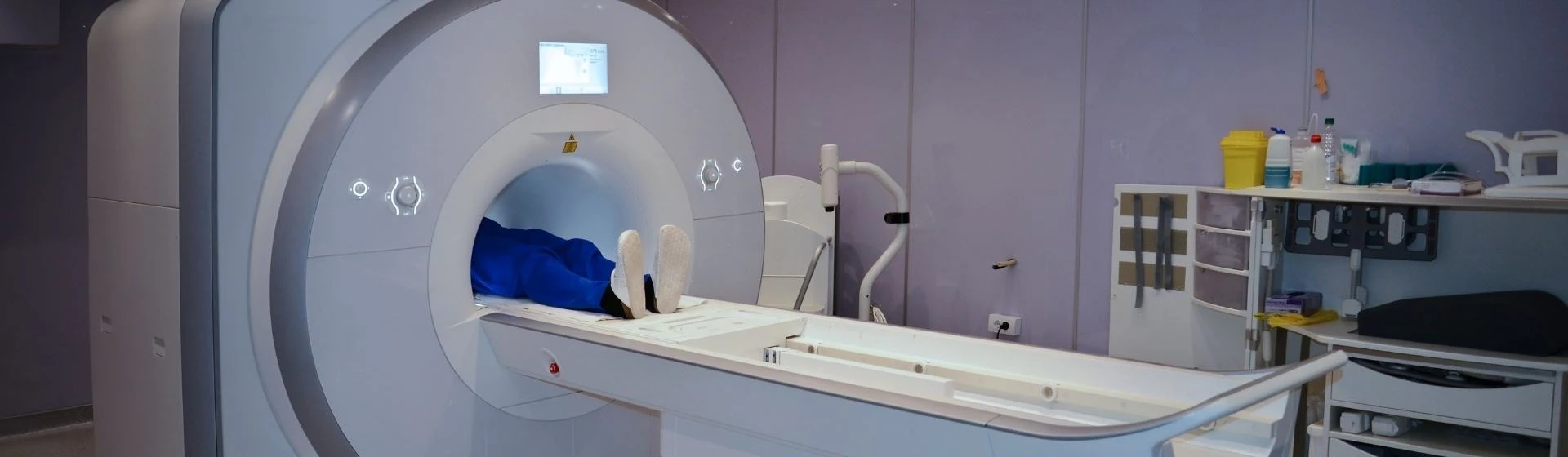
Magnetic resonance imaging of the intestine can be performed in different formats depending on which exact area needs to be examined. This allows for a more accurate assessment of the condition of individual sections of the intestine and the detection of possible changes.
MRI Enterography
MRI enterography — is a specialized method used to assess the small intestine. This section is more difficult to examine by other methods, so such diagnostics provide additional information.
Before the examination, the patient takes a special solution that helps better visualize the intestinal lumen. Thanks to this, it is possible to more accurately assess the condition of the walls, their thickness, and structure.
The examination also makes it possible to assess adjacent tissues and determine the extent of pathological changes. In particular, the method is informative in cases of suspected small intestine cancer, as it helps assess the structure of tissues and the possible spread of the process.
MRI of the Large Intestine
MRI of the large intestine is used to assess the condition of the large bowel and surrounding structures. The examination helps assess the intestinal walls, their thickness, contours, and possible changes.
The method is used to clarify the results of other examinations, in particular if colonoscopy did not provide complete information.
MRI of the Rectum
MRI of the rectum — is a targeted examination that allows a detailed assessment of the final section of the intestine and adjacent tissues.
The method is used to clarify the nature of changes and plan further treatment. If there are appropriate indications, MRI of the perianal area may also be performed, which makes it possible to detect complications, fistulas, or chronic inflammatory processes in this area.