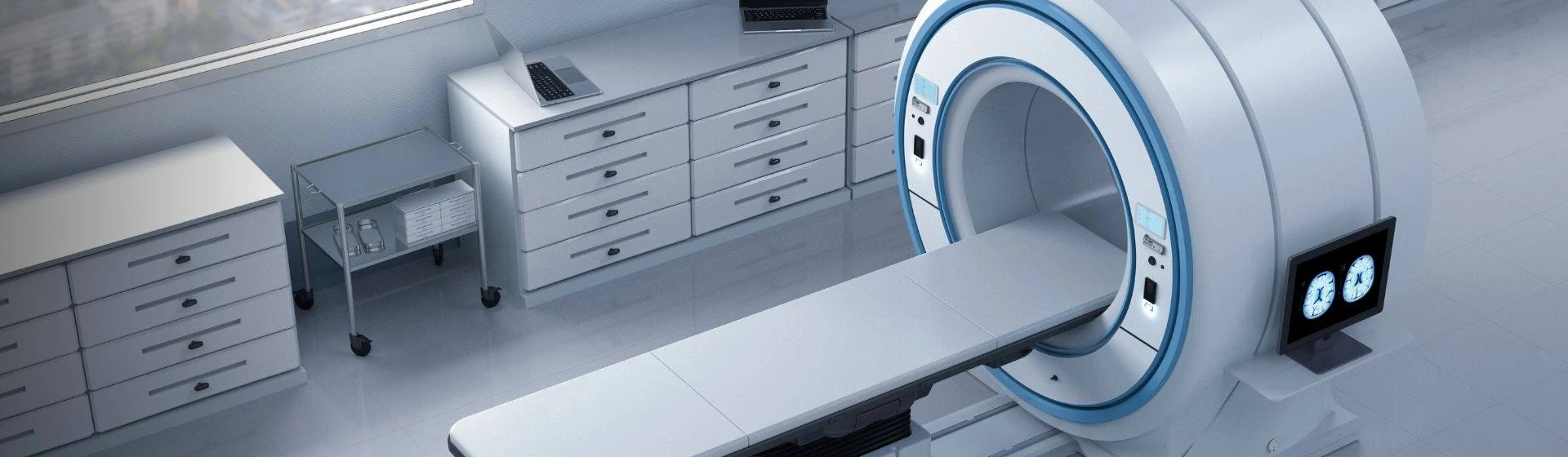
The examination is performed on a tomograph, which makes it possible to obtain detailed images of the organs and surrounding tissues without radiation exposure. The examination takes place in a lying-on-the-back position and is not accompanied by pain.
Before the examination begins, the patient is positioned on a movable table, after which the machine starts scanning. During the procedure, it is important to remain still, since this affects the clarity of the images. In some cases, the patient may be asked to hold their breath briefly.
The scanning is performed in stages, which makes it possible to obtain a series of images and to assess in detail the structure of the kidneys, the condition of the tissues, and the blood vessels. According to indications, a contrast agent may be used, which is administered intravenously for more precise visualization.
The duration of the examination is usually about 20–30 minutes, and when contrast is used, it may increase to 30–40 minutes.
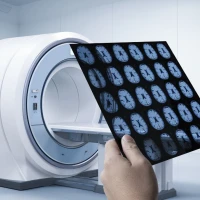
After the examination is completed, the obtained images are analyzed by a radiologist, who performs their interpretation, assesses whether the values correspond to the norm, and prepares a written report for further consultation with a doctor.