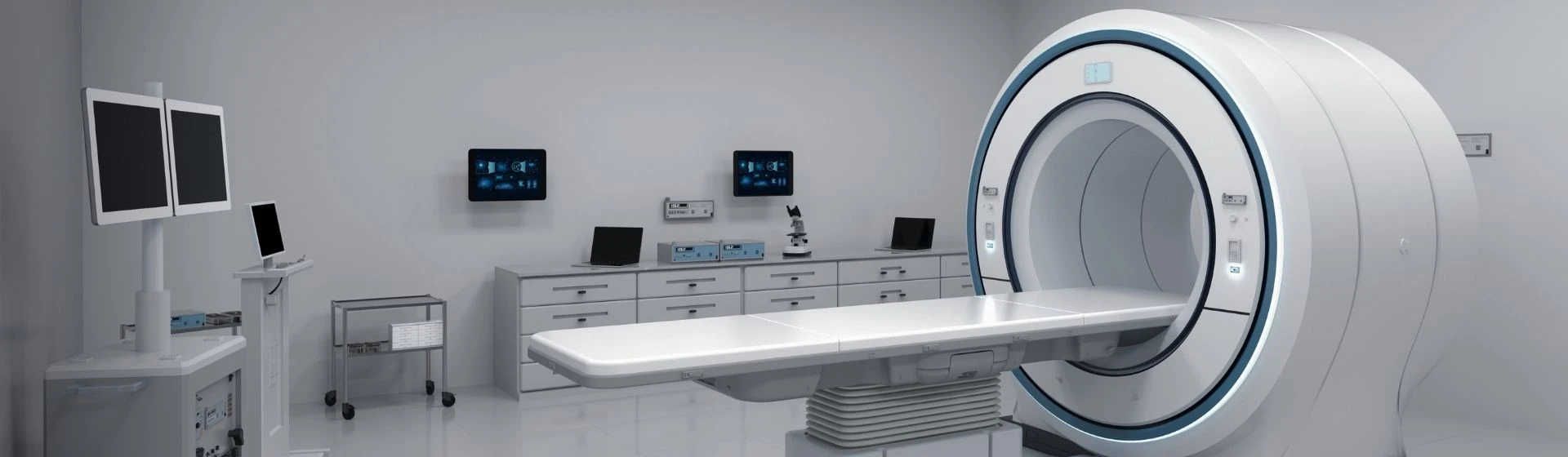
Before the beginning of the examination, the patient is positioned on a special table of the tomograph. The examination area is fixed with the help of soft rollers to ensure immobility during scanning.
After preparation, the table moves inside the tomograph, and scanning begins. The tomograph performs a series of layered images that allow a detailed assessment of the structures of the hip joint and surrounding tissues.
The procedure is painless. During the operation of the machine, characteristic sounds may be heard — this is a normal part of the process. It is important to remain still throughout the entire examination, since movements may affect the quality of the images.
If MRI with contrast enhancement is performed, standard scanning is first carried out, after which a contrast agent is administered intravenously and the examination is continued. This makes it possible to determine more accurately the nature of the changes and their extent.
The duration of the procedure usually is 15–30 minutes. When contrast is used, the examination may last up to 30–40 minutes. After the completion of the study, the obtained images are analyzed by a radiologist, who prepares a written report for further consultation with the doctor.