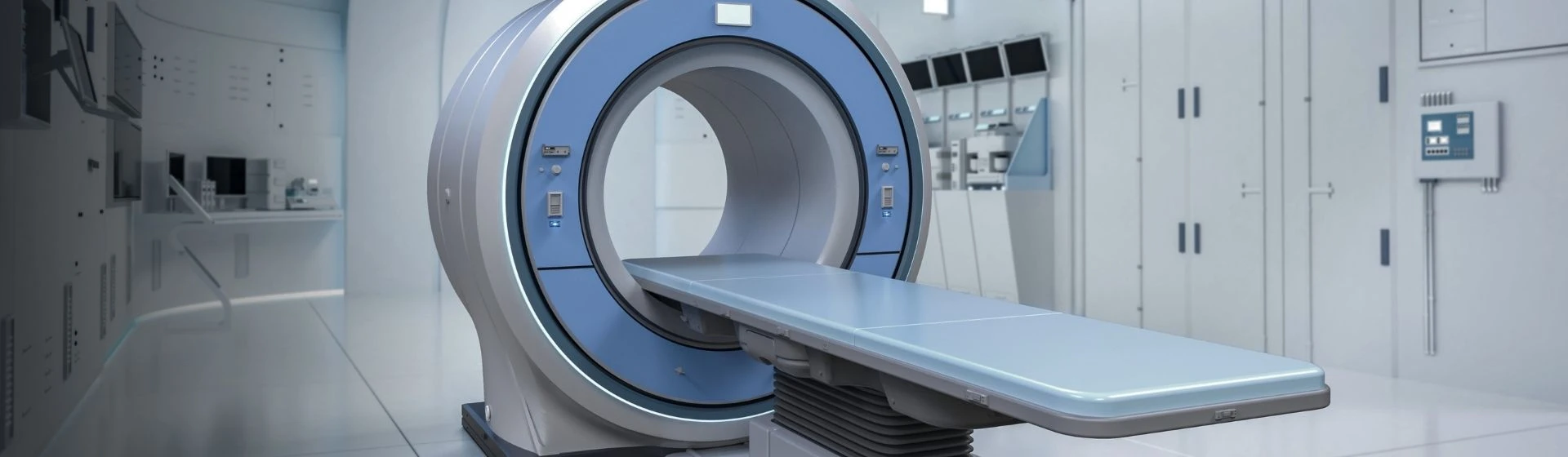
Before the examination begins, the patient is positioned on the movable table of the scanner lying on their back. To obtain high-quality images, it is important to remain still throughout the entire study.
After that, the table gradually moves into the scanning area, and the machine begins to operate. During the examination, rhythmic sounds may be heard — this is a normal feature of the scanner's operation. The procedure is painless and is usually well tolerated.
During MRI, a series of sequential images is taken, allowing a detailed assessment of the liver structure, the condition of tissues, and blood vessels. According to indications, the examination may be performed with contrast: first, scanning is performed without a contrast agent, after which the agent is administered intravenously and the examination continues.
The duration of the procedure is usually about 20–30 minutes, and when contrast is used it may increase to 30–40 minutes.
After the examination is completed, the radiologist analyzes the obtained images and performs their interpretation, preparing a written report with a description of the detected changes or confirmation of normal findings. The report is provided to the patient for further consultation with a doctor.