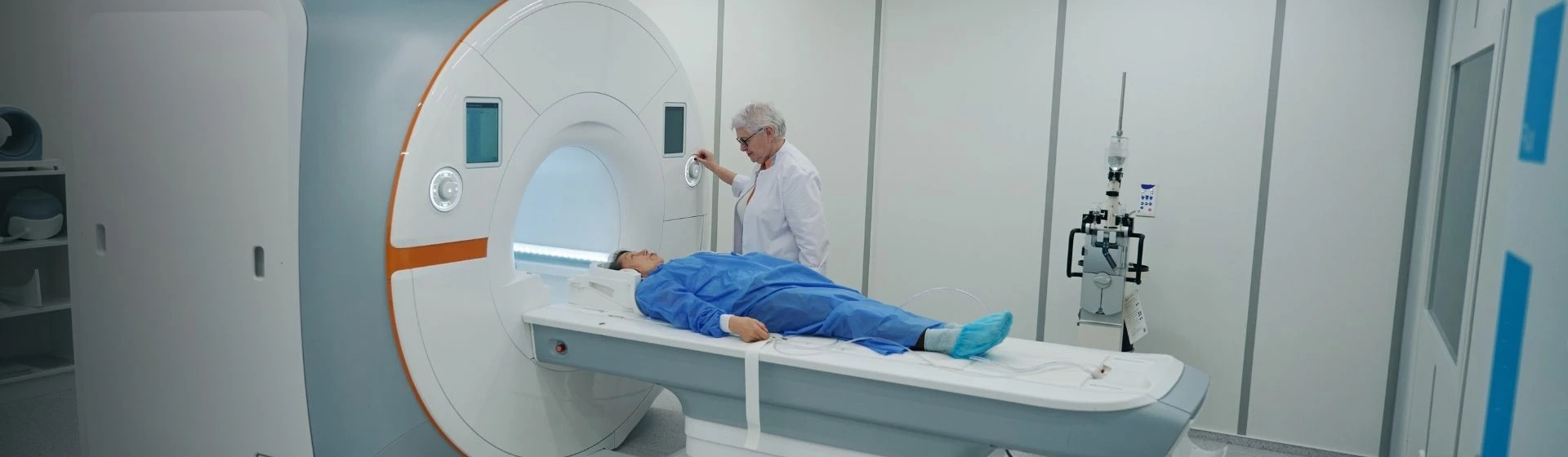
During the examination, the patient lies on a special tomograph table, which smoothly moves inside the machine. It is important to remain still throughout the entire examination, as this affects the clarity of the images.
The scanning is performed step by step: the machine forms a series of images that allow a detailed assessment of the condition of the lumbosacral spine and the surrounding structures. During the examination, characteristic sounds of the tomograph operation may occur — this is a normal part of the procedure.
If it is necessary to clarify the nature of the changes, a contrast agent is used. First, standard scanning is performed, after which contrast is injected intravenously and the examination is continued. This helps to more accurately assess the structure of the changes and their extent.
The duration of the procedure usually is 15–30 minutes, and when contrast is used it may increase to 30–40 minutes. After the examination is completed, the images are analyzed by a radiologist, who prepares a written report. To establish an accurate diagnosis, a consultation with the doctor who prescribed the examination is necessary. A neurologist, a spinal surgeon, or another specialized specialist evaluates the MRI results together with the symptoms, establishes the diagnosis, and prescribes treatment.