


protrusion of tissues in the area of the anal opening;
Protrusion of the rectum appears only during defecation. After bowel movement the intestine returns to the normal position on its own.

 Adults Adults Adults Adults Adults Adults Adults Adults Adults
  Children Children Children Children


 Hotline:
 Adults Adults Adults Adults Adults Adults Adults Adults Adults Children Children Children Children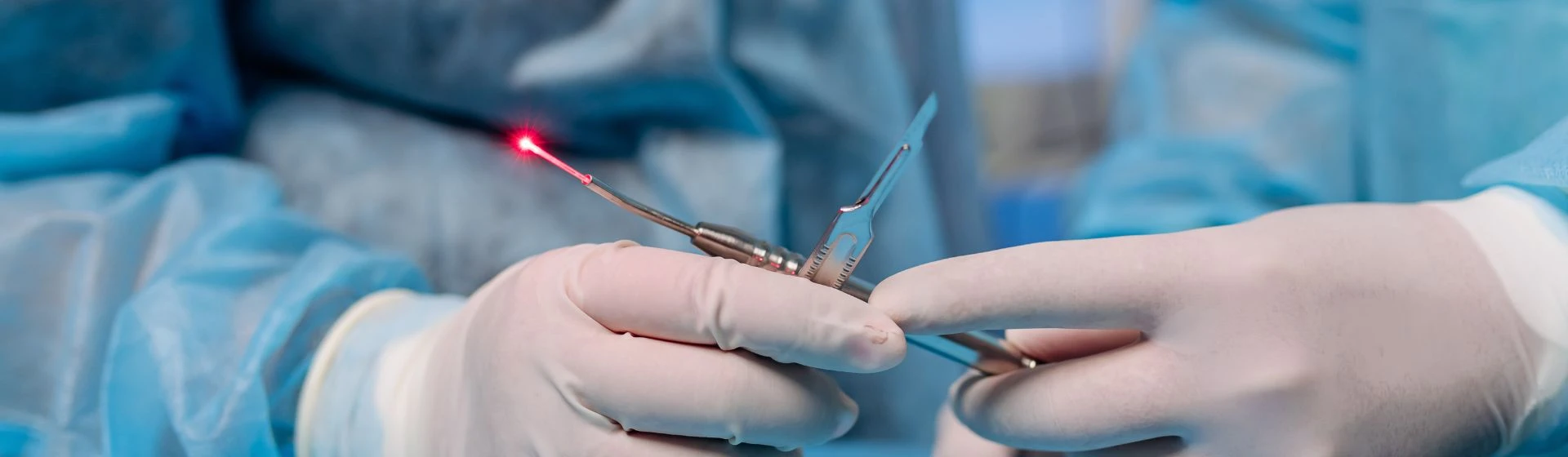
The appearance of protrusion of tissues in the area of the anal opening during defecation or physical strain may indicate a serious proctological disease. In some cases, this is accompanied by a sensation of a foreign body, discomfort in the perineum, or difficulties during bowel movement.
One of the possible causes of such symptoms is rectal prolapse. This condition requires examination by a proctologist and timely treatment, since over time the manifestations of the disease may intensify.
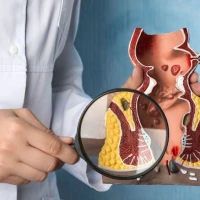
Rectal prolapse is a condition in which the rectum shifts downward and partially or completely protrudes through the anal opening. Normally, it is held in the correct position by the muscles of the pelvic floor, ligaments, and surrounding tissues. When these structures weaken or stop supporting it sufficiently, displacement and prolapse of the intestine through the anal canal may occur.
Anal prolapse may have different degrees of severity — from a slight displacement of the mucous membrane to complete prolapse of the rectal wall. That is why, to establish an accurate diagnosis and determine further treatment tactics, examination by a proctologist is necessary.
The development of rectal prolapse is usually associated with weakening of the pelvic floor muscles and ligaments that support the rectum in the correct position. When these structures lose their strength or are constantly subjected to excessive load, displacement of the intestine may occur.
The factors that may contribute to the development of this condition include:
In some cases, rectal prolapse after childbirth is associated with significant load on the muscles and ligaments of the pelvic floor during the birth of a child. This may lead to their weakening and disruption of support of the rectum.
Factors that increase intra-abdominal pressure also play an important role, for example prolonged cough, lifting of heavy objects, or intense physical exertion. If several such factors are present, the risk of prolapse development may increase.
Manifestations of rectal prolapse may differ depending on the degree of displacement of the rectum.
In the early stages, symptoms sometimes appear only during defecation, but over time they
may become more pronounced.
The most common symptoms:


protrusion of tissues in the area of the anal opening;
sensation of a foreign body in the anal canal;
mucous discharge or irritation of the skin around the anus;
difficulties with retaining gas or stool.

In the early stages, prolapse may manifest only during defecation: at this moment the rectum prolapses, but after bowel movement it returns back on its own. As the disease progresses, protrusion may occur more often, and sometimes the patient notices that the rectum protrudes even during physical strain or prolonged staying in a vertical position.
The course of rectal prolapse usually has a gradual character. Depending on the degree of displacement of the rectum and the conditions under which its prolapse occurs, several stages of the disease are distinguished.
Protrusion of the rectum appears only during defecation. After bowel movement the intestine returns to the normal position on its own.
Prolapse may occur during physical strain, coughing, or lifting heavy objects. After that the rectum does not always return on its own and may require manual reduction.
Rectal prolapse occurs even with minor exertion or during walking. The intestine does not reduce on its own and requires manual return to the normal position.
The rectum is in a state of constant prolapse and is not retained inside even after reduction. Such a condition is accompanied by pronounced discomfort and requires mandatory surgical treatment.
When symptoms appear that may indicate prolapse, it is important to consult a proctologist. During the consultation, the specialist clarifies the patient's complaints, specifies when the first manifestations appeared and under what circumstances rectal prolapse occurs.
The examination usually begins with inspection of the area of the anal opening. The doctor may ask the patient to strain slightly in order to assess tissue displacement and determine the degree of prolapse. After this, a digital examination of the rectum is performed, which allows assessment of the condition of the muscles of the anal canal and exclusion of other pathologies.
To уточнить the diagnosis, instrumental examination methods may be used:
Comprehensive diagnostics helps confirm prolapse, determine its stage, and exclude other diseases of the rectum. In particular, during the examination the doctor assesses the condition of the mucous membrane and excludes pathologies that may have similar symptoms, for example anal polyps, inflammatory diseases, or other proctological disorders.
If intestinal prolapse is confirmed, treatment is chosen depending on its stage, severity of symptoms, the patient's age, and the condition of the pelvic floor muscles. In some cases, at the early stages the doctor may recommend conservative measures aimed at reducing the load on the rectum and normalizing bowel function. These include dietary correction, normalization of bowel movements, and exercises to strengthen the pelvic floor muscles.
However, in cases of pronounced prolapse, the main method of assistance is surgical treatment. The goal of the operation is to return the rectum to the correct anatomical position and fix it, which helps prevent repeated prolapse.
In modern proctology, various surgical methods are used:
During surgical treatment, the doctor may perform fixation of the rectum to surrounding structures, as well as correction of accompanying anatomical changes. The method of intervention is selected individually after examination.
Most operations are performed under general or spinal anesthesia. After the intervention the patient usually stays in the hospital under medical supervision. Later it is important to follow the doctor's recommendations regarding nutrition, physical activity, and bowel function in order to reduce the risk of recurrent prolapse.
Surgical treatment in the «Oxford Medical» clinic is performed in a high-tech surgical hospital equipped with modern equipment, which allows interventions to be carried out as accurately and safely as possible. After surgery, patients remain under constant medical supervision in comfortable single or double hotel-type rooms. This approach ensures not only high-quality treatment, but also calm recovery in comfortable conditions.
It is impossible to completely eliminate the risk of prolapse development, however certain measures help reduce the likelihood of rectal prolapse and maintain normal bowel function. It is especially important to pay attention to prevention for people who have chronic constipation or have had injuries or surgeries in the pelvic area.
The main preventive recommendations include:
It is also important to consult a doctor in time when proctological symptoms appear. Early diagnosis helps detect the disease at early stages and prevent its progression.
The cost of treatment depends on the stage of prolapse and the chosen method of therapy. In some cases the doctor may recommend conservative treatment, however in more pronounced prolapse surgical methods are used. In such a case the price may be influenced by the type and complexity of the operation, the type of anesthesia, as well as the need to stay in the hospital after the intervention.
You can familiarize yourself with the prices for medical services in advance here. The doctor will inform you more precisely about the treatment possibilities, operation options and their cost during the consultation.
You can make an appointment at a time convenient for you — by phone or through the online appointment form on the website.
If rectal prolapse is suspected, you should consult a proctologist. This specialist deals with the diagnosis and treatment of diseases of the rectum and anal canal. During the consultation, the doctor performs an examination, if necessary prescribes instrumental examinations, and determines the stage of prolapse. After that, the optimal treatment tactics are selected taking into account the symptoms and the patient's condition.
In the early stages a person may live with rectal prolapse for some time, however without treatment the disease usually progresses. Protrusion may appear more and more often, mucous discharge and skin irritation occur, and sometimes the retention of gas or stool is impaired. That is why when symptoms appear it is important to consult a proctologist in order to determine the stage of prolapse and choose the appropriate treatment method.
Hemorrhoids are the enlargement of hemorrhoidal nodes in the area of the anal canal, whereas in rectal prolapse a part of the intestinal wall protrudes outside. Because of similar symptoms these conditions are sometimes confused, although hemorrhoids and rectal prolapse have different nature. That is why when protrusion or discomfort appears in the anal area it is important to consult a proctologist to establish an accurate diagnosis.


Experienced doctors. Appointments are conducted by proctologists with extensive experience who work according to modern protocols and use the latest treatment methods.
Accurate modern diagnostics. The clinic uses expert-class endoscopic equipment, which allows a detailed assessment of the condition of the rectum and determination of the degree of prolapse.
Effective treatment methods. Modern minimally invasive and surgical techniques are used that allow elimination of rectal prolapse and restoration of its normal position.
Comfortable hospital stay. If necessary, treatment is carried out in a high-tech surgical hospital with comfortable single and double hotel-type rooms.


 in the clinic
  online
  Hello!


