

 Adults Adults Adults Adults Adults Adults Adults Adults Adults
  Children Children Children Children


 Hotline:
 Adults Adults Adults Adults Adults Adults Adults Adults Adults Children Children Children Children


Treatment of chronic venous insufficiency (CVI)

A sedentary lifestyle — is a true punishment of modern humanity, which provokes the development of a whole range of diseases. One of the consequences of insufficient human activity is diseases of the veins in the legs, the best known of which is varicose veins.
What Is Venous Insufficiency
Most often, chronic venous insufficiency develops against the background of varicose disease of the lower extremities, which is not only an aesthetic but also a medical problem. It entails worsening of blood outflow through the veins and impaired blood circulation in the legs. This syndrome is called chronic venous insufficiency of the lower extremities, being a frequent companion of varicose veins. According to doctors’ estimates, this complication of varicose veins is observed in every tenth person of adult age.
The veins of the legs are subjected to especially high loads, because through them blood rises to the heart, overcoming gravity. So that all the blood in the vein does not create excessive pressure on its lower part, internal valves are located in this vessel at certain intervals, which let blood pass upward but do not allow it to move downward.
With varicose vein dilation, the work of the valves is disrupted — they cannot completely close the dilated vein. This is how chronic venous insufficiency develops.
Causes of Venous Insufficiency
The development of chronic venous insufficiency is promoted by many factors:
- carrying and birth of a child;
- excess weight;
- genetic factor;
- taking hormonal medications;
- chronic constipation;
- lifting heavy objects;
- a sedentary lifestyle.
Also, one of the causes of CVI of the lower extremities may be systematic sports activities. Here it is important to clarify that this is not about physical education, the main goal of which is to ensure motor activity and physical exertion sufficient to maintain the body in a healthy state. It is about professional sports associated with intensive training and the risks associated with them.
Also, heart failure may serve as a cause of CVI.
Chronic venous insufficiency is noted in 75-80% of patients with varicose disease. It is also observed in 15-20% of people who suffer from PTS (post-thrombophlebitic syndrome) — a condition that develops in patients who have had deep vein thrombosis.
The presence of such a large number of triggering factors leads to the fact that in the age group from 30 to 70 years, no less than a quarter of patients suffer from chronic venous insufficiency.
Symptoms of Chronic Venous Insufficiency
CVI in the early stages may proceed asymptomatically, without bothering a person with any manifestations. Such a course of the disease may last for years.
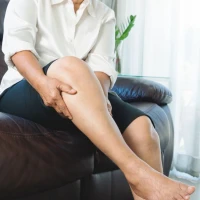
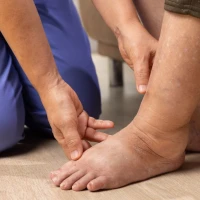
The first signs of venous insufficiency of the lower extremities are a feeling of heaviness in the legs, the appearance of swelling in the area of the shins, ankles, and feet. Later, the patient begins to be bothered by bursting pain in the legs. A frequent symptom is night cramps of the calf muscles. A feeling of heat in the lower extremities and the appearance of itching are also possible.
If the disease is associated with varicose veins, then wide and tortuous superficial veins become noticeable on the surface of the skin. The skin itself becomes drier, the appearance of islands of pigmented skin (different shades of brown color) is possible, which increase as the disease progresses. In advanced cases, trophic ulcers begin to develop in the center of such pigmented areas.
Degrees of CVI
Classification of degrees of chronic venous insufficiency:
- 0 — absence of any symptoms in patients;
- I — appearance of swelling at the end of the day, development of the «heavy legs» syndrome;
- II — swelling acquires a persistent character, hyperpigmentation and eczema develop on the skin;
- III — appearance of trophic ulcers, development of thrombophlebitis, as a complication.
At different stages of insufficiency, changes gradually occur both in the structure of the veins themselves and in the character of blood flow. Chronic venous insufficiency of the 1st degree is accompanied by changes in the venous wall and disruption of valve function. As a result, reverse blood flow through the vein becomes possible, which increases pressure on its walls. Under its influence, the walls of the vein, in turn, stretch, and the efficiency of the valve apparatus becomes even less — varicose vein dilation develops.
Due to thinning of the venous wall, its permeability increases, which leads to the appearance of swelling, and lymph may penetrate into the vein itself, triggering an inflammatory process. A complication of the last stages of venous insufficiency may be thrombophlebitis — the formation of a thrombus in the lumen of the vein.
If such a thrombus breaks off, it begins to move through the circulatory system, threatening to block one of the large vessels. Such blockage is called thromboembolism, and PE (pulmonary artery thromboembolism) is especially dangerous — a condition that threatens the patient’s life.
Diagnosis of CVI
The examination begins with a consultation with a phlebologist — a specialist who deals with the treatment of vein diseases. He conducts an examination, analyzes the patient’s symptoms, compiles the medical history, and makes a preliminary diagnosis.
To make an accurate diagnosis, it is necessary to assess the condition of the veins and the blood flow in them. The fastest and most accessible way of such an examination is Doppler ultrasound of the veins of the lower extremities (ultrasound of the veins). With its help, the doctor can visualize the vein, assess its condition, the function of the venous valves, and blood flow.
Ultrasound of the veins, as a rule, is performed not by an ultrasound diagnostics doctor, but by the treating phlebologist himself, so that he can personally assess the situation in all nuances. There is no need to wait for the examination data — the doctor can analyze them during the procedure. In addition, ultrasound is safe, as it does not create radiation exposure for the patient.
In addition to Doppler ultrasound, an X-ray examination, computed tomography, or magnetic resonance imaging may be prescribed. Laboratory diagnostics may also be needed, for which it will be sufficient for the patient to provide a blood sample from a vein in the arm.
Venous Insufficiency: Treatment of the Disease
Treatment of venous insufficiency may include conservative and operative methods. The tactics of therapy depend on the stage of the disease, the severity of symptoms, the condition of the veins, and the presence of complications. In most cases, a comprehensive approach is used, which makes it possible to improve venous outflow, reduce symptoms, and slow the progression of the disease.
Medication Treatment of CVI
Medication therapy involves the use of venotonics, which help stabilize the structure of the venous wall and increase its tone. In more severe cases, anticoagulants may be prescribed to reduce the risk of thrombus formation.
Symptomatic treatment may also be used:
- nonsteroidal anti-inflammatory drugs — to reduce pain and cramps;
- diuretics — in case of pronounced swelling;
- antihistamine drugs — in case of eczema and dermatitis;
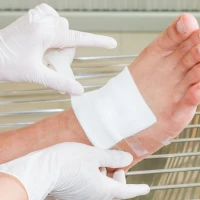
- antibacterial or antifungal agents — in case of infection of trophic ulcers.
The combination of medications is selected individually depending on the symptoms, stage of the disease, and the presence of concomitant complications.
Compression Therapy for Venous Insufficiency
Compression therapy involves wearing special compression knitwear, which provides dosed compression of the veins of the lower extremities. The degree of compression is selected individually by a phlebologist depending on the stage of the disease and recommendations regarding treatment.
Compression knitwear helps:
- reduce swelling;
- decrease the feeling of heaviness in the legs;
- improve venous outflow;
- improve the function of the muscle-venous pump;
- reduce the risk of disease progression.
Regular use of compression knitwear helps control the symptoms of CVI and increases the effectiveness of the main treatment.
Surgical Treatment of CVI
Modern surgical treatment of CVI is mainly based on minimally invasive methods. Classical operations for removal or ligation of veins are now used much less often, because they require longer rehabilitation and have a higher risk of postoperative complications.
Modern treatment methods include:
- Sclerotherapy — injection of a special medication into the affected vein to «glue» its walls. The method is more often used for small veins and spider veins.
- Endovenous laser coagulation — minimally invasive laser treatment, during which a laser light guide is inserted into the vein. Under the action of the laser, the lumen of the vein closes, and blood flow in it stops.
After laser treatment, scars or marks usually do not remain, and hospitalization is not needed — the patient can return home on the day of the procedure. An important stage of recovery after the intervention is early activation of the patient and walking, as well as following the doctor’s recommendations.
All methods of treatment of venous insufficiency may be used comprehensively depending on the clinical situation and the patient’s needs.
Prevention of Venous Insufficiency
To prevent the development of chronic venous insufficiency, correction of lifestyle, moderate physical activity, and a balanced diet are most often recommended. Regular walking, swimming, therapeutic physical training, and gymnastics for venous insufficiency, which helps improve venous outflow and reduce blood stagnation in the legs, play an important role. If the patient suffers from flatfoot, a consultation with an orthopedist may be recommended to correct this disorder.
It is also important to avoid prolonged stay in a sitting or standing position. If this is impossible because of the characteristics of work, it is necessary to regularly change the position of the body, take short breaks, and warm up.
An important element of prevention is body weight control. Moderate physical activity in combination with a properly selected diet helps reduce the load on the veins of the lower extremities. Nutrition for venous insufficiency should include a sufficient amount of vegetables, fruits, greens, and foods rich in fiber. It is recommended to limit excess salt, spicy seasonings, fatty and fried foods, as well as maintain a sufficient drinking regimen.
What Is the Price of Treatment of Venous Insufficiency in Kyiv at the «Oxford Medical» Clinic
The cost of treatment of venous insufficiency depends on the stage of the disease, the severity of symptoms, the presence of complications, and the chosen method of therapy. In some cases, conservative treatment using compression knitwear and medications is sufficient, and in others a minimally invasive or surgical intervention may be needed.
You can preliminarily familiarize yourself with the prices here. The doctor will orient you in more detail regarding the possibilities, program, and cost of treatment during the initial consultation. Make an appointment at a convenient time for you by phone or through the online appointment form on the website.
The information is for informational purposes and does not replace a doctor’s consultation.
Sources:


Advantages of the phlebology department at "Oxford Medical" in Kyiv

Modern diagnostics without queues. Latest ultrasound machines and the ability to get tested on the day of the visit.
Experienced phlebologists and vascular surgeons. Skilled doctors who follow modern treatment protocols.
Minimally invasive treatment without incisions. Laser, glue obliteration, and radiofrequency methods without hospitalization.
Surgical facility within the clinic. Possibility to perform miniphlebectomy and classic surgery.

Our doctors

 4.8
4.8  17+
17+ 
 17+ Years of experience
 4.92 7+ 7+ Years of experience
  m. Kyiv, Parkovo-Syretska St., 7A
  4.83 22+ 22+ Years of experience
  4.78 10+ 10+ Years of experience Kyiv, st. Bereznyakivska, 30b Kyiv, Yevgen Malanyuk Street, 101



 in the clinic
  online

 Hello!
Let's take care
about your health:

