


This is one of the main symptoms that indicates serious damage to the joint. The pain can be constant and bothersome not only during movement, but also at rest or even at night. It is often the result of long-term progression of osteoarthritis or other degenerative processes.
Sign up via call center 
 Adults Adults Adults Adults Adults Adults Adults Adults Adults
  Children Children Children Children
Department
Adults Outpatient department
Adults Outpatient department
Inpatient department
Adults Inpatient department
Aesthetic medicine
Adults Aesthetic medicine
Dentistry
Adults Dentistry
Plastic surgery
Adults Plastic surgery
Diagnostics
Adults Diagnostics
Analyzes
Adults Analyzes
Outbound services
Adults Outbound services
Children Outpatient department
Children Outpatient department
Dentistry
Children Dentistry
Diagnostics
Children Diagnostics

Kyiv


 Hotline:
 Request a call:


Department
Adults Outpatient department
Adults Outpatient department
Inpatient department
Adults Inpatient department
Aesthetic medicine
Adults Aesthetic medicine
Dentistry
Adults Dentistry
Plastic surgery
Adults Plastic surgery
Diagnostics
Adults Diagnostics
Analyzes
Adults Analyzes
Outbound services
Adults Outbound services
Children Outpatient department
Children Outpatient department
Dentistry
Children Dentistry
Diagnostics
Children Diagnostics
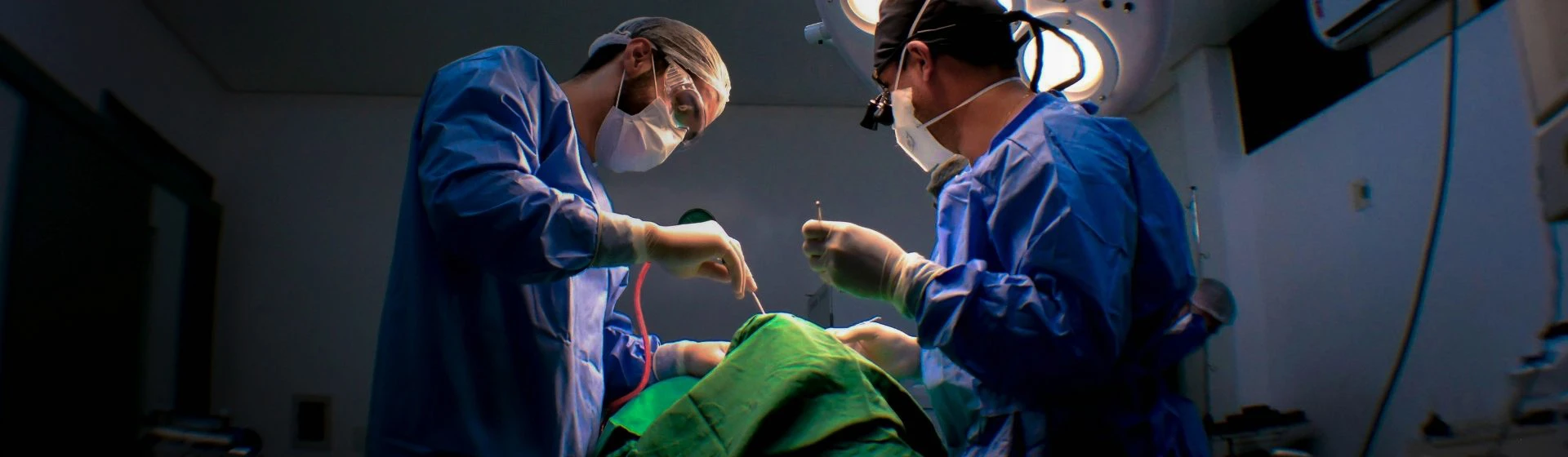
Knee joint replacement
Knee replacement surgery in Kyiv
Knee replacement surgery — is a modern and effective way to restore mobility and quality of life to patients with serious musculoskeletal problems. Thanks to innovative technologies, professional surgeons and proper rehabilitation, patients are able to move without pain again. At the «Oxford Medical» clinic in Kyiv, knee replacement surgery is performed by experienced surgeons using the latest equipment and high-quality endoprostheses from leading manufacturers.
If you are experiencing constant knee pain and limited mobility due to injuries or diseases, do not delay solving the problem. Make an appointment with a specialist and take the first step towards restoring your health and comfort.

What is knee replacement surgery?
Knee replacement surgery — is a surgical procedure in which damaged parts of the joint are replaced with artificial components (endoprosthesis). The knee replacement completely repeats the anatomical shape of the joint, ensuring mobility and stability of the limb.
This operation allows you to eliminate chronic pain, restore mobility and avoid serious complications caused by diseases such as arthrosis or rheumatoid arthritis.

When is knee replacement necessary?
Knee replacement surgery — is a serious operation that is only indicated if there are clear medical indications.
The main indications for knee replacement surgery include:
Chronic knee pain that doesn't go away even when at rest
Significant limitation of mobility
Patients report difficulty performing simple daily activities such as walking, climbing stairs, or getting up from a chair. The reduced range of motion is associated with the destruction of cartilage, deformation of the articular surfaces, and the presence of osteophytes (bone spurs).
Lack of effect from conservative treatment
In the early stages of the disease, medication, physical therapy, intra-articular injections, and special exercises are used. However, in cases where conservative methods do not help reduce pain or improve mobility, your doctor may recommend surgery.
Diseases that destroy the structure of the joint
Some pathologies lead to irreversible changes in the structure of the joint, including osteoarthritis, rheumatoid arthritis, and post-traumatic arthrosis.
Injuries and fractures
Serious knee injuries, such as intra-articular fractures or meniscal tears, can lead to irreversible changes in the joint. If a patient experiences chronic pain and limited mobility after an injury, a doctor may suggest replacing the knee joint with a prosthesis.
Preparation for knee replacement surgery
Proper preparation for knee replacement surgery is a key stage that determines the success of the endoprosthesis and the speed of rehabilitation.
First, a comprehensive examination is performed, which usually includes:
-
X-ray or CT scan of the knee joint;
-
Blood tests;
-
Urine test;
-
ECG (electrocardiogram).
In the presence of chronic diseases, the patient may also be referred for consultations to doctors of relevant specialties to exclude contraindications.

How is knee replacement surgery performed?
Knee replacement surgery — is a high-tech surgical operation that requires careful preparation and precise work by a team of specialists. At the «Oxford Medical» clinic, operations are performed by experienced orthopedic surgeons according to modern standards, which guarantees the best results for patients.
Stages of the operation:
1. Anesthesia
The operation begins with the introduction of anesthesia, which ensures the patient's comfort. In most cases, spinal anesthesia is used, which blocks sensitivity in the lower part of the body. If necessary, general anesthesia can be used, which immerses the patient in a deep sleep.
2. Surgical access to the joint
The surgeon makes an incision in the front of the knee, providing access to the damaged joint. The incision is usually 10–15 cm long.
3. Removal of damaged tissues
The damaged parts of the joint are removed. The surgeon cleans the bone surfaces, preparing them for the installation of the prosthesis.
4. Installing a prosthesis
The main stage of the operation is the installation of a knee joint prosthesis, which consists of several components:
-
Metal parts (for the femur and tibia), which ensure the stability of the structure.
-
A polyethylene liner that imitates cartilage and ensures smooth gliding.
The prosthesis can be fixed to the bones using:
-
Special bone cement. This method is most often used in older patients.
-
Cement-free fixation. It is used in younger patients when the bones are able to "grow" to the prosthesis.
5. Functionality check
After the prosthesis is installed, the surgeon checks how the new joint is working. He makes sure that the mobility and stability correspond to anatomical norms.
6. Closing the surgical wound
The wound is closed in layers. The skin is sutured or stapled, which are removed 10-14 days after surgery. A special sterile dressing is used to minimize swelling. In some cases, drainage is installed to drain excess fluid that may form in the joint capsule after surgery. The drainage is usually removed after 1-2 days.
The operation usually lasts from 1.5 to 2 hours, depending on the complexity of the case and the patient's characteristics.
After the operation, the patient is transferred to the postoperative ward. In the first few hours, doctors carefully monitor his condition and monitor the stability of vital signs.
Rehabilitation after knee replacement surgery
Rehabilitation — is an important stage that determines how effective the operation will be and how quickly the patient will return to active life.
1. The first days after the operation
-
Day one. The patient is under the supervision of medical personnel. The condition of the wound is monitored, pain is relieved with medication. Compresses are applied to reduce swelling.
-
Day two. Light physical exercises begin under the supervision of a physiotherapist. The patient is offered to perform simple movements with the toes and ankle joint to improve blood circulation.
-
First getting up. Usually on the second or third day after the operation, the patient can get out of bed with the help of crutches.
2. First week of rehabilitation
-
Assistive devices (crutches) are used for support while walking.
-
Exercises are performed to strengthen the leg muscles, reduce swelling, and improve joint flexibility.
-
The patient is advised to alternately bend and unbend the leg at the knee, without overloading the new knee prosthesis.
3. From the second to the fourth week
-
The patient gradually increases the range of motion in the knee.
-
Training begins on special rehabilitation equipment under the supervision of a physiotherapist.
-
The main goal of this period is to achieve a 90-degree knee flexion angle and improve stability while walking.
4. Second and third month
-
The patient begins to walk without aids.
-
More complex exercises are added to strengthen the thigh and lower leg muscles.
-
Return to daily life: the patient can perform simple household chores, go for short walks.
5. After the third month
-
Full restoration of joint functionality.
-
The patient can return to an active lifestyle, including sports (on the recommendation of a doctor).
Proper rehabilitation after endoprosthetics is the way to a full life without pain.
Price of knee replacement at the Oxford Medical clinic in Kyiv
Knee replacement — is a complex high-tech procedure that requires the involvement of experienced surgeons, the use of high-quality materials and modern equipment. The cost of primary and revision arthroplasty depends on several factors:
-
The type of prosthesis that will be installed.
-
The patient's condition and the complexity of the operation.
You can preliminarily familiarize yourself with the prices here. To find out exactly how much a knee joint costs, make an appointment with a doctor. During the consultation, the specialist will conduct a detailed examination, study the patient's history and determine the cost of treatment.
Don't put off your health for tomorrow. Sign up for a consultation now!

Our services
Consultations

Consultation with an orthopedic traumatologist
1100.00 ₴
Add Added 
Consultation with a leading orthopedic traumatologist
1989.00 ₴
Add Added
Online consultation with an orthopedic traumatologist
1100.00 ₴
Add Added

Benefits of knee replacement at Oxford Medical Clinic

Modern equipment. The department is equipped with the latest technologies for accurate diagnostics and high-quality operations
Experienced surgeons. Our specialists have many years of experience in the field of endoprosthetics
Individual approach. Each patient receives a personalized treatment and recovery program
Patients' comfort. Modern hospital wards are designed for maximum comfort during your stay in the clinic.
Show more 
Reviews
Альона 29.01.2026
Щиро дякую хірургу Фроловій Єлені Юріївні за суперово виконану операцію. Втручання було невелике, але для мене дуже важливе — і все пройшло швидко, акуратно та без ускладнень. Лікар уважна, спокіна, усе пояснив перед процедурою, так як я боялась- вона мене підтримувала та відволікала)) Загоєння проходило добре, шви зняла безболісно, результатом повністю задоволена. Дуже приємно мати справу з таким відповідальним і людяним спеціалістом. Рекомендую від щирого серця.

Яніна 18.01.2026
Хочу висловити подяку Мудрієвському Богдану Любомировичу. Моєму батьку було зроблено ургентно (15.12.2025) операцію по видаленню жовчного міхура. Поки я їхала в лікарню лікар і медперсонал підготували тата до операції. Велика подяка Богдану Любомировичу за Професіоналізм, за чітке пояснення і відповіді на всі питання. Цей лікар не тільки Професіонал своєї справи з великої літери, це ще і чудова людина!!! Бажаємо Богдану Любомировичу міцного здоров'я і завжди залишатися такою ж чудовою та розуміючою людиною
Current information

23 December 2025
Laparoscopy in gynecology: how modern methods are changing approaches to operations

27 July 2025
Removal of the Thyroid Gland: Consequences, Rehabilitation, and Life After Surgery
23 July 2025
Everything About Joint Replacement: Price, When, For Whom, and How Arthroplasty Can Be Performed
18 March 2025
What is uterine suturing and when is it performed?

Sign up
 in the clinic
  online

 Hello!
Let's take care
about your health:
Sign up via call center 
