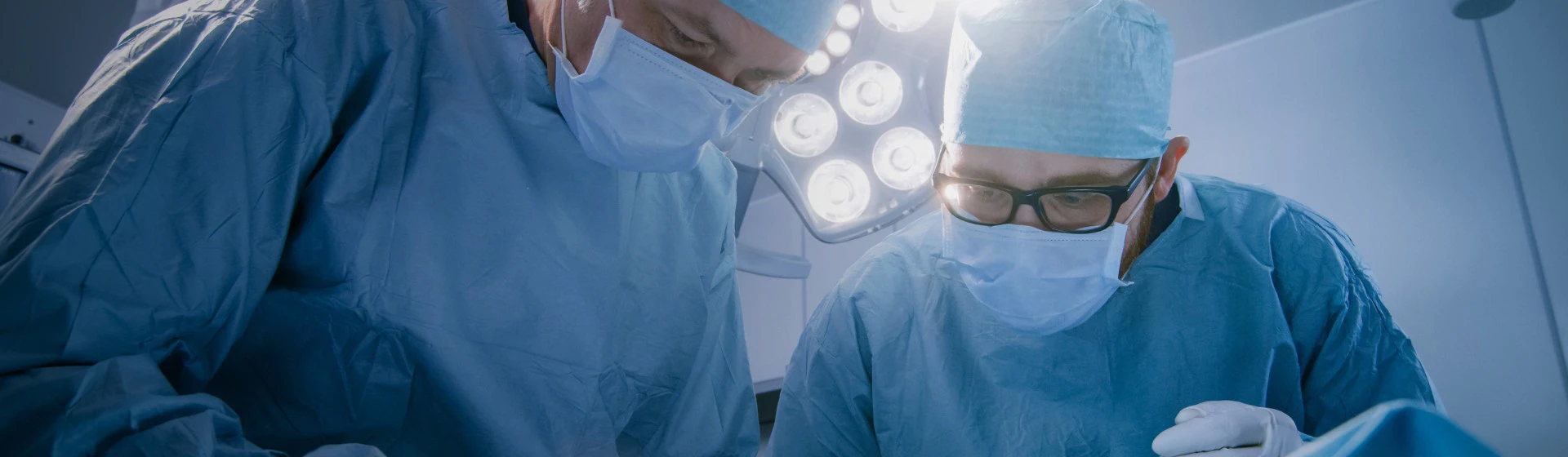
In severe cases, when osteophytes significantly compress neural structures, surgical intervention may be required.
Surgical treatment of spondylosis is aimed at eliminating nerve root compression, stabilizing the spine, and restoring its functions. The patient may be prescribed:
1. Nerve root decompression
This surgery is performed to relieve pressure on spinal nerves caused by osteophytes or thickening of ligamentous structures.
Decompression methods:
- Laminectomy — removal of part of the vertebral arch to widen the spinal canal and reduce spinal cord compression.
- Foraminotomy — widening of intervertebral foramina to release nerve roots.
- Osteophytectomy — surgical removal of osteophytes that compress nerves and cause pain.
2. Spinal stabilization (spondylodesis)
In cases of significant spinal instability caused by destruction of intervertebral discs or vertebral displacement, surgery is performed to strengthen the spinal column.
Types of stabilization procedures:
- Spondylodesis — fusion of two or more vertebrae using special metal implants or bone grafts to prevent further displacement.
- Dynamic spinal fixation — implantation of flexible stabilizing systems that preserve a certain degree of vertebral mobility while preventing excessive displacement.
3. Discectomy (removal of the intervertebral disc)
If lumbar spondylosis or spondylosis of other spinal segments is accompanied by significant intervertebral disc damage and its protrusion beyond the spinal canal, disc removal may be required.
At the Oxford Medical Clinic, the following procedures are performed:
- Classic discectomy — removal of the damaged intervertebral disc to eliminate neural compression.
- Microdiscectomy — a minimally invasive technique that allows surgery through small incisions, reducing complication risk and shortening rehabilitation time.