Sign up via call center
Department
Osteoplastics at the private clinic Oxford Medical Kyiv

Osteoplasty

Osteoplastics in Kyiv

Modern implantology allows you to completely restore lost teeth, but in some cases there is a need for preliminary preparation of bone tissue. If the jaw bone has atrophied, implant placement is impossible without additional intervention - osteoplasty. This is a surgical procedure aimed at restoring bone volume and creating a reliable foundation for implantation.

At Oxford Medical Dentistry in Kyiv, we use modern methods of osteoplasty using certified materials and adhering to all protocols.

Make an appointment with an experienced dental surgeon to find out which method will be most effective in your case and get individual recommendations.

What is osteoplasty?

Osteoplasty is a surgical procedure that restores the volume and density of the jaw bone using bone substitutes or the patient's own bone. Its main goal is to provide sufficient bone volume for stable and safe placement of a dental implant.

Under normal conditions, the jaw bone is supported by chewing load. After tooth loss, stimulation disappears and the bone begins to atrophy. A few months after tooth extraction, the bone volume may decrease so much that implantation without osteoplasty becomes impossible.

What is osteoplasty

Types of osteoplasty

By anatomical location

  • Osteoplasty of the upper jaw. Performed when there is insufficient bone height in the molar and premolars. Often includes sinus lifting — raising the floor of the maxillary sinus with subsequent introduction of bone material.

  • Osteoplasty of the lower jaw. Performed when there is horizontal or vertical atrophy. May include block transplantation or directed regeneration.

By intervention method

  • Sinus lift. Raising the floor of the maxillary sinus followed by the introduction of osteoplastic material. Used only in the upper jaw.

  • Guided bone regeneration (GBR). Using a special membrane to stimulate bone growth and isolate it from soft tissues.

  • Block augmentation. Fixing a dense fragment of bone (own or donor) to the area of ​​deficiency. Suitable for cases of large bone loss.

  • Combined osteoplasty. Combining several methods — for example, GBR and blocks — to achieve maximum effect.

When is osteoplasty needed?

Osteoplasty can be performed to augment the bone tissue around the teeth
during periodontal treatment.

The procedure is recommended in the following cases:

with bone atrophy after a long-term absence of a tooth

with jaw developmental anomalies, congenital or acquired defects

after injuries or inflammatory processes that caused bone loss

before placing implants in areas of significant jawbone deficiency

List of diseases

What materials are used for osteoplasty?

Osteoplastic material in dentistry is selected taking into account the patient's clinical situation.

Autogenous bone

The patient's own bone tissue taken from another area of ​​the jaw or body. Best compatibility, but requires additional intervention.

Allogeneic bone

Donor material that undergoes sterilization. It takes root well and is safe.

Xenogeneic bone

It is obtained from animal bone. It has a purified structure and provides mechanical support.

Synthetic materials

Artificial substitutes that stimulate bone formation.

How is osteoplasty performed?

The osteoplasty procedure is performed on an outpatient basis under local anesthesia. In complex cases, sedation may be used.

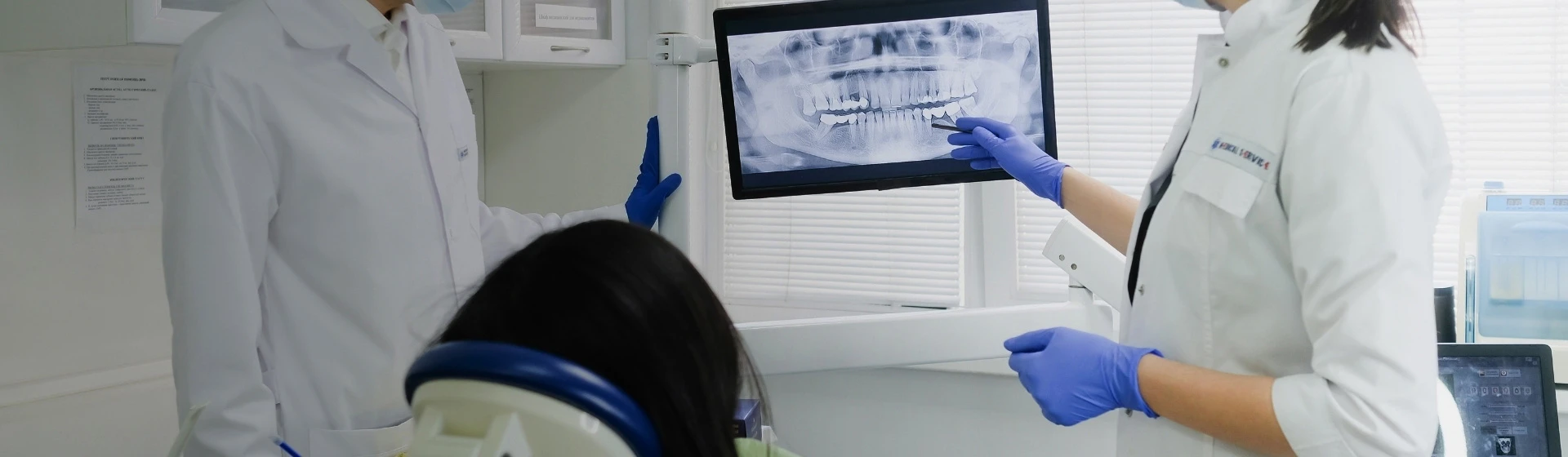
  1. Planning. Before the intervention, diagnostics are performed - orthopantomogram or computed tomography. This allows you to assess the condition of the bone and accurately plan the volume of restoration.

  2. Preparation of the surgical field. After anesthesia, the surgeon creates access to the defect area and removes excess soft tissue (if necessary).

  3. Introduction of material. Bone material is introduced into the selected area. When using blocks - they are fixed with screws. With directed regeneration - a membrane is applied.

  4. Closing the surgical area. After fixing the material, sutures are applied.

Recovery period after osteoplasty

The duration of healing depends on the extent of the intervention, the type of material used and the individual characteristics of the body. On average, the recovery period lasts 4-6 months.

The first days after surgery may be accompanied by:

  • swelling;

  • a feeling of tension or pain;

  • minor bleeding.

This is a normal reaction of the body, which gradually passes. It is important to follow the regimen, not to strain the operated area and to follow the doctor's instructions.

Recommendations after osteoplasty

Following the recommendations reduces the risk of complications and accelerates the osseointegration of the material.


For successful healing, follow these tips:

Do not smoke or drink alcohol until completely healed.

Avoid strenuous exercise for the first 5–7 days.

Do not eat hot food for a day after the intervention.

Maintain thorough oral hygiene

Take medications prescribed by your dentist.

Attend check-ups at the appointed time.

Are there any risks and complications after osteoplasty?

In the vast majority of cases, the procedure is successful. However, like any surgical intervention, it has certain risks. 

In the case of osteoplasty, complications may include:

  • inflammation or infection of the area;

  • resorption of part of the bone material;

  • prolonged healing;

  • rejection of the implanted material (rare).

At Oxford Medical Dentistry, we adhere to all safety standards to minimize any risks.

Osteotoplasty: price at Oxford Medical Dentistry

The prices for osteoplasty in dentistry depend on:

  • the volume of the bone defect;

  • the selected method;

  • the type of material (autogenous, synthetic, xenogenic);

  • the complexity of the intervention.

You can preliminarily familiarize yourself with the prices here, and the exact cost is determined after examination and diagnosis. Make an appointment with a dentist to learn more about osteoplasty and its exact price. 

Surgical ward
Our services
Consultations
Maxillofacial surgery services
Maxillary sinus junction plastic surgery
4400.00 ₴
Sign up by the call center
Osteosynthesis kit (with installation)
9800.00 ₴
Sign up by the call center
Treatment of bilateral displaced jaw fractures
46200.00 ₴
Sign up by the call center
Treatment of bilateral jaw fractures with displacement within the dentition
31000.00 ₴
Sign up by the call center
Treatment of unilateral jaw fractures with displacement within the dentition
29000.00 ₴
Sign up by the call center

Frequently asked questions

Osteotoplasty: what is it?

Osteotoplasty is a surgical procedure to restore the volume of the jaw bone. It is used for bone atrophy in preparation for implantation or for bone defects after injuries, inflammation, or removal of tumors.

How long is the healing period after osteoplasty?

On average, it takes 4 to 6 months. During this time, the graft gradually integrates into the jaw, forming new bone tissue sufficient for implant placement.

Is it necessary to perform osteoplasty before implantation?

Not always. If the bone volume is preserved, implantation is possible without prior intervention. The final decision is made by the dentist after the examination.

Is the osteoplasty procedure painful?

The procedure is performed under local anesthesia or sedation, so the patient does not feel any pain. After the surgery, there may be some minor discomfort, which is well controlled with painkillers.

Is it possible to avoid osteoplasty?

If implantation is performed immediately after tooth extraction, the risk of atrophy is reduced, and the need for osteoplasty is reduced. Regular dental visits help avoid complex procedures.

( Rating: 4.77 , Votes: 48 )

Advantages of osteoplasty in dentistry "Oxford Medical"

Individual approach. Dentists assess the condition of the jaw and choose the method that will give the best result.

Experienced surgeons. Our doctors have extensive experience in performing osteoplastic interventions

Modern techniques. We apply proven global approaches to bone regeneration

Comfort for the patient. The procedure takes place under effective anesthesia, in compliance with all sterility protocols

Reviews
Альона 29.01.2026
Щиро дякую хірургу Фроловій Єлені Юріївні за суперово виконану операцію. Втручання було невелике, але для мене дуже важливе — і все пройшло швидко, акуратно та без ускладнень. Лікар уважна, спокіна, усе пояснив перед процедурою, так як я боялась- вона мене підтримувала та відволікала)) Загоєння проходило добре, шви зняла безболісно, результатом повністю задоволена. Дуже приємно мати справу з таким відповідальним і людяним спеціалістом. Рекомендую від щирого серця.
Star Star Star Star Star
Яніна 18.01.2026
Хочу висловити подяку Мудрієвському Богдану Любомировичу. Моєму батьку було зроблено ургентно (15.12.2025) операцію по видаленню жовчного міхура. Поки я їхала в лікарню лікар і медперсонал підготували тата до операції. Велика подяка Богдану Любомировичу за Професіоналізм, за чітке пояснення і відповіді на всі питання. Цей лікар не тільки Професіонал своєї справи з великої літери, це ще і чудова людина!!! Бажаємо Богдану Любомировичу міцного здоров'я і завжди залишатися такою ж чудовою та розуміючою людиною
Star Star Star Star Star
Current information
All Articles
Sign up
in the clinic
online
This site is protected by reCAPTCHA technology, and the Google Privacy Policy and Terms of Service apply.
Hello!
Let's take care
about your health:
Sign up via call center

We use cookies and other technologies to remember your preferences and find out exactly how you use and interact with the site.

By using our site, you also agree to the terms of the "User Agreement" and "Regulation on the processing and protection of personal data". By clicking "I AGREE", you consent to the processing of your data.