


A hemorrhoid is a venous node that appears due to vein dilation. It looks like a small lump. However, if the node is internal, it cannot be detected without examination. If you experience pain, bleeding, prolapse after defecation, or other symptoms, consult a proctologist. Early-stage hemorrhoids can be treated with minimally invasive techniques.
Sign up via call center 
 Adults Adults Adults Adults Adults Adults Adults Adults Adults
  Children Children Children Children
Department
Adults Outpatient department
Adults Outpatient department
Inpatient department
Adults Inpatient department
Aesthetic medicine
Adults Aesthetic medicine
Dentistry
Adults Dentistry
Plastic surgery
Adults Plastic surgery
Diagnostics
Adults Diagnostics
Analyzes
Adults Analyzes
Outbound services
Adults Outbound services
Children Outpatient department
Children Outpatient department
Dentistry
Children Dentistry
Diagnostics
Children Diagnostics

Kyiv


 Hotline:
 Request a call:


Department
Adults Outpatient department
Adults Outpatient department
Inpatient department
Adults Inpatient department
Aesthetic medicine
Adults Aesthetic medicine
Dentistry
Adults Dentistry
Plastic surgery
Adults Plastic surgery
Diagnostics
Adults Diagnostics
Analyzes
Adults Analyzes
Outbound services
Adults Outbound services
Children Outpatient department
Children Outpatient department
Dentistry
Children Dentistry
Diagnostics
Children Diagnostics
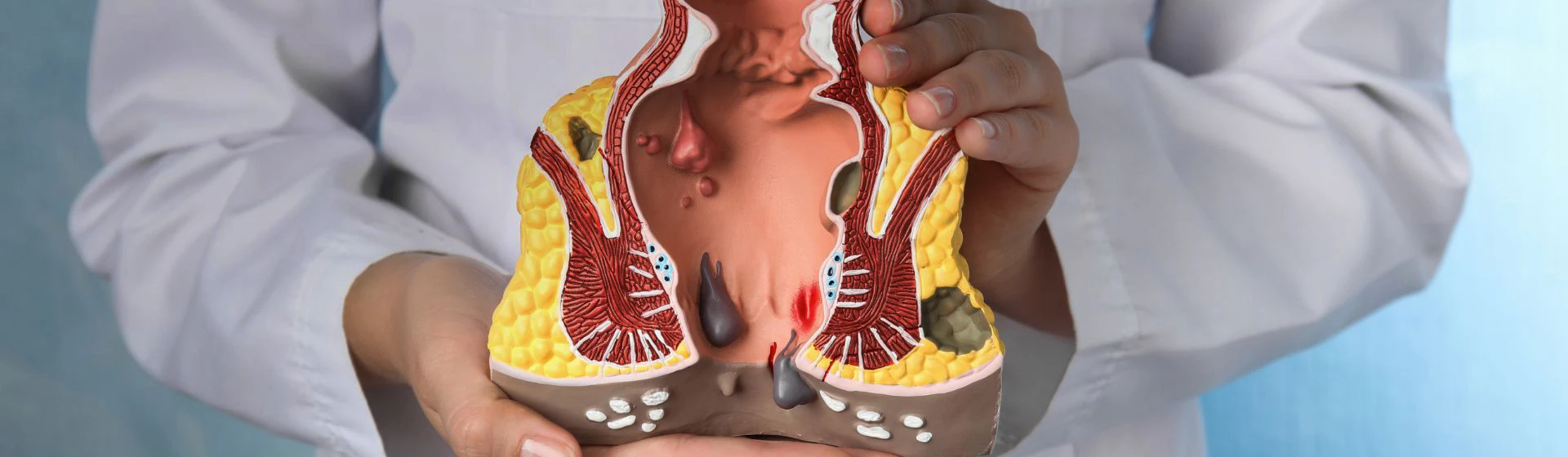
Surgical treatment of hemorrhoids (hemorrhoidectomy)
Surgical treatment of hemorrhoids in Kiev
In the early stages, hemorrhoids can be treated with conservative methods, but most patients consult a proctologist later. When the size or number of nodes increases, surgical treatment becomes necessary. At Oxford Medical, this is performed using modern minimally invasive techniques:
- ligation of hemorrhoidal nodes with latex rings;
- Doppler-guided HAL-RAR dearterialization;
- infrared photocoagulation;
- laser hemorrhoidoplasty;
- radiofrequency ablation.
These methods allow the removal of hemorrhoidal nodes in one procedure (several sessions may be needed for latex ring ligation), often without the need for hospitalization.
Hemorrhoidectomy — radical excision of hemorrhoidal nodes with a scalpel — is prescribed only in the most severe cases when other techniques are ineffective. About 10% of patients require such surgery.
Indications for surgical treatment of hemorrhoids
Hemorrhoids occur due to varicose enlargement of the veins in the hemorrhoidal plexus of the anal canal and are accompanied by the formation of venous nodes. They may be located inside the rectum or outside the anus, and in combined hemorrhoids — on both sides.
At an early stage, the disease is almost asymptomatic, so many patients delay seeing a doctor. Symptoms appear when the nodes enlarge. In such cases, surgical treatment is usually required. The choice of technique depends on the stage of hemorrhoids and the patient’s individual characteristics.
Minimally invasive techniques are used for uncomplicated stage 1–3 hemorrhoids.
Indications for hemorrhoidectomy include:
-
Prolapse of internal hemorrhoidal nodes;
-
Strangulation of one or more nodes;
-
Thrombosis of the node;
-
Frequent bleeding;
-
Combination of hemorrhoids with anal fissures or rectal fistula;
-
Insufficient effect from conservative or minimally invasive methods.
How is the surgery performed?
Minimally invasive treatment of hemorrhoids usually does not require hospitalization and is performed on an outpatient basis. In many cases, the patient can return to their normal rhythm of life within a few days, however recovery time depends on the selected treatment method, the stage of the disease, and the individual characteristics of the body.
The procedures are performed as follows:
- Ligation of hemorrhoidal nodes with latex rings – using a special ligator, a latex ring is placed on the base of the internal hemorrhoidal node, which stops its blood supply. As a result, the node gradually becomes necrotic and falls off after a few days, and connective tissue forms in its place, which helps fix the mucous membrane.
- Doppler-guided dearterialization HAL-RAR – an anoscope with a Doppler sensor is inserted into the lumen of the rectum, which allows the arteries supplying the hemorrhoidal nodes to be detected. After that, the doctor sutures and ligates these vessels, reducing blood flow to the nodes. If prolapse is present, mucosal lifting and fixation of the rectal mucosa (mucopexy) is additionally performed. As a result, the hemorrhoidal nodes gradually decrease in size.
- Laser hemorrhoidoplasty – laser treatment of hemorrhoids, which involves controlled thermal exposure of laser energy to the tissues of the hemorrhoidal node. The laser coagulates the vessels feeding the node, as a result of which it gradually decreases and is replaced by connective tissue.
- Infrared photocoagulation – a method in which infrared radiation causes coagulation of tissues in the area of the internal hemorrhoidal node. This leads to a decrease in blood filling of the node and the formation of fibrous tissue, which contributes to fixation of the mucosa.
- Radiofrequency ablation – a treatment method in which the tissues of the hemorrhoidal node are exposed to radiofrequency energy. Under the influence of the thermal effect, coagulation of the vessels occurs and the node gradually decreases.
Most minimally invasive procedures are performed using local anesthesia or sedation to ensure patient comfort.
If the disease has an advanced stage or minimally invasive methods do not provide the required result, surgical treatment may be used. The radical surgery – hemorrhoidectomy – involves hospitalization of the patient, preoperative preparation, anesthesia, and adherence to recommendations during the postoperative period.
At the «Oxford Medical» clinic, hemorrhoidectomy is performed using the Milligan-Morgan method. During the operation, the surgeon removes internal and external hemorrhoidal nodes together with areas of altered vessels. This approach allows the source of the disease to be eliminated and significantly reduces the risk of recurrent hemorrhoids.
The Milligan-Morgan method is mainly used for combined hemorrhoids or in the late stages of the disease, when other treatment methods may be insufficiently effective.
Advantages of surgical treatment at oxford medical
Oxford Medical operates a high-tech surgical inpatient facility equipped with expert-level devices. This enables both minimally invasive and classical surgical hemorrhoid treatments.
When a patient comes to the clinic, a comprehensive diagnosis is first performed. Based on the results, proctologists and surgeons select the most appropriate treatment method.
Advantages of treatment at Oxford Medical include:
-
Use of minimally invasive techniques that do not require hospitalization or anesthesia;
-
Longo hemorrhoidectomy for complex cases;
-
High professionalism of proctologist-surgeons;
-
Advanced equipment from leading European and American manufacturers (for laser and radio wave therapy, infrared photocoagulation, HAL-RAR, etc.);
-
Comfortable single and double patient rooms.
Recovery period
Recovery after minimally invasive hemorrhoid treatment is relatively quick and easy. The patient is discharged home immediately after the procedure.
For several days, dull pain or discomfort in the anal area may be felt. Minor bleeding is also possible.
To promote healing and prevent complications, the doctor may prescribe medication.
Until full recovery, it is important to:
- Follow a recommended diet – drink enough fluids and eat fiber-rich foods to prevent constipation, while avoiding spicy, salty, smoked, and fried foods.
- Maintain hygiene of the perianal area.
- Avoid heavy lifting and intense physical activity, though moderate activity is encouraged as it improves circulation and promotes recovery.
After hemorrhoidectomy, the recovery is longer and more complex. The patient remains in the clinic for a few days, receives dressings and medications.
Possible complications of hemorrhoids
Hemorrhoids not only cause pain and other unpleasant symptoms, but may also lead to serious complications. Without timely treatment, the risks increase for:
- Thrombosis of the hemorrhoidal node;
- Acute paraproctitis;
- Anal fissures;
- Perianal pruritic dermatitis;
- Posthemorrhagic anemia;
- Mucosal necrosis.
Causes and prevention of hemorrhoids
Factors that provoke hemorrhoid development include:
- Frequent lifting of heavy objects;
- Cycling or horseback riding;
- Sedentary work;
- Chronic constipation;
- Diarrhea;
- Unbalanced diet;
- Obesity;
- Alcohol abuse;
- Increased intra-abdominal pressure;
- Childbirth.
To reduce the risk of hemorrhoids or recurrence, avoid excessive physical strain and frequent heavy lifting, lead an active lifestyle, eat properly, and maintain good intimate hygiene. If symptoms appear, consult a proctologist promptly. In early stages, conservative or minimally invasive treatment is possible.
Hemorrhoid removal: price at Oxford Medical
The cost of hemorrhoid removal can vary significantly depending on the stage and form of the disease and the chosen treatment method. You can check the prices for surgical treatment at Oxford Medical here.
Make an appointment with a proctologist at a convenient time. The doctor will perform an examination, choose the optimal treatment method, and provide an accurate estimate.
FAQ
What does a hemorrhoid look like?
Why do hemorrhoids occur?
The main causes include frequent heavy lifting, sedentary lifestyle, poor diet, obesity, chronic constipation, and diarrhea. The risk is also higher during pregnancy, after childbirth, and in older adults.
How are hemorrhoids treated?
Treatment depends on the type and stage. Conservative therapy, minimally invasive procedures, and surgery are used. Minimally invasive methods include latex ring ligation, HAL-RAR dearterialization, infrared photocoagulation, and laser or radio wave ablation. These procedures do not require hospitalization and can resolve the problem in one session.
To schedule a consultation with a doctor at Oxford Medical in Kyiv, call our contact center or submit a request on the website.

Our services
Consultations

Consultation with a leading proctologist surgeon
1989.00 ₴
Add Added 
Consultation with a proctologist surgeon
1100.00 ₴
Add Added
Proctology services
HAL-RAR
39889.00 ₴
Sign up by the call center
Anoscopy (without anesthesia cost)
549.00 ₴
Sign up by the call center
Sigmoidoscopy (without anesthesia cost)
789.00 ₴
Sign up by the call center
Sigmoidoscopy (without anesthesia cost)
1500.00 ₴
Sign up by the call center
Removal of one external hemorrhoid
7889.00 ₴
Sign up by the call center

Advantages of the Oxford Medical Proctology Department in Kyiv

Experienced proctologists. Qualified specialists with extensive treatment experience.
Advanced diagnostic equipment. Video rectosigmoidoscopy, colonoscopy, and other modern methods.
Unique treatment methods. Use of HAL-RAR and other minimally invasive technologies.
Comprehensive care. Possibility to undergo all tests and examinations on-site.
Show more 
Our doctors

 4.94
4.94  24+
24+ Proctologist of the 1st category, surgeon of the highest category
 24+ Years of experience
 Consultation 1100
 Kyiv, Hlybochytska St., 40x
 4.96 24+
Proctologist surgeon of the highest category, Candidate of Medical Sciences
24+ Years of experience Consultation 1100
Kyiv, Hlybochytska St., 40x  4.79 3+
  4.88 10+
 Doctor, surgeon-proctologist
10+ Years of experience Consultation 1100
Kyiv, st. Bereznyakivska, 30b 
Reviews
Марія 17.02.2026
Лікар Фролова, щиро дякую за високий професіоналізм, уважність та турботу! Призначене лікування виявилося ефективним і швидко дало позитивний результат. Дякую!!!

Христина 14.02.2026
Я дуже вдячна лікарю Єлєні Юріївні Фроловій!!! Не вперше звертаюся за допомогою!! Налаштовує на позитив, все пояснить! Уважна, чуйна, добра, дуже грамотна та професійна! Дуже вдячна від усієї душі!
Current information


10 March 2026
Why does the anus itch and how to get rid of anal itching
22 April 2025
Non-surgical hemorrhoid treatment at Oxford Medical in Kyiv
27 June 2022
First examination by a proctologist: how to prepare properly?
10 June 2022
Diagnosis of rectal cancer
Sign up
 in the clinic
  online

 Hello!
Let's take care
about your health:
Sign up via call center 
