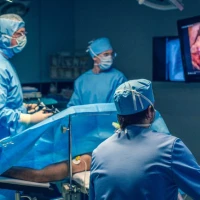
Most often, phlegmon requires surgical intervention. At early stages, drug therapy may be applied, but since symptoms are mild during this period, patients usually do not seek medical attention.
At the onset of the disease, only local symptoms appear — hyperemia (skin redness and local increase in temperature), tissue swelling, a feeling of fullness and pain. The area of inflammation has no clear boundaries and gradually increases. The diameter of phlegmons can reach 5, 10, or more centimeters. If the affected area is near a joint, its function may be impaired (for example, it becomes difficult to bend the wrist or put weight on the ankle).
Deterioration of general health, fever, and the appearance of other symptoms occur with body intoxication. This develops when the purulent process goes deep, spreads to a large area of the skin, or has several foci. With the development of a large phlegmon, due to toxic effects, the respiratory and cardiovascular systems may also suffer, causing shortness of breath and changes in heart rate.
When inflammation of the internal organs’ adipose tissue occurs, such as in phlegmonous cholecystitis, external symptoms may be absent, but organ function disorders and severe intoxication may develop. In such cases, the disease can only be diagnosed using instrumental diagnostics.
The earlier the patient seeks a surgeon, the easier the treatment may be and the lower the risk of complications.