


Acute pain in the right side, which spreads to the entire abdomen, chest, and shoulder blades
Sign up via call center 
 Adults Adults Adults Adults Adults Adults Adults Adults Adults
  Children Children Children Children
Department
Adults Outpatient department
Adults Outpatient department
Inpatient department
Adults Inpatient department
Aesthetic medicine
Adults Aesthetic medicine
Dentistry
Adults Dentistry
Plastic surgery
Adults Plastic surgery
Diagnostics
Adults Diagnostics
Analyzes
Adults Analyzes
Outbound services
Adults Outbound services
Children Outpatient department
Children Outpatient department
Dentistry
Children Dentistry
Diagnostics
Children Diagnostics

Kyiv


 Hotline:
 Request a call:


Department
Adults Outpatient department
Adults Outpatient department
Inpatient department
Adults Inpatient department
Aesthetic medicine
Adults Aesthetic medicine
Dentistry
Adults Dentistry
Plastic surgery
Adults Plastic surgery
Diagnostics
Adults Diagnostics
Analyzes
Adults Analyzes
Outbound services
Adults Outbound services
Children Outpatient department
Children Outpatient department
Dentistry
Children Dentistry
Diagnostics
Children Diagnostics
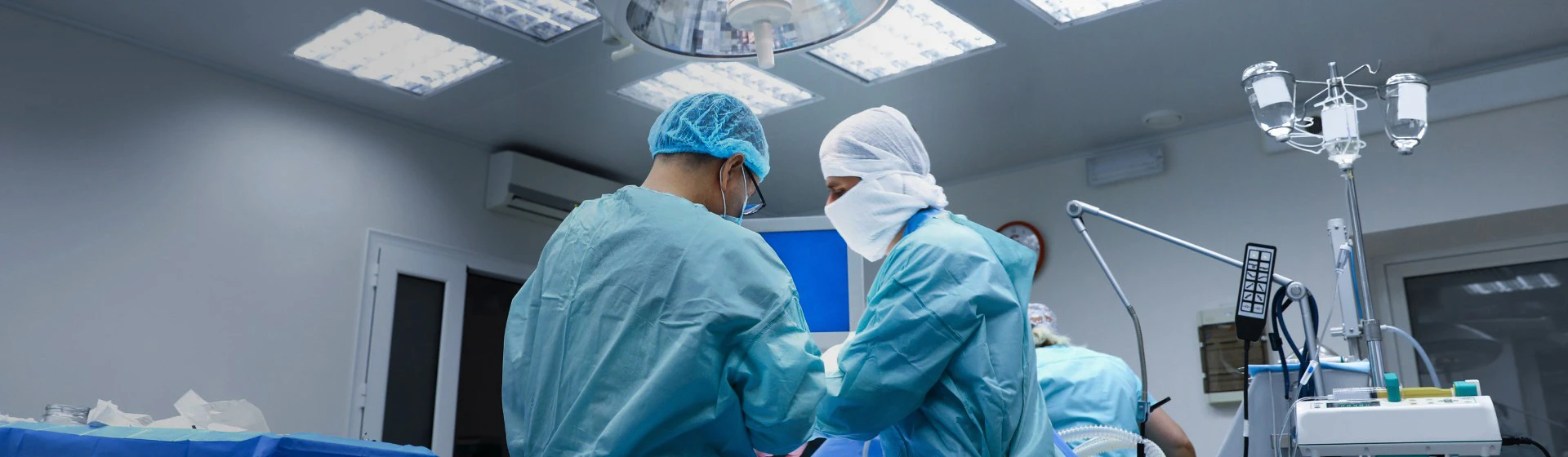
Surgery removal of the gallbladder
In Oxford Medical the surgical treatment of acute and chronic cholecystitis is performed in a high-tech surgical in-patient department equipped with modern expert-class devices for accurate diagnostic and operations of high complexity level.
Surgeons of Oxford Medical are top-category doctors with 20-30 years of expertise. They perform innovative minimally invasive surgery, as well as open access laparotomy.
For cholecystitis treatment, laparoscopic cholecystectomy is most often recommended. It allows to remove gallbladder and carry out other medical procedures with the help of only 3 small punctions in the abdomen. The rehabilitation after such surgery is easier and faster than after laparotomy.
Oxford Medical has all the necessary conditions for effective treatment and minimization of complication risk, which cannot be completely excluded even with careful preparation. The clinic has intensive care unit with intensive therapy wards equipped with medical ventilators and other devices to control and maintain the vital body functions.
After the surgery, patients are moved to a comfortable single or double hotel-type room, where they stay under permanent observation of the medical staff till the moment of their discharge.
What Is Cholecystitis and What Symptoms Does It Cause?
Cholecystitis is an inflammatory disease of the gallbladder, which is accompanied by impaired outflow of bile produced in it. It may be caused by gallstone disease, biliary dyskinesia, pancreatitis, and the flow of pancreatic enzymes into the gallbladder, helminth infestation, infections, unbalanced diet, hypodynamia, metabolic disorders etc.
Acute cholecystitis is characterized
by a sudden increase in following symptoms:


Nausea and vomiting
Bitter taste in the mouth
Increase in body temperature

Without timely treatment or in the presence of additional risk factors, the disease can become chronic. Alternating periods of remission and exacerbation are typical for it.
Most common symptoms
of chronic cholecystitis are:
Nagging pain in the right side
Discomfort after meal
Nausea attacks
Flatulence
Indications for Surgical Treatment of Cholecystitis
Cholecystitis treatment method depends on the form and stage of the disease. In case of non-calculous (without formation of stones in the gall bladder or its ducts) or catarrhal cholecystitis (accompanied by swelling of organ tissues and narrowing of ducts), pharmacological treatment is prescribed.
Surgical treatment may be needed in the following cases:
-
phlegmonous cholecystitis – accompanied by formation of purulent exudate;
-
gangrenous cholecystitis – accompanied by the tissue necrosis of the gallbladder;
-
destructive cholecystitis – perforation of the organ walls, formation of fistulas and ulcers;
-
gallbladder ruptures;
-
gallstone disease;
-
obstruction of the bile ducts by concretions;
-
cholangitis – bile duct inflammation;
-
spread of infection to adjacent organs, peritonitis etc.
Acute cholecystitis with complications requires hospitalization of the patient and emergency operation. In case of chronic inflammation, a planned surgical intervention is performed.
Preparation for Cholecystitis Operation
Before the operation, the patient is prescribed a comprehensive examination, which may include:
-
abdominal ultrasound;
-
computed tomography;
-
cholecystocholangiography – gallbladder and duct X-ray with contrast;
-
fibrogastroduodenoscopy (FGDS) – endoscopic examination of the esophagus and stomach;
-
laboratory tests;
-
fluorography;
-
electrocardiography (ECG) and other examinations according to the indications.
Types of Cholecystitis Operations
Oxford Medical has new equipment that allows to perform innovative minimally invasive operations and employs qualified surgeons with years of expertise.
Patients with acute and chronic cholecystitis usually undergo laparoscopic cholecystectomy – the removal of the gallbladder through several punctures in the abdomen less than 1 cm in diameter each. This is the most effective and safe procedure, after which most patients recover quickly.
The advantages of laparoscopic cholecystectomy:
-
minimal damage to healthy tissues;
-
low risk of postoperative hernia and other complications;
-
almost complete absence of pain syndrome after surgery;
-
short rehabilitation period;
-
the possibility of discharge from the hospital 1-2 days after surgery and quick recovery.
In some cases, instead of laparoscopic cholecystectomy other types of operations are performed, such as:
-
laparotomy or open access operation – involves an abdominal wall incision (indications for this type of surgery are gallbladder perforation, peritonitis and other complications);
-
mini-cholecystectomy – to access a gallbladder the incision 4 to 8 cm in length is made in the right iliac area (combines advantages of the laparoscopic method and open surgery);
-
cholecystectomy – surgery to remove gall bladder stones and installation of a stent to expand the bile ducts (can be performed using laparoscopic or laparotomic method but is only prescribed if there are contraindications to gallbladder removal or high risk of complications).
Features of the Postoperative Period
After surgery, patients are transferred to comfortable single or double rooms, where they remain under round-the-clock medical supervision. Bed rest is required during the first 4-6 hours, after that the doctor performs the examination and allows the patient to sit or get up. The first meal is recommended the next morning.
Most patients may leave the hospital after 24 to 48 hours, but at home they should take the medication prescribed by the doctor, follow a diet and other recommendations.
In the absence of comorbidities, full recovery usually occurs after 6 months. Patients return to their usual lifestyle without strict dietary restrictions other than recommendation to follow the principles of healthy eating.
The surgical department of Oxford Medical has the latest expert-class medical equipment. Thanks to this, as well as the team of experienced specialists, the clinic has all conditions for performing minimally invasive and open operations of any complexity.
To make an appointment with a doctor, call our contact center or leave a request on the website.
Surgical ward
General Surgery
Surgery removal of the gallbladder
Show more 
Our services
Consultations

Consultation with a surgeon
1100.00 ₴
Add Added 
General surgery services
Ultrasound-guided puncture of cystic formation of III complexity category
5389.00 ₴
Sign up by the call center
Operation of the II category of complexity performed by a doctor of medical sciences
59889.00 ₴
Sign up by the call center
Operation of the III category of complexity
59889.00 ₴
Sign up by the call center
Operation of the III category of complexity performed by a doctor of medical sciences
69889.00 ₴
Sign up by the call center
Hartmann's operation
46889.00 ₴
Sign up by the call center

Advantages of Surgical Treatment of Cholecystitis in Oxford Medical

Intensive care ward equipped with medical ventilators and other devices that support vital body functions
High-tech equipment of operational units
High level of professionalism of our doctors
Comfortable conditions for staying in the in-patient department
Loyalty program for regular clients
Show more 
Our doctors

 4.9
4.9  47+
47+ 
Surgeon of the highest category, Doctor of Medical Sciences
 47+ Years of experience
 4.58 42+
 Surgeon-oncologist of the highest category, Candidate of Medical Sciences
42+ Years of experience Consultation 1989
 Kyiv, st. Bereznyakivska, 30b
  4.92 42+
 Surgeon of the Highest Category, Candidate of Medical Sciences
42+ Years of experience  4.84 40+
 Reviews
Альона 29.01.2026
Щиро дякую хірургу Фроловій Єлені Юріївні за суперово виконану операцію. Втручання було невелике, але для мене дуже важливе — і все пройшло швидко, акуратно та без ускладнень. Лікар уважна, спокіна, усе пояснив перед процедурою, так як я боялась- вона мене підтримувала та відволікала)) Загоєння проходило добре, шви зняла безболісно, результатом повністю задоволена. Дуже приємно мати справу з таким відповідальним і людяним спеціалістом. Рекомендую від щирого серця.

Яніна 18.01.2026
Хочу висловити подяку Мудрієвському Богдану Любомировичу. Моєму батьку було зроблено ургентно (15.12.2025) операцію по видаленню жовчного міхура. Поки я їхала в лікарню лікар і медперсонал підготували тата до операції. Велика подяка Богдану Любомировичу за Професіоналізм, за чітке пояснення і відповіді на всі питання. Цей лікар не тільки Професіонал своєї справи з великої літери, це ще і чудова людина!!! Бажаємо Богдану Любомировичу міцного здоров'я і завжди залишатися такою ж чудовою та розуміючою людиною
Current information

23 December 2025
Laparoscopy in gynecology: how modern methods are changing approaches to operations
27 July 2025
Removal of the Thyroid Gland: Consequences, Rehabilitation, and Life After Surgery
23 July 2025
Everything About Joint Replacement: Price, When, For Whom, and How Arthroplasty Can Be Performed
18 March 2025
What is uterine suturing and when is it performed?
Sign up
 in the clinic
  online

 Hello!
Let's take care
about your health:
Sign up via call center 
