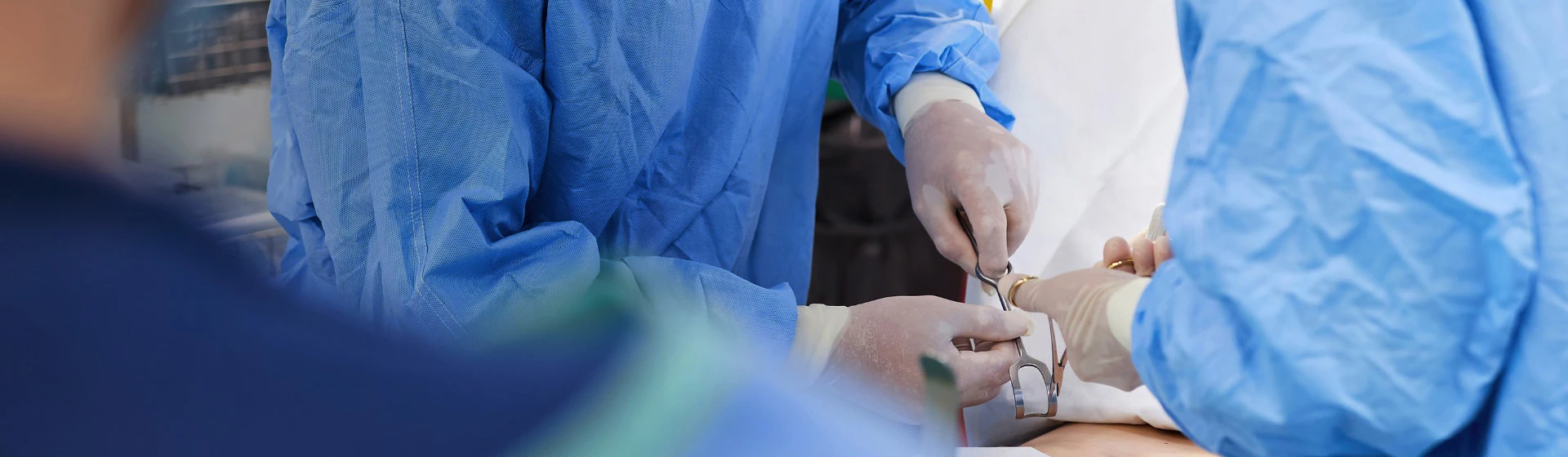
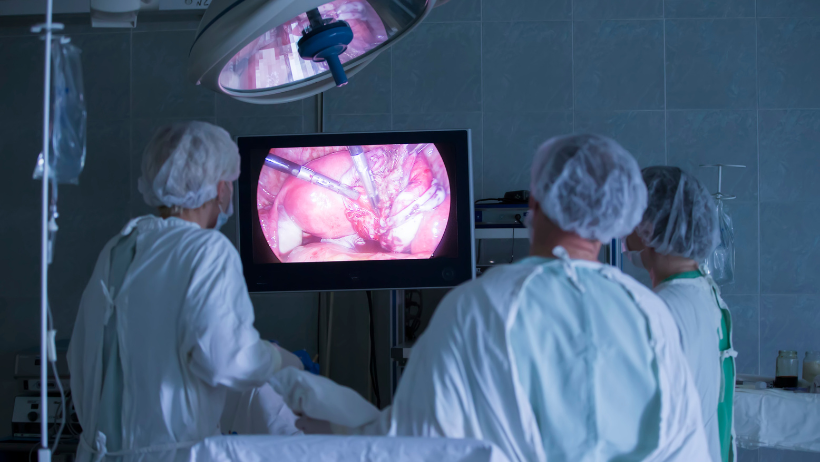
At “Oxford Medical”, surgeries are mainly performed using modern minimally invasive techniques. They are associated with less damage to healthy tissues, a lower risk of complications, and a shorter and easier rehabilitation period. At the same time, which operation will be optimal for the patient – laparoscopic or open – is determined individually by the surgeons in each case.
Types of surgeries for intestinal obstruction:
-
Laparoscopy – a minimally invasive surgery. To provide access to the intestine, 3–4 punctures about 1 cm in size are made in the abdominal wall. Through one of them, carbon dioxide is pumped in, which lifts the peritoneum and enlarges the operating field. Through the others, a laparoscope equipped with a miniature video camera (the image is transmitted to a computer and magnified 30–40 times) and surgical instruments are inserted. Using them, the surgeon carefully performs all the necessary manipulations. After completion, the instruments are removed, the gas is released, and the punctures are sutured and covered with sterile dressings.
-
Laparotomy – an open-access surgery. An incision 15–20 cm long is made on the peritoneum. Through it, the surgeon gains wide access to the internal organs, can carefully inspect and palpate them to identify the exact damaged area. After that, with the help of a scalpel, the surgeon performs resection and other necessary manipulations, sutures the wound, and applies stitches.
Depending on the cause of intestinal obstruction, during surgery the surgeon performs:
In some cases, with extensive intestinal damage, after colectomy, it may be necessary to create a stoma – a part of the intestine is fixed on the inner side of the peritoneum, and the end is brought outside to divert fecal masses into a colostomy bag. This solution may be temporary or permanent.
The complexity of the surgery depends on the cause of the disease and the presence of complications. The earlier the patient seeks medical help, the better the prognosis.