


A cyst is a benign, hollow neoplasm filled with a liquid or semi-liquid substance. It can develop in various parts of the organ and be congenital or acquired (appear in adulthood).
Sign up via call center 
 Adults Adults Adults Adults Adults Adults Adults Adults Adults
  Children Children Children Children
Department
Adults Outpatient department
Adults Outpatient department
Inpatient department
Adults Inpatient department
Aesthetic medicine
Adults Aesthetic medicine
Dentistry
Adults Dentistry
Plastic surgery
Adults Plastic surgery
Diagnostics
Adults Diagnostics
Analyzes
Adults Analyzes
Outbound services
Adults Outbound services
Children Outpatient department
Children Outpatient department
Dentistry
Children Dentistry
Diagnostics
Children Diagnostics

Kyiv


 Hotline:
 Request a call:


Department
Adults Outpatient department
Adults Outpatient department
Inpatient department
Adults Inpatient department
Aesthetic medicine
Adults Aesthetic medicine
Dentistry
Adults Dentistry
Plastic surgery
Adults Plastic surgery
Diagnostics
Adults Diagnostics
Analyzes
Adults Analyzes
Outbound services
Adults Outbound services
Children Outpatient department
Children Outpatient department
Dentistry
Children Dentistry
Diagnostics
Children Diagnostics
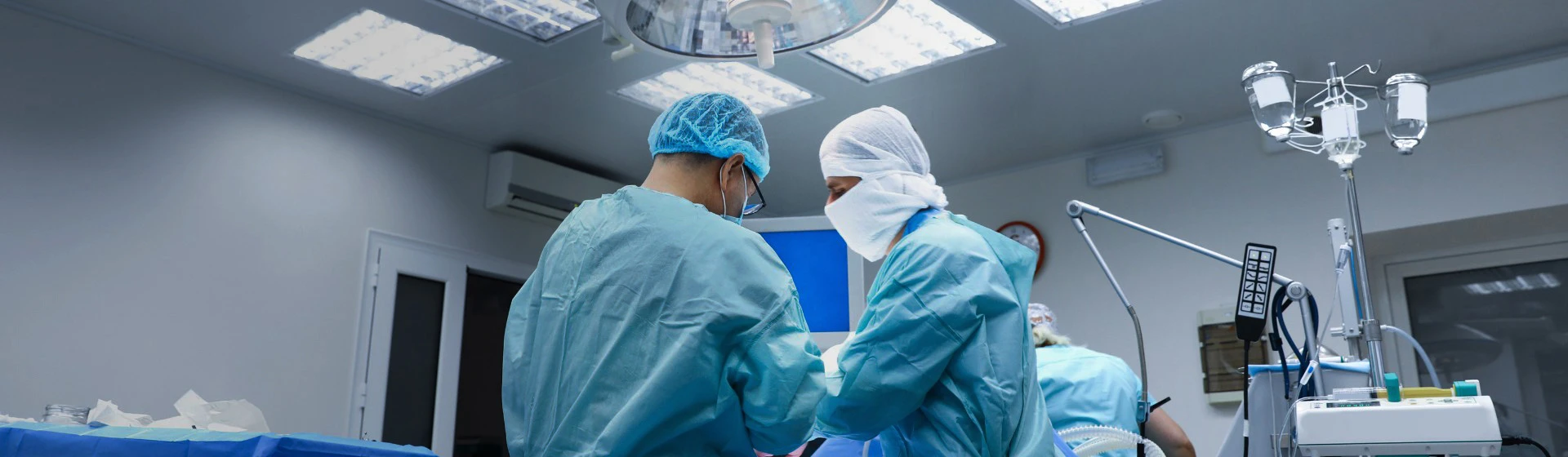
Surgery treatment of liver cysts
Please note! Hospitalization and surgery at the «Oxford Medical» clinic requires mandatory PCR testing for coronavirus.
Cysts are hollow formations filled with fluid. By origin cysts are congenital and acquired. Congenital cysts are associated with the peculiarities of intrauterine organ formation. At the moment it has not been clearly identified which factors cause the formation of non-parasitic liver cysts. Infections or injuries can contribute to their development.
Some types of cysts are parasitic, formed as a result of invasion of microorganisms (for example, echinococcal and amoebic cysts). The structure of a parasitic cyst is somewhat different from the structure of a simple one, but sometimes in the early stages of formation, it is problematic to distinguish cysts only by structural features.
False cysts are formed as a result of necrosis of other neoplasms, injuries, parasitic liver damage, etc.
Signs of a liver cyst
Symptoms of liver cyst depend on its size and location in the organ. Increasing, the cyst disrupts blood circulation to the liver and adjacent organs, and can eventually lead to liver dysfunction. Symptoms of this pathology may include:
- pain, feeling of pressure in the abdomen;
- nausea, vomiting;
- yellow eye sclera, skin or mucous membranes;
- rapid loss of appetite and weight;
- general weakness;
- urine becomes dark and fecal masses become light.
Pedunculated cysts may twist or tear. As a result bleeding, which causes acute attacks of abdominal pain, may occur. Parasitic cysts can be accompanied by fever, weakness, and other signs of the inflammatory process.
Complications caused by a liver cyst
Cysts can rupture and the substrate they contain gets into the abdominal cavity. This process is accompanied by significant bleeding, which causes acute attacks of pain, up to loss of consciousness. If the cyst is complicated by an inflammatory process, suppuration and liver abscess may occur.
If the cyst squeezes the adjacent bile ducts, the symptoms of jaundice develop. Liver cysts can contribute to the development of cirrhosis and other liver diseases. Cases of degeneration of cysts into malignant tumors are also recorded.
Diagnosis and treatment of liver cysts
The size, location, and number of liver cysts are key parameters for choosing a treatment method. Detected single small liver cysts that do not have any symptoms and do not increase in size are subject to monitoring in dynamics, except the cases when they block the liver pathways. If the cyst quickly increases in size, or it interferes with the normal functioning of the liver or other adjacent organs, its removal is indicated.
The treatment strategy also depends on the number of detected formations. Multiple formations of cysts in the liver – polycystic disease, requires immediate treatment.
Modern laparoscopic technique allows with the help of a minimally invasive way to get a high-quality image of the liver, to establish the presence of pathologies, to perform a targeted biopsy. This makes it possible to detect neoplasms and immediately determine their nature (whether they are malignant) and conduct surgical treatment.
To make an appointment with a surgeon at the «Oxford Medical» clinic call our contact-center or fill in the form on the website.
Liver cyst removal: price at the Oxford Medical clinic
The cost of surgical treatment of a liver cyst depends on:
- the complexity of the operation and the volume of liver tissue removed;
- the method of surgical intervention - laparoscopic or open access.
You can find out the prices of liver surgeries at «Oxford Medical» here.
Only a doctor can give you a more accurate estimate of the price of liver cyst treatment, taking into account the exact diagnosis and other individual characteristics of the patient. Sign up for a consultation at a time convenient for you.
Surgical ward
General Surgery
Surgical treatment of liver cysts
Show more 
Our services
Consultations

Consultation with a surgeon
1100.00 ₴
Add Added 
General surgery services
Ultrasound-guided puncture of cystic formation of III complexity category
5389.00 ₴
Sign up by the call center
Operation of the II category of complexity performed by a doctor of medical sciences
59889.00 ₴
Sign up by the call center
Operation of the III category of complexity
59889.00 ₴
Sign up by the call center
Operation of the III category of complexity performed by a doctor of medical sciences
69889.00 ₴
Sign up by the call center
Hartmann's operation
46889.00 ₴
Sign up by the call center
Answers to popular questions about surgical treatment of liver cysts
Liver cyst: what is it?
How to get rid of a liver cyst?
Single small liver cysts that do not cause painful symptoms require follow-up – the patient is recommended to periodically visit a doctor and undergo ultrasound. Large cyst size, impact on liver function or adjacent organs are indications for surgery.
How dangerous is a liver cyst?
As the size of a liver cyst increases, it can rupture, which can lead to internal bleeding and peritonitis. The cyst can also cause complications such as liver abscess, jaundice, cirrhosis, and cancer.

Advantages of the General Surgery Department at Oxford Medical in Kyiv

Modern equipment. The latest technology ensures accurate diagnostics and safe surgeries.
Experienced surgeons. Doctors with many years of practice use advanced treatment methods.
Minimally invasive techniques. Laparoscopic surgery reduces trauma and speeds up recovery.
Comfortable conditions. Rehabilitation takes place in modern wards under staff supervision.
Loyalty program. Special offers make surgical treatment more affordable for patients.
Comprehensive approach. Patients receive full care: diagnostics, surgery, and rehabilitation.
Show more 
Our doctors

 4.9
4.9  47+
47+ 
Surgeon of the highest category, Doctor of Medical Sciences
 47+ Years of experience
 4.58 42+
 Surgeon-oncologist of the highest category, Candidate of Medical Sciences
42+ Years of experience Consultation 1989
 Kyiv, st. Bereznyakivska, 30b
  4.84 40+
  4.95 43+
 Surgeon of the highest category
Candidate of Medical Sciences
Candidate of Medical Sciences
43+ Years of experience Consultation 1100
Kyiv, st. Bereznyakivska, 30b 
Reviews
Альона 29.01.2026
Щиро дякую хірургу Фроловій Єлені Юріївні за суперово виконану операцію. Втручання було невелике, але для мене дуже важливе — і все пройшло швидко, акуратно та без ускладнень. Лікар уважна, спокіна, усе пояснив перед процедурою, так як я боялась- вона мене підтримувала та відволікала)) Загоєння проходило добре, шви зняла безболісно, результатом повністю задоволена. Дуже приємно мати справу з таким відповідальним і людяним спеціалістом. Рекомендую від щирого серця.

Яніна 18.01.2026
Хочу висловити подяку Мудрієвському Богдану Любомировичу. Моєму батьку було зроблено ургентно (15.12.2025) операцію по видаленню жовчного міхура. Поки я їхала в лікарню лікар і медперсонал підготували тата до операції. Велика подяка Богдану Любомировичу за Професіоналізм, за чітке пояснення і відповіді на всі питання. Цей лікар не тільки Професіонал своєї справи з великої літери, це ще і чудова людина!!! Бажаємо Богдану Любомировичу міцного здоров'я і завжди залишатися такою ж чудовою та розуміючою людиною
Current information

23 December 2025
Laparoscopy in gynecology: how modern methods are changing approaches to operations
27 July 2025
Removal of the Thyroid Gland: Consequences, Rehabilitation, and Life After Surgery
23 July 2025
Everything About Joint Replacement: Price, When, For Whom, and How Arthroplasty Can Be Performed
18 March 2025
What is uterine suturing and when is it performed?
Sign up
 in the clinic
  online

 Hello!
Let's take care
about your health:
Sign up via call center 
