


hereditary predisposition
General anesthesia is used for anesthesia.

 Adults Adults Adults Adults Adults Adults Adults Adults Adults
  Children Children Children Children


 Hotline:
 Adults Adults Adults Adults Adults Adults Adults Adults Adults Children Children Children Children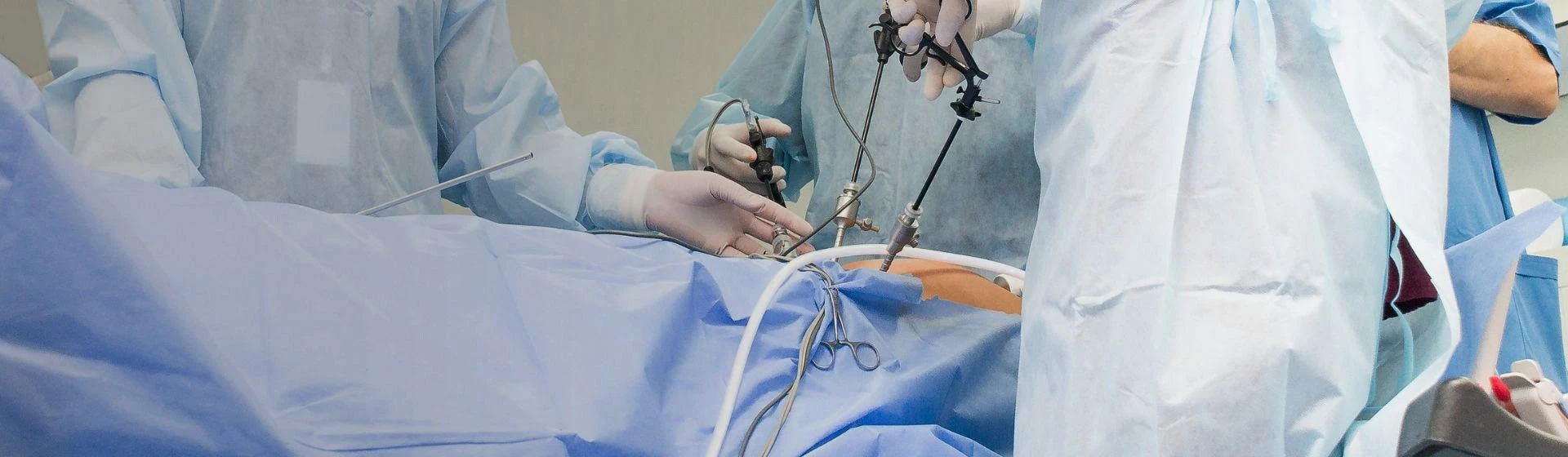
Laparoscopic kidney resection - is a minimally invasive operation, during which small tumors and affected tissues are removed. Its main advantage - the ability to preserve the organ and its functionality.
The operation is performed using modern high-tech equipment - a laparoscope and trocars, special surgical instruments. They are inserted into the retroperitoneal space through several punctures with a diameter of about 1 cm. This minimizes damage to healthy tissues, reduces blood loss and the risk of complications, and the rehabilitation process is easier and faster than after open surgery.
At «Oxford Medical» laparoscopic kidney resection is performed by oncological surgeons and urological surgeons with more than 20 years of experience. They use the latest expert-grade equipment, which allows them to diagnose tumors as small as 1 mm and perform minimally invasive surgeries with maximum precision. Thanks to this, every patient can be sure of receiving high-quality medical care at all stages, from diagnosis to rehabilitation.

In modern clinics, most operations on internal organs are performed laparoscopically, as it has the following advantages:
minimally invasive – instead of incisions, several small punctures are made;
low trauma – less healthy tissue is damaged;
reduced blood loss – also due to the absence of large incisions;
lower risk of complications during and after surgery;
shorter and easier rehabilitation period;
discharge from the hospital in 1-3 days;
formation of cosmetic scars.
Laparoscopic kidney resection – the most gentle surgical treatment option.
Indications for surgery are:
stage 1 kidney cancer;
cysts and benign neoplasms up to 4 cm in diameter;
urolithiasis;
renal infarction;
damage to organ tissues due to trauma or disease;
damage to both kidneys or the patient having only one kidney.
In the case of large neoplasms and damage to the entire kidney, resection is impossible. In such cases, radical surgery is prescribed - nephrectomy, or removal of the kidney.
Before the operation, the patient undergoes a comprehensive examination to confirm the presence of indications for kidney resection and the absence of contraindications.
It may include:
Ultrasound of the kidneys;
Computed tomography (CT);
Electrocardiography (ECG);
Blood tests for tumor markers;
Preoperative blood and urine tests.
The patient may also need a consultation with an anesthesiologist.
In most cases, specialists at «Oxford Medical» work according to the Fast Track Surgery protocol, which provides for simplified preparation for surgery and facilitation of the rehabilitation period.
In particular, it provides for:
reduction of preoperative manipulations (no strict diet required);
rapid recovery from anesthesia;
reduction of postoperative pain syndrome due to additional anesthesia of the puncture sites;
reduction of the risk of postoperative complications;
early recovery after surgery;
minimal dietary restrictions after surgery;
discharge from the hospital on the day of surgery or for 2-3 days.
Detailed recommendations for preparing for surgery are given to the patient by the surgeon. A common rule is to refrain from eating for 8 hours and drinking water for 3-4 hours before surgery.
On average, such an operation lasts from 1.5 to 3 hours. In complex cases, surgeons may need more time.
The essence of the operation is to remove only the affected area of the kidney with maximum preservation of healthy tissues. In the case of cancer, the tumor, adjacent parenchyma and, if necessary, nearby lymph nodes are removed.
The main stages of laparoscopic kidney resection:
General anesthesia is used for anesthesia.
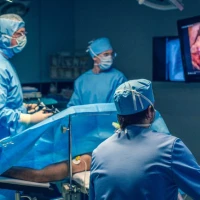
The surgeon makes 3 or 4 punctures with a diameter of about 1 cm. Through one of them he inserts a laparoscope equipped with a miniature video camera, the image from which is transmitted to the monitor screen and magnified many times. Through the others he inserts surgical instruments, using which he performs the necessary manipulations.
The surgeon removes the tumor and/or all damaged kidney tissue, then performs a revision and applies internal sutures with self-absorbable sutures.
Removal of instruments and suturing of puncture sites.
After the operation, the patient is transferred to the intensive care unit. There, the pulse and other vital signs are monitored using special equipment. After a few hours, if the patient's condition is stable, he is transferred to a hospital ward.
«Oxford Medical» is equipped with single and double hotel-type wards with a private bathroom. They are equipped with technological beds with electronic control, which ensures maximum comfort for patients. Special buttons are installed for an emergency call to a nurse. Also, patients can order three meals a day if they wish.
After the operation, the patient is recommended to adhere to bed rest. The first time you can sit down and get out of bed only after a doctor's examination. Most often, getting up is allowed after a few hours, less often the next day.
The duration of hospitalization depends on the complexity of the operation and the patient's well-being. On average, it is from 1 to 3 days.
For successful recovery, patients are recommended to:
take medications prescribed by the doctor;
follow a diet (exclude salty, smoked, spicy foods and foods that cause constipation);
drink enough fluids;
avoid alcohol;
do not lift weights or perform heavy physical exertion until full recovery;
come for examination and postoperative examination at the time prescribed by the doctor.
Special attention should be paid to the diet during rehabilitation. The patient is usually allowed to have their first meal the next day. It may consist of a small portion of broth, unsweetened yogurt or cheese. After the bowel movement is restored, vegetable soups, porridge, boiled fish and meat, and natural juices are added. This diet should be followed for about 2 weeks. After that, if the test results are satisfactory, the doctor may allow the diet to be expanded. But in no case should it contain smoked, spicy, salty foods, or alcoholic beverages.

Resection of the kidney is prescribed when conservative treatment methods are inappropriate or ineffective. This operation is the optimal solution for cancer diagnosed at an early stage, benign tumors and cysts. It is minimally invasive and allows you to save the kidney, which increases the likelihood of a full recovery.
If the operation is refused, there is a risk of the tumor growing, which will require the removal of the kidney. With cancer, malignant cells can spread and metastasize throughout the body.
These risks are much higher than the possible complications of laparoscopic kidney resection. It is performed using high-tech equipment and is accompanied by minimal damage to healthy tissues, which significantly reduces the risk of blood loss, infection and other complications.
The main indications for kidney resection are benign and malignant neoplasms,
cysts and urolithiasis.
It is believed that the risk factors for these pathologies are:


hereditary predisposition
chronic diseases of the genitourinary system
long-term hemodialysis
hypertension
adiposity
age over 50-60 years
smoking

«Oxford Medical» operates a high-tech department of surgery and oncology, equipped with new expert-class equipment. It allows for thorough diagnostics and detection of neoplasms and other pathological changes from 1 mm in size, as well as performing operations of any complexity.
To provide patients with high-quality medical care, the clinic has assembled a team of experienced, highly qualified surgeons of various specialties, including candidates and doctors of medical sciences.
The cost of laparoscopic kidney surgery depends on its complexity, in particular the size and location of the tumor. You can find out the prices at «Oxford Medical Kyiv» here.
The surgeon will provide you with more detailed information about the cost of treatment during a preliminary consultation. Make an appointment at a convenient time.


The operation is performed by an oncologist, urologist surgeon, and a candidate of medical sciences.
Using new, expert-grade equipment
Application of the Fast Track Surgery accelerated training and rehabilitation protocol
Availability of intensive care units equipped with equipment to monitor and support vital body functions
Patient support at all stages kidney cancer treatment from diagnosis to rehabilitation
Single and double hotel-style rooms


 4.88
4.88  27+
27+  27+ Years of experience
  Kyiv, st. Bereznyakivska, 30b




 in the clinic
  online
  Hello!


