


severe pain in the lower abdomen that does not go away after taking painkillers
Local anesthesia or general anesthesia is used.

 Adults Adults Adults Adults Adults Adults Adults Adults Adults
  Children Children Children Children


 Hotline:
 Adults Adults Adults Adults Adults Adults Adults Adults Adults Children Children Children Children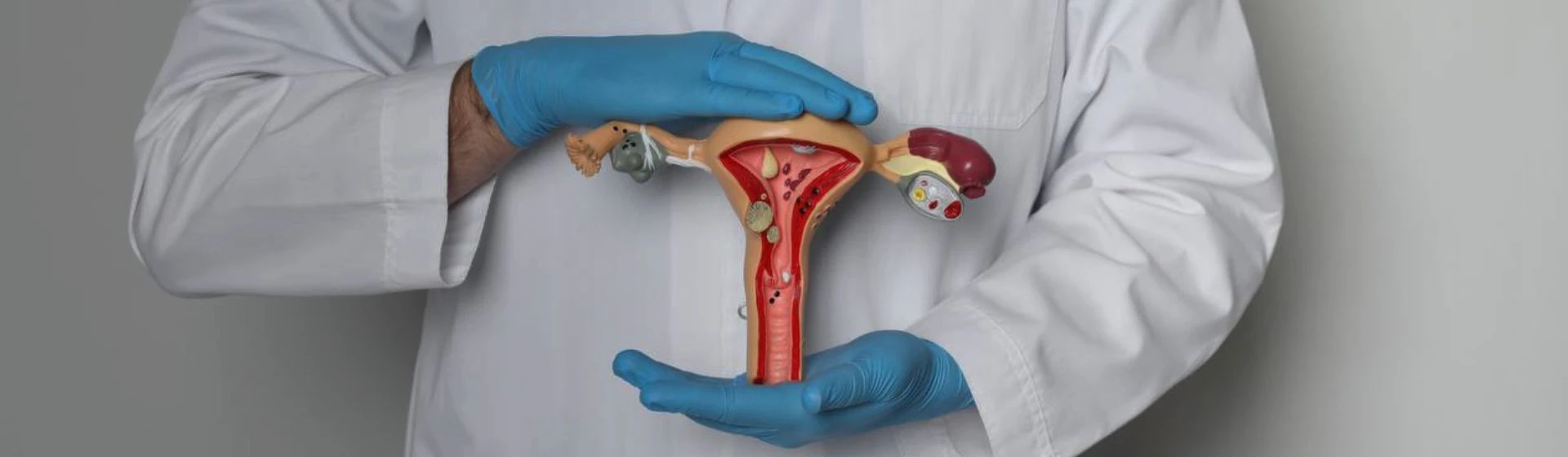
A loyalty program is available for surgical interventions in the hospital, making treatment even more affordable.
Uterine curettage, or curettage, is a surgical procedure that is prescribed for diagnostic or therapeutic purposes. The doctor inserts a special instrument called a curette through the cervix into its cavity and carefully scrapes off the upper layer of the mucous membrane. The procedure is performed under general or local anesthesia.
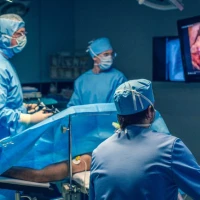
At Oxford Medical, curettage is performed by experienced gynecologists under hysteroscopy control. An endoscope equipped with a miniature video camera is inserted into the uterine cavity and transmits the image to a monitor screen.
The advantages of curettage under hysteroscopy control are:
Curettage involves the removal of only the functional layer of the endometrium. It undergoes cyclical changes: it grows in the first phases of the menstrual cycle and, if conception does not occur, is rejected and excreted from the body. Due to this property, after curettage and removal of damaged areas of the endometrium, the functional layer is quickly restored.
Diagnostic curettage of the uterine cavity is prescribed to take a tissue sample for histological analysis. It allows you to assess their morphological structure and detect changes characteristic of various diseases. In particular, the procedure can be prescribed in the case of:
Often the procedure is performed simultaneously with a therapeutic and diagnostic purpose, that is, in addition to taking a tissue sample for analysis, endometrial curettage is performed to alleviate the patient's condition and eliminate the pathological focus.
As a therapeutic procedure, curettage is performed to:
Curettage is prescribed after a gynecological examination, tests and ultrasound, when it is necessary to clarify the diagnosis or perform a procedure for therapeutic purposes.
Before curettage, the following are usually performed:
On the day of the procedure, it is necessary to carry out hygiene procedures and shave the hair in the groin area.
If general anesthesia is planned, the operation is performed on an empty stomach, and a few days later it is recommended to follow a diet to cleanse the intestines and prevent gas formation.
At Oxford Medical, curettage of the uterine cavity is performed under the control of hysteroscopy. The hysteroscope is a thin flexible endoscope equipped with a miniature video camera with a built-in LED. The image from the camera is transmitted to the monitor screen and magnified. The ability to visually control the process allows the doctor to perform the procedure with maximum accuracy.
The main stages of the operation:
Local anesthesia or general anesthesia is used.
The doctor carefully dilates the cervix using special instruments, then inserts a hysteroscope into the uterine cavity. A camera at the end of the hysteroscope transmits images to a screen, allowing the doctor to see the inside of the uterus.
The gynecologist examines the uterine cavity, assessing the condition of the endometrium, detecting polyps, fibroids, and other pathological changes.
If necessary, a tissue sample is taken for further histological examination.
Under the visual control of a hysteroscope, the doctor performs scraping (curettage) of the uterine cavity using a curette or other special instrument.
After the curettage is complete, the doctor will examine the uterine cavity again to make sure all abnormal tissue has been removed. Then, the hysteroscope and other instruments will be carefully removed.
The recovery period after curettage usually lasts from several days to several weeks. At this time, it is important to follow the doctor's recommendations and carefully monitor your condition.
In the first days after the procedure, you may experience:
Until complete recovery, the patient is recommended to avoid physical exertion and heavy lifting, take antibiotics and painkillers prescribed by the doctor, carefully monitor intimate hygiene, but do not use tampons.
For most women, the recovery period after curettage is
quite easy. After the procedure, it is important to follow all
your doctor's recommendations, take the prescribed medications, and attend check-ups on time. This will reduce the risk of complications,
such as infection or the development of adenomioza.
If you experience symptoms that may indicate the development of complications,
you should consult a doctor:


severe pain in the lower abdomen that does not go away after taking painkillers
heavy bleeding, requiring you to change sanitary pads more often than every 1-2 hours
foul-smelling discharge, which may indicate an infection
increase in body temperature above 38°C
absence of menstruation 6 weeks after the procedure

«Oxford Medical» – is a modern medical center equipped with the latest equipment. It allows for accurate diagnostics and surgical operations of any complexity.
Cure treatment for endometrial hyperplasia and other pathologies is performed by experienced gynecological surgeons. To ensure maximum accuracy and safety of manipulations, the procedure is performed under the control of hysteroscopy.
The cost of curettage of the endometrium may vary depending on the purpose of the procedure - diagnostic or therapeutic. You can find out the prices here. A gynecologist will advise you more precisely on this issue during a preliminary consultation. Make an appointment at the «Oxford Medical» clinic in Kyiv at a time convenient for you.


It is recommended to avoid sexual intercourse and intense physical activity for 2-4 weeks. You should also avoid using tampons, douching, taking hot baths, and visiting saunas.
The menstrual cycle usually returns 4-6 weeks after the procedure. This period depends on the individual characteristics of the body. If menstruation has not started after 6 weeks, you should consult a gynecologist.


Use of high-tech equipment that increases the accuracy and safety of the procedure
The operation is performed by gynecological surgeons with many years of experience
Possibility of simultaneous polypectomy, myoma removal, etc.
Comfortable conditions in the hospital with single and double hotel-style wards

 4.82
4.82  29+
29+  29+ Years of experience
  Kyiv, st. Bereznyakivska, 30b


 in the clinic
  online
  Hello!


