

 Adults Adults Adults Adults Adults Adults Adults Adults Adults
  Children Children Children Children


 Hotline:
 Adults Adults Adults Adults Adults Adults Adults Adults Adults Children Children Children Children


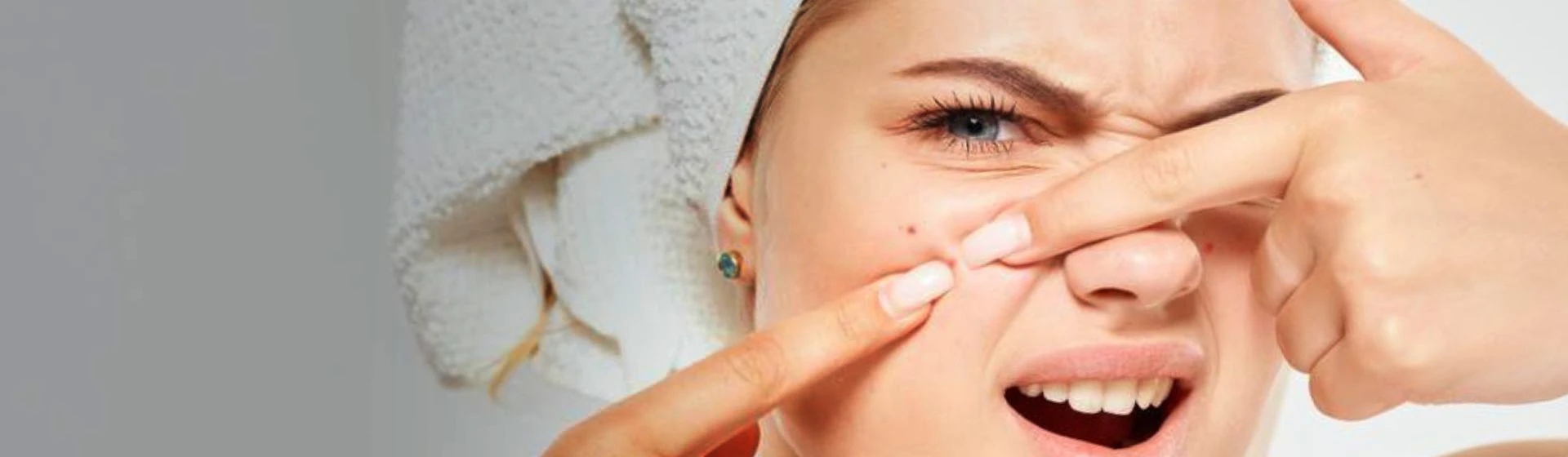
Acne treatment
Acne treatment in Kyiv
Acne vulgaris is an inflammation of the sebaceous glands that typically occurs in young people during puberty. Acne vulgaris manifests as a disorder of keratinization in the sebaceous hair follicles and is accompanied by a perifollicular inflammatory reaction. Acne commonly affects boys and girls between the ages of 12 and 19.
Causes of acne
The main causes of acne development include:
-
improper diet, gastrointestinal diseases;
-
stress;
-
premenstrual flare-ups in girls and women;
-
endocrine disorders, age-related changes;
-
excessive sweating;
-
exposure to ultraviolet radiation;
-
genetic predisposition;
-
harmful habits: smoking, alcohol abuse.
People who frequently come into contact with dioxin, lubricating oils, and petroleum products are also at increased risk. Acne can also be triggered by the intake of various medications. A key role in the development of the condition is played by androgens, which, when interacting with the sebaceous glands, provoke the active secretion of sebum. An excess of sebum, in combination with fatty acids, provokes an inflammatory reaction in the sebaceous glands and hair follicles. As a result, the follicle walls become keratinized, and the follicle becomes clogged with sebum.
Symptoms of acne vulgaris
The main symptoms of acne include:
-
presence of comedones, papules, and pustules;
-
merging of comedones and papules into solid areas of lesions, often with fistulas, cysts, and scarring.
The disease may occur in several forms:
-
acne fulminans — presents with pustular-ulcerative lesions accompanied by fever;
-
acne conglobata — characterized by fistulous and abscessed lesions with scarring;
-
acne necroticans — papulonecrotic eruptions on the forehead;
-
acne neonatorum — eruptions observed on the cheeks of infants.
In some cases, acne vulgaris begins acutely:
-
the skin becomes covered with numerous acne lesions, abscessed nodules appear;
-
weakness and headaches occur;
-
elevated temperature is observed.
Acne treatment
Treatment of acne vulgaris generally depends on the form of the disease and the stage of its development. Anti-inflammatory and antibacterial medications, immunomodulators, vitamins, and biogenic stimulants may be prescribed. In each individual case, the treatment is selected personally.


Advantages of Oxford Medical Dermatology in Kyiv

Comprehensive treatment approach. We treat not only symptoms but also eliminate the root cause of the disease.
Modern equipment. We use advanced technologies for accurate diagnosis and effective treatment.
Individual therapy programs. Treatment plans are developed considering the specifics of the disease course.
Experienced dermatologists. Consultations are provided by specialists with extensive clinical experience and high qualifications.

Our doctors
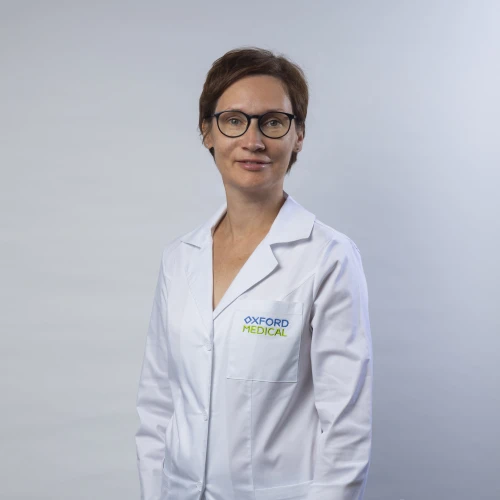
 4.91
4.91  23+
23+ 
 23+ Years of experience
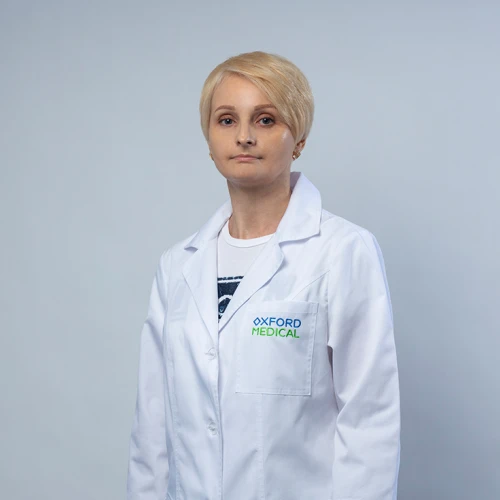 4.92 18+ 18+ Years of experience
  Kyiv, Mykhayla Hryshka St., 1
  4.96 25+ 25+ Years of experience Kyiv, Knyaziv Ostrozkyh St., 46/2 Kyiv, Oleksandra Olesia St., 2
 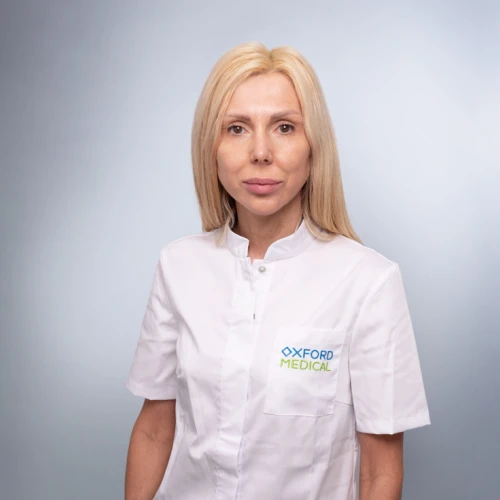 4.95 16+ 16+ Years of experience Kyiv, Hlybochytska St., 40x


 in the clinic
  online

 Hello!
Let's take care
about your health:

