

 Adults Adults Adults Adults Adults Adults Adults Adults Adults
  Children Children Children Children


 Hotline:
 Adults Adults Adults Adults Adults Adults Adults Adults Adults Children Children Children Children



Phototherapy
Phototherapy
Phototherapy (also known as “light therapy”) is an effective, evidence-based method used to treat skin conditions by applying ultraviolet (UV) radiation of a specific spectrum.
This approach is widely used in modern dermatology, particularly when conventional medication proves insufficiently effective or causes side effects. Depending on the diagnosis and clinical picture, the doctor may use different types of ultraviolet light — most commonly narrowband UVB (311 nm) or UVA therapy, sometimes combined with a photosensitizing agent (PUVA therapy).
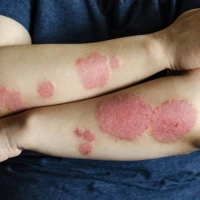
Phototherapy helps significantly improve skin condition with minimal impact on the body. The procedure itself is painless and well tolerated by most patients. For these reasons, it has become a key component of comprehensive treatment for conditions such as psoriasis, atopic dermatitis, vitiligo, eczema, and other chronic dermatoses.
Indications for phototherapy
- psoriasis;
- acne;
- vitiligo;
- atopic dermatitis (neurodermatitis, chronic eczema).
Advantages of phototherapy
- non-invasiveness;
- reduced drug burden;
- excellent tolerance;
- exposure to the entire surface of the skin.
These have made phototherapy one of the leading treatments. Phototherapy is widely used in dermatology, having become a significant complement to drug treatments.
Phototherapy is prescribed after examination by a specialist dermatologist, who determines the course of treatment, monitors its effectiveness and, if necessary, corrects it.


Advantages of Oxford Medical Dermatology in Kyiv

Comprehensive treatment approach. We treat not only symptoms but also eliminate the root cause of the disease.
Modern equipment. We use advanced technologies for accurate diagnosis and effective treatment.
Individual therapy programs. Treatment plans are developed considering the specifics of the disease course.
Experienced dermatologists. Consultations are provided by specialists with extensive clinical experience and high qualifications.

Our doctors
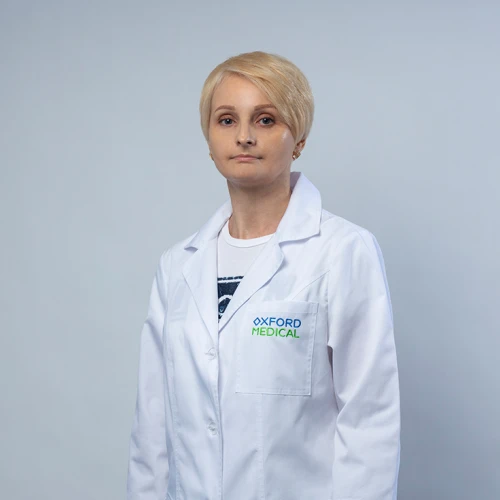
 4.92
4.92  18+
18+  18+ Years of experience
  Kyiv, Mykhayla Hryshka St., 1
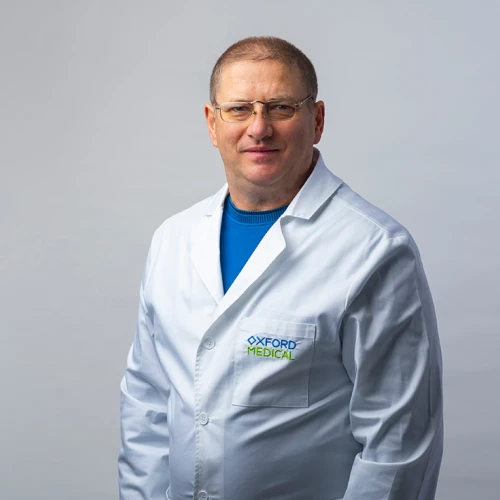 4.96 25+
  25+ Years of experience Kyiv, Knyaziv Ostrozkyh St., 46/2 Kyiv, Oleksandra Olesia St., 2
 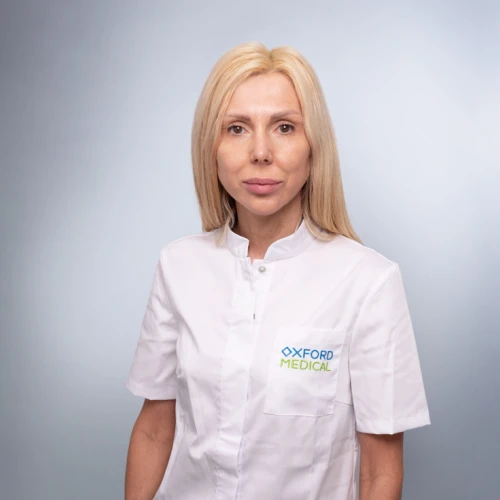 4.95 16+ 16+ Years of experience Kyiv, Hlybochytska St., 40x
  0 3+ 3+ Years of experience Kyiv, Obolonska Naberezhna, 1, building 2


 in the clinic
  online

 Hello!
Let's take care
about your health:

