

 Adults Adults Adults Adults Adults Adults Adults Adults Adults
  Children Children Children Children


 Hotline:
 Adults Adults Adults Adults Adults Adults Adults Adults Adults Children Children Children Children


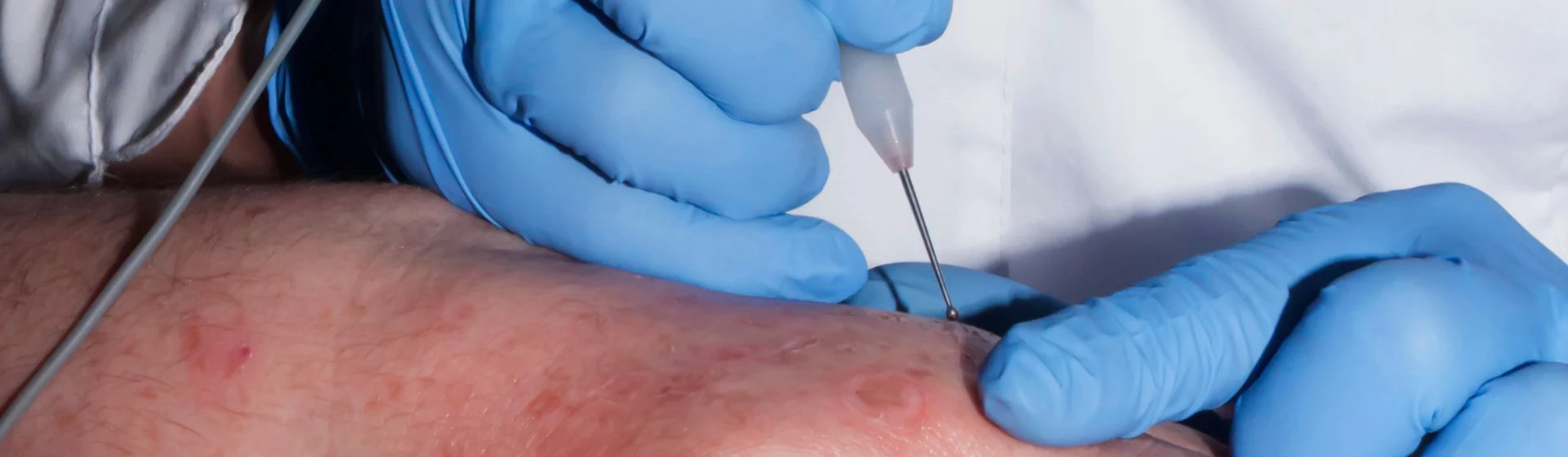
Benign skin tumor removal
Removal of benign skin neoplasms in Kyiv
The human skin is a natural "living barrier" whose function is to protect the body from external influences. Therefore, the skin is much more exposed to harmful factors than other tissues and organs.
In recent years, the number of patients with benign skin neoplasms has significantly increased, which is associated with the fashion for tanning.
Nature and types of benign skin neoplasms
Benign skin neoplasms are not dangerous to the body (excluding psychological and aesthetic discomfort), but under the influence of harmful factors (for example, insolation — intense exposure to sunlight), they can degenerate into malignant ones.
The most common type of benign skin neoplasm is moles (nevi). They appear due to the accumulation in the upper layers of the skin of special cells — melanocytes, which actively produce the pigment melanin.
In addition to nevi, there are other types of benign skin neoplasms:
-
Papillomas — soft outgrowths on a thin stalk formed from the epidermis (the upper skin layer), with various colors — from pinkish to dark brown; papillomas are caused by the human papillomavirus (HPV);
-
Dermatofibromas — small (0.3–1.5 cm) benign tumors that appear on the arms and legs, externally resembling "buttons" or "pins" of dark brown color;
-
Hemangiomas — benign tumors consisting of blood vessels in the form of small nodules, spots, or large lesions of various shades of red — from bright red to reddish-cyanotic.
There are also trichoepitheliomas, lipomas, seborrheic keratosis, "cutaneous horn", atheromas, milia, xanthomas, and xanthelasmas.
When should you see a dermatologist?
In case of the following changes in these neoplasms, it is necessary to urgently consult a dermatologist:
-
proliferation;
-
ulceration;
-
color change;
-
pain, itching, burning;
-
bleeding from the neoplasm;
-
rapid appearance of new lesions.
Highly qualified dermatologists at the dermatology department of the Oxford Medical clinic conduct a full comprehensive diagnosis of each skin neoplasm:
-
visual examination;
-
detailed patient interview;
-
dermatoscopy to determine the nature of the neoplasm.
Removal of skin neoplasms at Oxford Medical
After the diagnosis is made, the patient will be prescribed the appropriate method for removing the neoplasm. The Oxford Medical clinic practices the safest modern methods for removing neoplasms from any part of the skin:
-
Surgical method (excision of the unwanted neoplasm).
-
Radio wave surgery using the Surgitron device.
-
Curettage (a type of surgical intervention mainly used for removing plantar neoplasms).
-
Medicinal removal — non-surgical therapy that involves applying medications to the neoplasm that contribute to its destruction and regression.
A particularly popular method for removing warts and papillomas that do not require histological examination is cryodestruction with liquid nitrogen. Cryodestruction not only allows for the scarless removal of benign neoplasms but is also successfully used to treat certain forms of basal cell skin cancer — the most common type of skin cancer.
Cryodestruction of skin neoplasms does not require anesthesia — the patient may feel only cold in the treated area. The recovery period of the skin after cryodestruction takes 2–4 weeks. After the procedure, the patient receives all necessary skin care recommendations from the doctor for the recovery period.
Top-level specialists of the dermatology department at Oxford Medical effectively treat a wide range of skin diseases, using innovative diagnostic methods and optimal treatment protocols in each individual case. The clinic often holds various promotions that allow patients to receive qualified medical care at a moderate cost.
You can make an appointment with a dermatologist at Oxford Medical Kyiv by phone or by using the form on the website.


Advantages of Oxford Medical Dermatology in Kyiv

Comprehensive treatment approach. We treat not only symptoms but also eliminate the root cause of the disease.
Modern equipment. We use advanced technologies for accurate diagnosis and effective treatment.
Individual therapy programs. Treatment plans are developed considering the specifics of the disease course.
Experienced dermatologists. Consultations are provided by specialists with extensive clinical experience and high qualifications.

Our doctors
 4.91
4.91  23+
23+ 
 23+ Years of experience
 4.92 18+ 18+ Years of experience
  Kyiv, Mykhayla Hryshka St., 1
  4.96 25+ 25+ Years of experience Kyiv, Knyaziv Ostrozkyh St., 46/2 Kyiv, Oleksandra Olesia St., 2
  4.95 16+ 16+ Years of experience Kyiv, Hlybochytska St., 40x


 in the clinic
  online

 Hello!
Let's take care
about your health:

