


divergence of anastomotic sutures
Parts of the transverse colon, splenic flexure, descending colon, and upper third of the sigmoid colon are removed.

 Adults Adults Adults Adults Adults Adults Adults Adults Adults
  Children Children Children Children


 Hotline:
 Adults Adults Adults Adults Adults Adults Adults Adults Adults Children Children Children Children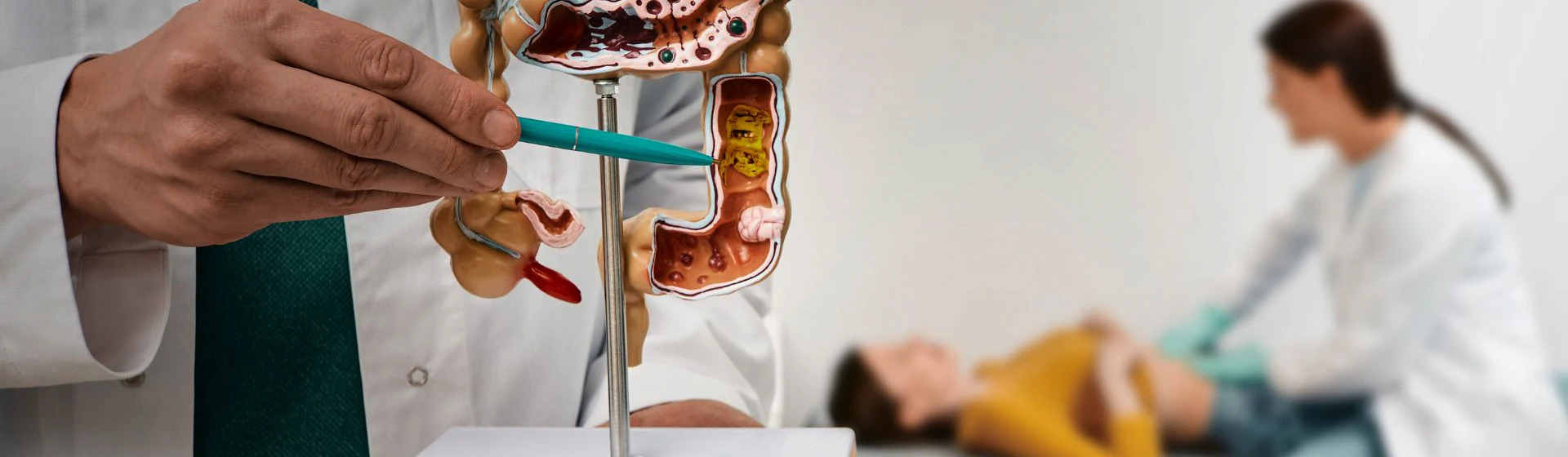
A loyalty program is available for surgical interventions in the hospital, which makes treatment even more affordable.
Hemicolectomy - this is an operation during which the left or right part of the colon is removed. After that, the two ends of the colon are stitched together - forming an anastomosis to restore continuity and normal functioning of the gastrointestinal tract. In severe cases, when this is not possible, a colostomy is performed - an opening is made in the abdominal wall to drain feces into a colostomy bag.
At “Oxford Medical” the operation is performed in a high-tech surgery department equipped with new, expert-class diagnostic and surgical equipment. The clinic's surgeons have the highest medical category and more than 20 years of experience.
They perform hemicolectomy:
laparoscopic method – this is a modern minimally invasive technique that allows you to do without a longitudinal incision in the abdominal wall, which is accompanied by a lower risk of complications, an easier and shorter rehabilitation period;
laparotomy method – this is a classic open-access operation that allows the doctor to obtain an extensive examination and is performed for large, inconveniently located malignant neoplasms, acute conditions and other indications.
Which method - laparoscopic or open - is will be optimal for the patient, surgeons decide after studying the results of his examinations and medical history.

Common indications for hemicolectomy are:
benign neoplasms;
intestinal obstruction;
intestinal polyposis;
Crohn's disease and others.
In the event of a tumor or intestinal obstruction, surgery is the main treatment method. In other cases, it is prescribed only if conservative therapy is ineffective.
Depending on the location of the tumor or other pathological process, the following is performed:
Parts of the transverse colon, splenic flexure, descending colon, and upper third of the sigmoid colon are removed.
The final fragment of the ileum, cecum, ascending colon, hepatic flexure, and one-third of the transverse colon are removed.
The operation is performed laparoscopically or laparotomically. Which one is optimal is determined individually.
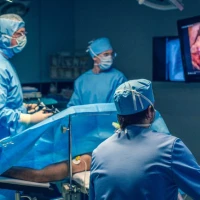
Laparoscopy - this is a minimally invasive technique. It involves providing access to the organ being operated on through several punctures with a diameter of 1-2 cm. Through them, a laparoscope - a device equipped with a miniature video camera, and endoscopic surgical instruments are inserted into the abdominal cavity. Using them, the surgeon performs the necessary manipulations with maximum precision. He looks at the monitor screen, where an enlarged image from the laparoscope is transmitted.
In laparotomy, on the contrary, direct examination is used. For this, an incision of about 20-25 cm is made in the abdominal cavity. Thanks to this, the surgeon can examine the entire intestine, accurately determine the boundaries of the pathological process and perform a resection.
Hemicolectomy involves removing the left or right part of the colon. In malignant tumors, nearby lymph nodes are also often removed. After that, the surgeon examines the tissues and forms an anastomosis - stitches together the healthy parts of the intestine.
In difficult cases, a colostomy may be required - a part of the intestine is attached to the abdominal wall, where a small opening is made to drain feces into a colostomy bag. This solution can be temporary until the lower parts of the intestine are restored, or permanent.
When the operation is over, the patient is transferred to the intensive care unit. He spends 2-3 hours there. During this time, special sensors monitor the respiratory rate and heartbeat, as well as blood pressure and other vital signs. After that, if the patient's condition does not cause concern, he is transferred to a single or double ward of a surgical hospital.
During the first day, bed rest is usually recommended. To ensure comfort, innovative beds with electronic control are installed in the wards. They allow you to choose a comfortable position. Also, if necessary, the patient can call a nurse at any time.
You can sit on the bed or get up for the first time only after a doctor's examination. It is recommended to start moving gradually from the 2nd to the 3rd day. Moderate physical activity serves to prevent the formation of adhesions and the development of postoperative pneumonia.
The average hospitalization period is from 3 to 7 days. It all depends on the complexity of the operation and the patient's well-being.
The recovery period can last from 1 to several months. During this time, the patient is recommended to follow a diet, avoid heavy physical exertion and take prescribed medications. Patients with intestinal cancer may be prescribed appropriate therapy at this time.


On the day of the operation, you can drink only a little clean, still water (with the doctor's approval)
On the second day, you are allowed to eat liquid foods – they should be moderately warm.
On day 4, easily digestible foods of a soft consistency are added and it is advised to eat in small portions 5-6 times a day.
2 weeks after the operation, the menu is gradually expanded.
 All tips
To minimize the risk of complications at “Oxford Medical”, patients undergo a thorough preliminary examination,
during the operation, sterile instruments and individual consumables are used, and then a course of antibacterial, anti-inflammatory and other drugs is prescribed according to indications.
Performing a hemicolectomy, like other types of intestinal resection, is associated with the following complications:


divergence of anastomotic sutures
intestinal bleeding
narrowing of the anastomosis
fluid accumulation in the abdominal cavity
development of bacterial infection
peritonitis
bowel movement disorder
urination disorder

The main reason for removing part of the colon is the development of a malignant neoplasm. Today, it is believed that its occurrence may be contributed to by genetic predisposition, the appearance of adenoma or polyps in the intestine, ulcerative colitis, Crohn's disease, diabetes, obesity, smoking, alcohol abuse and an unbalanced diet.
To reduce the risk of intestinal diseases, it is recommended:
lead a healthy lifestyle;
eat a balanced diet;
maintain weight within normal limits;
treat all diseases in a timely manner.
Men and women over 40 are also recommended to undergo an annual examination by a proctologist. Preventive examinations allow you to diagnose the disease at an early stage, when rectal cancer symptoms are practically absent, and treatment is most effective.
“Oxford Medical” operates a modern high-tech surgery department. It has all the conditions for the most accurate diagnosis and operations of any complexity. Thanks to this, as well as the high professionalism and many years of experience of surgeons, each patient can be sure of receiving quality medical care.
The price of hemicolectomy depends on many factors, so only a doctor can give the patient more accurate advice on this issue. In particular, the price is affected by the type of operation - left-sided or right-sided hemicolectomy, the method of surgical intervention - laparoscopic or open surgery, the need for an anastomosis or colostomy, the duration of anesthesia, etc.
Get to know the cost of operations at “Oxford Medical” you can here.
To make an appointment with an oncologist at the "Oxford Medical" clinic, call our contact center or leave a request on the website.

Hemicolectomy is an operation to remove the right or left part of the colon with the subsequent formation of an anastomosis (suturing the ends of the intestine to restore its integrity and normal functioning). It can be performed using a minimally invasive laparoscopic or laparotomic (open access) method.
Left hemicolectomy is an operation in which the left part of the colon is resected. In particular, part of the transverse colon, the splenic flexure, the descending colon, and the upper third of the sigmoid colon are removed. After that, an anastomosis is formed - the descending and diverting parts of the intestine are sewn together.
As a result of performing a right-sided hemicolectomy, complications such as anastomotic leakage, internal bleeding, peritonitis, bowel obstruction, pain syndrome, etc. may develop.


The operation is performed mainly laparoscopically, but with the possibility of switching to open access if necessary.
Intestinal resection performed by top-notch surgeons with over 20 years of experience
Use of expert-class diagnostic, endoscopic and other medical equipment from European and American manufacturers
Availability of intensive care (resuscitation) rooms with the possibility of 24-hour monitoring and support of vital body functions
The possibility of complex treatment of colon cancer using chemotherapy, immunotherapy and targeted therapy
Comfortable single and double rooms with private bathrooms, innovative beds with electric controls and a staff call button


 4.58
4.58  42+
42+  42+ Years of experience
  Kyiv, st. Bereznyakivska, 30b



 in the clinic
  online
  Hello!


