


sharp, spasmodic abdominal pain during menstruation
Sign up via call center 
 Adults Adults Adults Adults Adults Adults Adults Adults Adults
  Children Children Children Children
Department
Adults Outpatient department
Adults Outpatient department
Inpatient department
Adults Inpatient department
Aesthetic medicine
Adults Aesthetic medicine
Dentistry
Adults Dentistry
Plastic surgery
Adults Plastic surgery
Diagnostics
Adults Diagnostics
Analyzes
Adults Analyzes
Outbound services
Adults Outbound services
Children Outpatient department
Children Outpatient department
Dentistry
Children Dentistry
Diagnostics
Children Diagnostics

Kyiv


 Hotline:
 Request a call:


Department
Adults Outpatient department
Adults Outpatient department
Inpatient department
Adults Inpatient department
Aesthetic medicine
Adults Aesthetic medicine
Dentistry
Adults Dentistry
Plastic surgery
Adults Plastic surgery
Diagnostics
Adults Diagnostics
Analyzes
Adults Analyzes
Outbound services
Adults Outbound services
Children Outpatient department
Children Outpatient department
Dentistry
Children Dentistry
Diagnostics
Children Diagnostics
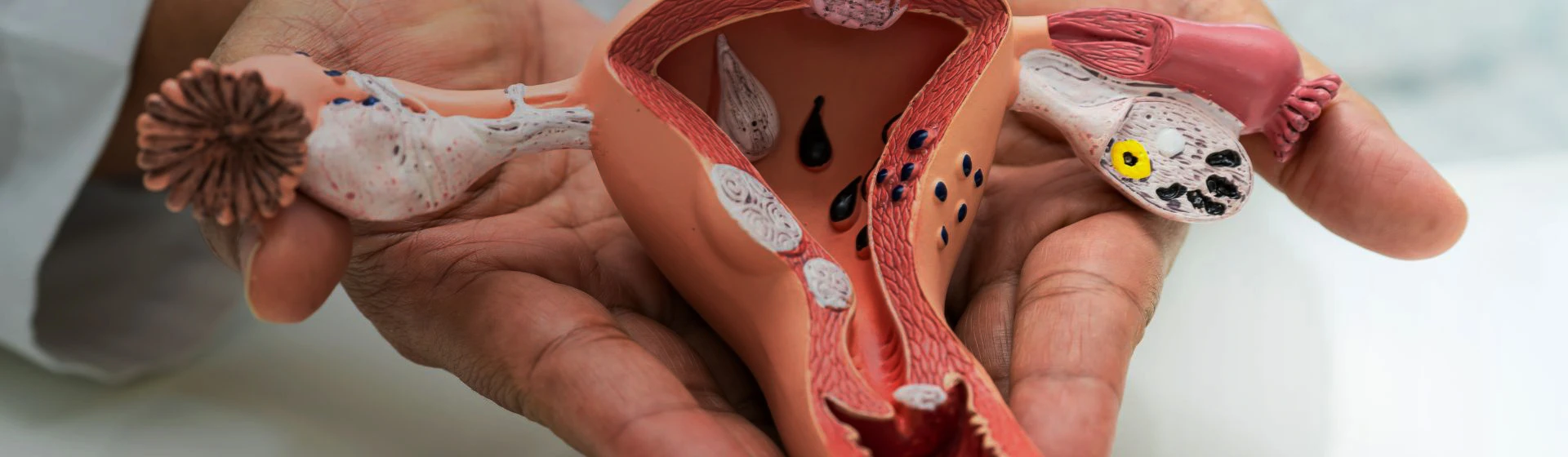
Surgical treatment of endometriosis
Surgical treatment of endometriosis
We use the Fast Track Surgery Protocol which facilitates rapid postoperative recovery. This method supposes minimal surgery preparation, reducing of pain and restrictions after surgery, and returning to a normal lifestyle in 1-2 days.
More than 176 thousand women suffer from endometriosis all around the world. It is the main cause of abdominal pain and one of the most frequent indications for laparoscopy in gynecology.
Endometriosis is a complex disease that can spread to different organs. It is easier to cure it at the early stages. The main symptom of endometriosis is severe pain during menstruation, but many women consider it normal and do not consult a doctor. You can suspect the disease in time if you know the exact symptoms.
Endometriosis is almost always treated surgically. Surgery is the only way to remove the foci of the disease and get rid of the pain in full. Modern surgery makes it possible to do this carefully and to return the patient to her normal life quickly.
Types of endometriosis
Depending on the location of the disease, endometriosis is divided into the following types:
- genital – endometrium grows through other organs of the reproductive system (vagina, fallopian tubes, ovaries);
- extragenital - the endometrium grows outside the reproductive system and affects other internal organs.
Endometrial tissue can grow through almost any organ, although most often it develops in the genitourinary system.
If extragenital endometriosis takes place, the traits of the disease may appear in:
- abdominal wall;
- bladder;
- kidneys;
- intestine;
- liver;
- diaphragm;
- lungs and other organs.
Stages of endometriosis
Endometriosis can progress without timely treatment. The number of foci of the disease, as well as the depth of endometrial penetration in healthy tissues can increase.
Thus 4 stages of the disease are distinguished:
- At stage 1 one or more superficial endometrial foci appear;
- At stage 2 the number of sites of the disease and the depth of endometrial penetration increases;
- At stage 3 many deep sites located in different places, as well as individual cysts and adhesions are diagnosed;
- At stage 4 the prevalence of the disease increases even more, as well as the number and size of cysts and adhesions.
Surgical treatment of endometriosis at the «Oxford Medical» clinic
At the «Oxford Medical» Сlinic the treatment is carried out in a surgical hospital which has two high-tech operating units, an intensive care unit and comfortable individual wards. They are supplied with new equipment of the world's best brands, which allows performing operations of any difficulty.
One of the advantages of our clinic is a successful implementation of the advanced Protocol of rapid rehabilitation - Fast Track Surgery.
It helps to simplify the preparation for surgery, gives better control for the depth of anesthesia, prevents postoperative pain and abandons restrictions in nutrition and motion immediately after the operation, makes it possible for the patient to return to a usual lifestyle in 1-2 days.
In Ukraine this technology is used by only a few clinics, as it requires special training of surgeons and anesthesiologists.
At the «Oxford Medical» Clinic all operations are performed by qualified surgeons with many years of experience, We use only new endoscopic equipment from the world's best brands. Specialists are guided by national and international treatment protocols, using innovative technologies with proven effectiveness and safety. This allows performing of low-traumatic organ-preserving operations in all possible cases, which is especially important for young women.
How surgical treatment of endometriosis is performed at the «Oxford Medical» clinic
At the «Oxford Medical» Clinic the treatment of endometriosis is performed by the following types of operations:
- hysteroscopy – supposes getting the access through the vagina;
- laparoscopy – the access to the operated organs is provided through 3 small punctures of the abdominal cavity;
- laparotomy is a classic open-access operation, which is now used quite rarely and only in complicated cases.
Most often the locations of endometriosis are removed by laparoscopy. The operation is performed with the help of modern endoscopic equipment. The doctor makes 3-4 punctures on the anterior wall of the peritoneum, up to 1 cm in diameter, through which surgical instruments and optical devices are inserted. The magnified image from the miniature camera is transmitted to the monitor. This provides the surgeon with good visualization and allows him to perform all actions with maximum accuracy.
After laparoscopy the punctures are sewn up and sterile bandages are applied to them. This operation is much less traumatic than classical laparotomy since damage to healthy tissues is reduced to the minimum.
Due to the usage of the Fast Track Surgery Protocol, the patient can leave the clinic the next day after the operation and return to her usual lifestyle.
In some cases, when we deal with widespread endometriosis, an open operation is required – a longitudinal incision is made to ensure access. This method allows removing of endometriosis of complex localization.
Fast recovery after surgery – Fast Track Surgery protocol
Surgeons at Oxford Medical work according to the Fast Track Surgery protocol, which provides for easier preparation for surgery and ensures an easy and short rehabilitation period.
This technology has been used in leading clinics around the world for many years. Studies have confirmed its effectiveness and safety.
| Preparation and rehabilitation after laparoscopy | |
| Standard protocol | Fast Track Surgery protocol |
| Intestinal cleansing is required | No cleansing is required |
| The depth of anesthesia is not checked | The depth of anesthesia is monitored to ensure optimal anesthesia and early awakening |
| The puncture sites are not anesthetized | The puncture sites are anesthetized, which reduces pain after surgery |
| A urinary catheter and drainage tubes are placed during surgery | Used in rare cases |
| Standard gas pressure is used to lift the abdominal wall | The minimum possible gas pressure is used to prevent injury to internal organs |
| A small amount of gas may remain in the abdominal cavity after surgery | The gas residue is carefully removed, so there is no pain after the operation |
| After the operation, bed rest is required without visiting the toilet for 1 day | Early rising is allowed |
| You can only lie on your back | Body position is not limited |
| You need to follow a diet | There is practically no restriction on nutrition |
| Need to conduct dressing and removal of stitches for 7 days | No need to bandage and remove stitches |

Endometriosis is a rather complex disease that can spread to various organs. It is easier to cure it in the early stages. The main symptom of endometriosis is severe pain during menstruation, but many women consider them the norm and do not consult a doctor. You can suspect the disease in time by knowing its symptoms.
Symptoms of endometriosis
Most often endometriosis causes:


persistent aching or intermittent acute abdominal pain
feeling of heaviness and fullness
intense menstruation
long periods
spotting in the middle of the cycle
disorder of menstrual cycle
discomfort during intercourses
pain during urination and/or defecation
blood impurities in the urine and feces

Diagnostic aids
Sites of extragenital endometriosis can appear in different parts of the body, so the symptoms of the disease differ. This complicates the diagnosis and requires a thorough complex examination. First of all the doctor prescribes laboratory tests and ultrasound of the pelvic and peritoneal organs.
If a new growth is detected, the doctor can immediately make a diagnosis (if the results of other studies and symptoms match) or schedule additional examinations. Computer (CT) or magnetic resonance imaging (MRI) is often performed. These examinations provide more accurate and detailed visualization and help to determine the size of the endometriosis site and the depth of tissue invasion.
According to indications, endoscopic examinations can also be prescribed: cystoscopy (examination of the bladder), rectoromanoscopy (examination of the intestine) and others.
The most accurate method of diagnosis is laparoscopy with tissue biopsy and subsequent histological analysis. But since it requires surgical intervention for diagnostic purposes, laparoscopy is rarely performed.
Treatment of endometriosis
Treatment of extragenital endometriosis is carried out mainly by surgical method. Only the operation can completely eliminate the site of the disease. But in some cases conservative therapy is also used: hormonal medications are prescribed to stop the development and bleeding of endometrioid sites, and other medications to relieve pain and other symptoms of the disease.
Hormone therapy can also be prescribed before surgery (sometimes it reduces the size of endometriosis site) or after to normalize the endocrine profile and prevent relapses.
The doctor chooses the way of treatment individually, taking into account the stage of the disease, the presence of concomitant pathologies, the age of the woman and other individual characteristics.
Indications for surgical treatment of endometriosis are:
- multiple sites of endometriosis;
- the size of the site is more than 2 cm;
- presence of adhesions and cysts;
- dysfunction of organs affected by endometriosis;
- endometriosis of the umbilicus or surgical scar;
- combination of endometriosis with abnormalities in the development of reproductive organs;
- infertility caused by endometriosis;
- ineffectiveness of conservative therapy, etc.
You can make an appointment for a gynecologist’s consultation or diagnosing at the «Oxford Medical» clinic by calling our contact center or writing in the chat.
Endometriosis prevention

To reduce the risk of developing endometriosis it is recommended:

To exclude intercourses and physical activity during menstruation

To visit a gynecologist for preventive purposes at least once a year
To treat the diseases of the genitourinary system in time
To control the endocrine profile (do not take hormonal drugs and contraceptives without the doctor’s prescription)
Implement the childbearing function
The risk of developing endometriosis is lower in women after childbirth, lactation and/or late onset of menarche.
 All tips
Surgical ward
Gynecological surgeries
Surgical treatment of endometriosis
Show more
Our services
Consultations
Consultation with an obstetrician-gynecologist
1100.00 ₴
Add Added 
Consultation with a leading obstetrician-gynecologist
1989.00 ₴
Add Added
Online consultation with an obstetrician-gynecologist
1100.00 ₴
Add Added
Surgical gynecology services
Plastic surgery of the posterior vaginal wall (colporrhaphy)
13889.00 ₴
Sign up by the call center
Laparoscopic removal of ovarian cyst/tumor
19989.00 ₴
Sign up by the call center
Laparotomic removal of the uterus without appendages
42989.00 ₴
Sign up by the call center
Laparotomic removal of the uterus with appendages (panhysterectomy)
47989.00 ₴
Sign up by the call center
Laparotomic removal of the fallopian tube (tubectomy)
17989.00 ₴
Sign up by the call center

Advantages of performing gynecological surgeries at the Oxford Medical clinic

Modern equipment: operating rooms are equipped with innovative equipment from world brands
Professional medical staff: qualified gynecologists, anesthesiologists, nurses
Individual approach: selection of treatment methods, taking into account the needs of each patient
Comfortable conditions for postoperative stay: single and double wards with all the necessary conditions for comfort
Show more 
Our doctors
 4.82
4.82  29+
29+ Leading specialist of the gynecological hospital, obstetrician-gynecologist, oncogynecologist, surgeon, Candidate of Medical Sciences
 29+ Years of experience
 Consultation 1100
 Kyiv, st. Bereznyakivska, 30b
Reviews
Альона 29.01.2026
Щиро дякую хірургу Фроловій Єлені Юріївні за суперово виконану операцію. Втручання було невелике, але для мене дуже важливе — і все пройшло швидко, акуратно та без ускладнень. Лікар уважна, спокіна, усе пояснив перед процедурою, так як я боялась- вона мене підтримувала та відволікала)) Загоєння проходило добре, шви зняла безболісно, результатом повністю задоволена. Дуже приємно мати справу з таким відповідальним і людяним спеціалістом. Рекомендую від щирого серця.

Яніна 18.01.2026
Хочу висловити подяку Мудрієвському Богдану Любомировичу. Моєму батьку було зроблено ургентно (15.12.2025) операцію по видаленню жовчного міхура. Поки я їхала в лікарню лікар і медперсонал підготували тата до операції. Велика подяка Богдану Любомировичу за Професіоналізм, за чітке пояснення і відповіді на всі питання. Цей лікар не тільки Професіонал своєї справи з великої літери, це ще і чудова людина!!! Бажаємо Богдану Любомировичу міцного здоров'я і завжди залишатися такою ж чудовою та розуміючою людиною
Current information

23 December 2025
Laparoscopy in gynecology: how modern methods are changing approaches to operations
27 July 2025
Removal of the Thyroid Gland: Consequences, Rehabilitation, and Life After Surgery
23 July 2025
Everything About Joint Replacement: Price, When, For Whom, and How Arthroplasty Can Be Performed
18 March 2025
What is uterine suturing and when is it performed?
Sign up
 in the clinic
  online

 Hello!
Let's take care
about your health:
Sign up via call center 
