Sign up via call center
Department
Surgical treatment of hiatal hernia in private dentistry Oxford Medical Kyiv

Surgery treatment of hernia of the esophageal opening of the diaphragm

Surgical treatment of hiatal hernia in Kyiv

Surgical interventions in the hospital are covered by a loyalty program, which makes treatment even more affordable.

A hiatal hernia is a condition accompanied by the protrusion of the stomach, and sometimes other abdominal organs, into the chest cavity. It develops when the muscles and ligaments of the diaphragm become stretched and weakened. The diaphragm is a thin muscular partition between the abdominal and thoracic cavities.

Normally, the diaphragm has narrow anatomical openings through which the aorta and esophagus pass. In the case of the disease, the esophageal opening becomes enlarged. Because of this, when intra-abdominal pressure increases, abdominal organs protrude into the chest cavity.

Surgery is the only effective method of treating a hiatal hernia. Modern technologies allow it to be performed using a minimally invasive laparoscopic method. Its advantages are:

  • access to the surgical area through 3 punctures up to 1 cm in diameter instead of a wide incision;

  • the possibility of easier preoperative preparation and rehabilitation according to the Fast Track Surgery protocol;

  • minimal damage to healthy tissues and low blood loss;

  • reduced risk of complications;

  • hospitalization of only 1–3 days;

  • short and easy rehabilitation period.

At Oxford Medical, hernia surgeries are performed by top-category surgeons with many years of experience. They are highly skilled in laparoscopic techniques and have already performed hundreds of successful operations. Thanks to this, as well as the availability of expert-class diagnostic and endoscopic equipment in the clinic, every patient can be confident in the high quality of medical services.

Indications for surgical treatment of hiatal hernia

In this case, surgical treatment is the main approach. Conservative therapy is rarely used and only in the early stages. The narrowing of the esophageal opening of the diaphragm can only be achieved surgically.

Indications for surgery are:

  • risk of hernia incarceration (highest with paraesophageal hernia);

  • pronounced symptoms of sliding hernia (heartburn, belching) requiring constant medication;

  • presence of extra-esophageal symptoms of hernia (night cough, laryngitis, frequent relapses of bronchitis and pneumonia);

  • Barrett’s metaplasia;

  • severe form of gastroesophageal reflux disease (GERD), esophagitis (inflammation of the esophageal mucosa), erosions, ulcers;

  • ineffectiveness of conservative therapy, development of side effects from acid-reducing drugs.

The decision on surgical treatment is made after thorough diagnostics and assessment of the patient’s health condition.

Preparation for surgery

Before the surgery is scheduled, the patient undergoes a thorough examination. It is necessary to confirm the diagnosis, detect comorbidities, and exclude contraindications to surgery and general anesthesia.

The patient may be prescribed:

  • gastroscopy – endoscopic examination of the esophagus, stomach, and duodenum;

  • X-ray with contrast enhancement;

  • computed tomography (CT) or magnetic resonance imaging (MRI);

  • measurement of pH levels in the stomach and esophagus.

During hospitalization, an ECG and preoperative tests are also performed.

Oxford Medical surgeons work according to the Fast Track Surgery protocol. It facilitates preparation for surgery: no mechanical bowel cleansing or prolonged fasting is required. The surgeon provides detailed recommendations the day before hospitalization.

How is surgery for hiatal hernia performed?

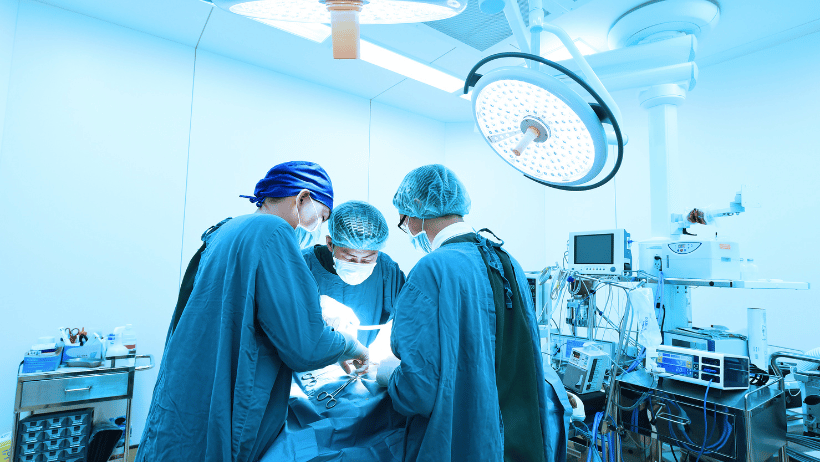
Most often, removal of the esophageal hernia is performed laparoscopically. Open surgery may be recommended in severe cases or in the presence of complications.

The laparoscopic surgery is performed as follows:

  • The anesthesiologist administers general anesthesia.

  • The surgeon makes several punctures up to 1 cm in diameter in the abdominal wall.

  • Through one puncture, a laparoscope with a miniature video camera is inserted. The image is transmitted to a monitor with 40–60x magnification.

  • Through another puncture, carbon dioxide is introduced into the abdominal cavity to enlarge the surgical field and improve visibility.

  • After this, endoscopic surgical instruments are inserted, with which the surgeon performs the necessary manipulations.

  • At the end, all instruments are removed, the carbon dioxide is carefully evacuated, and small sutures and sterile dressings are applied to the puncture sites.

After this, the patient is brought out of anesthesia and transferred to the intensive care unit, where they remain under monitoring for several hours.

The goal of surgical treatment is to eliminate the hernia and restore the anatomically correct position of the gastroesophageal junction. During the operation, the surgeon may perform:

  • suturing of the esophageal opening of the diaphragm;

  • strengthening of the diaphragm ligaments;

  • restoration of the natural position of the stomach and its fixation (gastropexy);

  • wrapping the upper part of the stomach around the lower end of the esophagus to prevent reflux of gastric juice into the esophagus (fundoplication).

The surgery allows for complete elimination of the pathology and its accompanying symptoms and complications. Statistics show absence of reflux in 94% of patients and absence of hernia recurrence in 85% of patients within 5 years after laparoscopic intervention.

Rehabilitation period

The complexity and duration of rehabilitation depends on the type of surgery – open or laparoscopic.

After laparoscopy, usually the next day the patient is allowed to get up and walk in the ward, drink water and broth, and then gradually add soft foods to the diet.

The length of hospitalization is usually 1–3 days, and full recovery takes 3–4 weeks. During this period, the patient is advised to:

  • take medications prescribed by the doctor;

  • follow the recommended diet;

  • limit physical activity and avoid lifting heavy weights.

Each patient receives detailed recommendations from the doctor. Successful recovery and absence of complications depend on following them.

Potential complications
of hiatal hernia

The thyroid pathologies develop under the impact of many factors, among which:

narrowing of the esophagus

duodenal ulcer

herniated disc

rupture of the stomach wall

internal bleeding

myocardial infarction

frequent bronchitis, pneumonia

List of diseases

Causes of hiatal hernia

The main cause of hernia development is dystrophy of the fascial ligaments of the diaphragm and a decrease in their elasticity. This can be caused by:

  • congenital anomalies;

  • age-related changes;

  • obesity;

  • excessive physical exertion and lifting of weights, which increases intra-abdominal pressure;

  • multiple pregnancies;

  • indirectly – tension of the occipital muscles, compression of the cervical spine, osteochondrosis.

Hiatal hernia surgery – price at Oxford Medical clinic

 «Oxford Medical» – is a modern medical center with a high-tech surgery department. It is equipped with the latest expert-class equipment, which allows for operations of any complexity. Many of the clinic's surgeons have the highest medical category, degrees of candidate and doctor of medical sciences. Our main principle is to ensure the highest quality of medical care for each patient.

The cost of the operation depends on the severity of the disease and the method of surgical intervention - laparoscopic or open access. The price of laparoscopic surgery may be slightly higher due to the use of expensive equipment. However, it is less traumatic, requires shorter hospitalization and rehabilitation, which also reduces additional costs.

Get to know the cost of surgical treatment at «Oxford Medical» you can here. To find out a more accurate price taking into account the diagnosis, make an appointment with a doctor at a time convenient for you.

Surgical treatment of hiatal hernia in Kyiv

Frequently asked questions about surgical treatment of hiatal hernia

How to treat a hiatal hernia?

In the early stages, if there are no pronounced symptoms, conservative therapy may be prescribed, but most often surgery is required. It is mainly performed laparoscopically – instead of an incision in the abdominal wall, several punctures are made for the insertion of a miniature video camera and endoscopic instruments. Hospitalization lasts 1–3 days, and rehabilitation takes 2–4 weeks.

( Rating: 4.86 , Votes: 29 )
Surgical ward
Our services
Consultations
Consultation with a surgeon
1100.00 ₴
Add Added
General surgery services
Ultrasound-guided puncture of cystic formation of III complexity category
5389.00 ₴
Sign up by the call center
Operation of the II category of complexity performed by a doctor of medical sciences
59889.00 ₴
Sign up by the call center
Operation of the III category of complexity
59889.00 ₴
Sign up by the call center
Operation of the III category of complexity performed by a doctor of medical sciences
69889.00 ₴
Sign up by the call center
Hartmann's operation
46889.00 ₴
Sign up by the call center

The advantages of treating esophageal hernia at Oxford Medical are:

Minimally invasive laparoscopic surgery

Working according to the Fast Track Surgery protocol, which facilitates preparation for surgery and the rehabilitation period

Availability of intensive care (resuscitation) rooms equipped with equipment to monitor and support vital body functions

Comfortable conditions in the hospital – single and double rooms with a private bathroom, air conditioning and everything you need

Our doctors

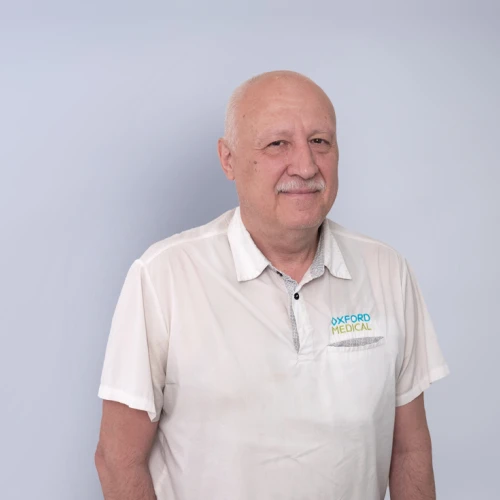
Valetsky Valery Leontyevich
4.58
rating (24)
42+
Years of experience
Surgeon-oncologist of the highest category, Candidate of Medical Sciences
42+ Years of experience
Consultation 1989
Kyiv, st. Bereznyakivska, 30b
Make an appointment
Mudrievsky Bogdan Lyubomirovich
4.84
rating (19)
38+
Years of experience
Online consultation
Surgeon
38+ Years of experience
Consultation 1100
Kyiv, st. Bereznyakivska, 30b
Make an appointment
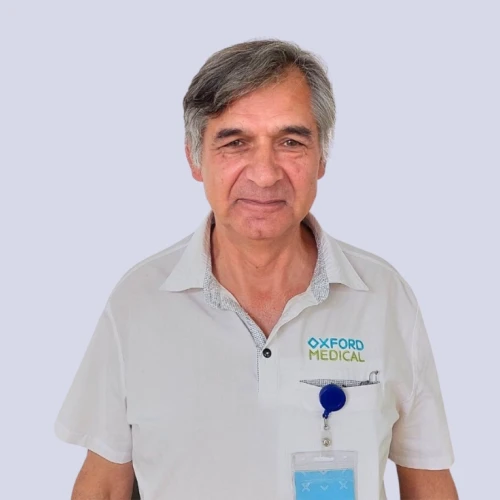
Kovalchuk Alexander Vasilyevich
4.95
rating (19)
43+
Years of experience
Surgeon of the highest category
Candidate of Medical Sciences
43+ Years of experience
Consultation 1100
Kyiv, st. Bereznyakivska, 30b
Make an appointment
Zezekalo Efim Olegovich
4.5
rating (10)
2+
Years of experience
Online consultation
Surgeon
2+ Years of experience
Consultation 1100
Kyiv, st. Bereznyakivska, 30b
Make an appointment
All doctors
Reviews
Альона 29.01.2026
Щиро дякую хірургу Фроловій Єлені Юріївні за суперово виконану операцію. Втручання було невелике, але для мене дуже важливе — і все пройшло швидко, акуратно та без ускладнень. Лікар уважна, спокіна, усе пояснив перед процедурою, так як я боялась- вона мене підтримувала та відволікала)) Загоєння проходило добре, шви зняла безболісно, результатом повністю задоволена. Дуже приємно мати справу з таким відповідальним і людяним спеціалістом. Рекомендую від щирого серця.
Star Star Star Star Star
Яніна 18.01.2026
Хочу висловити подяку Мудрієвському Богдану Любомировичу. Моєму батьку було зроблено ургентно (15.12.2025) операцію по видаленню жовчного міхура. Поки я їхала в лікарню лікар і медперсонал підготували тата до операції. Велика подяка Богдану Любомировичу за Професіоналізм, за чітке пояснення і відповіді на всі питання. Цей лікар не тільки Професіонал своєї справи з великої літери, це ще і чудова людина!!! Бажаємо Богдану Любомировичу міцного здоров'я і завжди залишатися такою ж чудовою та розуміючою людиною
Star Star Star Star Star
Current information
All Articles
Sign up
in the clinic
online
This site is protected by reCAPTCHA technology, and the Google Privacy Policy and Terms of Service apply.
Hello!
Let's take care
about your health:
Sign up via call center

We use cookies and other technologies to remember your preferences and find out exactly how you use and interact with the site.

By using our site, you also agree to the terms of the "User Agreement" and "Regulation on the processing and protection of personal data". By clicking "I AGREE", you consent to the processing of your data.