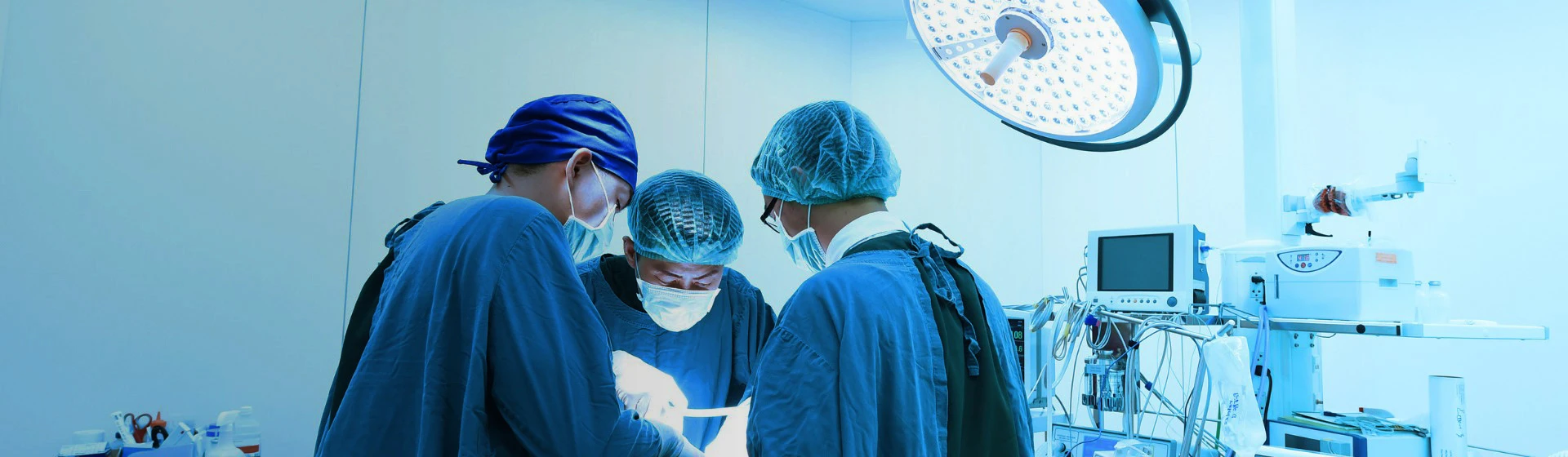
The surgery is performed under general anesthesia, in rare cases – under local or spinal anesthesia. Duration is about 1.5 hours.
In laparoscopic hernioplasty, surgeons make 3 punctures up to 1 cm in diameter in the anterior abdominal wall. A laparoscope with a miniature video camera and surgical instruments are inserted through them. To enlarge the operating field, carbon dioxide is introduced into the abdominal cavity.
The image from the laparoscope is transmitted to a monitor with multiple magnification. It allows the surgeon to perform all manipulations with maximum precision.
During the operation, the surgeon extracts the internal organs from the hernia sac and returns them to the abdominal cavity. Then he sutures the damaged wall and, if necessary, installs a mesh endoprosthesis. It is made of hypoallergenic material, so it is not rejected by the body.
The endoprosthesis prevents recurrence of the disease since, when intra-abdominal pressure increases, the load falls on it rather than on the postoperative sutures and weakened tissues.
After completing all manipulations, the surgeon removes endoscopic instruments and pumps out the carbon dioxide from the abdominal cavity. Small sterile dressings are applied to the puncture sites.
If open surgery is performed, a wide incision is made on the abdominal wall. Then the organs are removed from the hernia sac, the entrance opening is sutured, a mesh endoprosthesis is installed, and cosmetic sutures are applied.