Sign up via call center
Department
Spinal surgery at the private clinic Oxford Medical Kyiv

Treatment of herniated discs: endoscopic transforaminal and interlaminar discectomy

Treatment of herniated intervertebral discs: endoscopic transforaminal and interlaminar discectomy in Kyiv

A loyalty program is available for surgical interventions in the hospital, which makes treatment even more affordable.

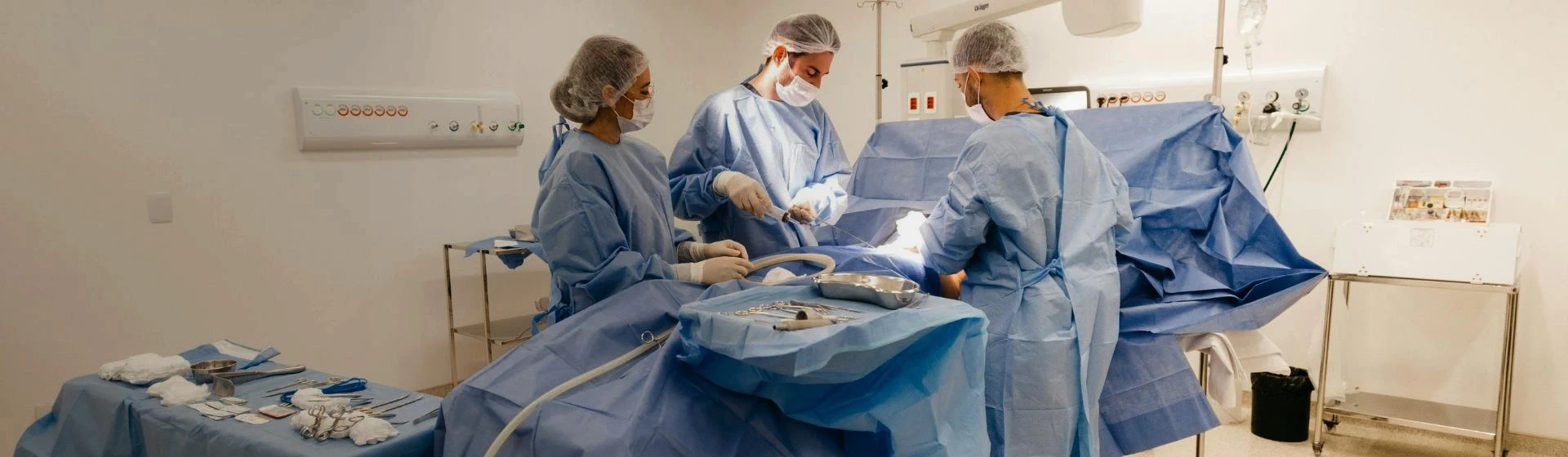
«Oxford Medical» uses a revolutionary method of removing herniated intervertebral discs. Operations are performed endoscopically through an incision with a diameter of 8 mm. This allows you to minimize damage to healthy tissues, shorten and facilitate the rehabilitation period.

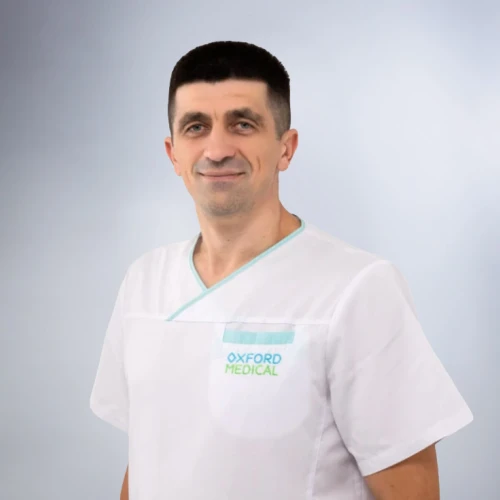
A spinal surgeon with many years of experience, who has been trained in Germany and other European countries, performs discectomy. Thanks to the doctor's high professionalism and equipping the surgery department with expert-class equipment, each patient can be sure of receiving quality medical care.

The main goal of the «Oxford Medical» team is to make advanced treatment methods available to Ukrainians.

Make an appointment with a spinal surgeon. During the appointment, the doctor will conduct an examination and advise you on which treatment method will be optimal in your case.

Symptoms and types of herniated discs

The spine is flexible and mobile thanks to the elastic discs that are located between the vertebrae made of bone tissue. Intervertebral discs absorb the loads that occur when walking, running or jumping.

The intervertebral disc is a gelatinous mass (nucleus) that is held in place by an outer shell (annulus fibrosus). If the annulus fibrosus weakens, the disc bulges out - a herniation is formed.

Each type of hernia requires an individual approach to treatment, which depends on the symptoms, the degree of damage to the disc and the patient's general health. Sometimes, in case of severe pain, to improve well-being, blockades along the spine are performed. 

A hernia that has formed can compress blood vessels, nerve endings, muscles, and the spinal cord, causing various symptoms.

Symptoms of hernias may vary depending on their location:

Symptoms of cervical spine herniation (C1, C2, C3, C4, C5, C6, C7)

 Herniations of the cervical spine, consisting of 7 vertebrae (C1, C2, C3, C4, C5, C6, C7) can cause the following symptoms:

  • neck pain;

  • radiation of pain to the shoulder and arm;

  • numbness and tingling in the upper extremities;

  • headaches;

  • weakness in the arm muscles.

Symptoms of a herniated disc in the thoracic spine (Th1–Th12)

  • pain in the upper and middle back;

  • radiation of pain to the chest and abdomen;

  • numbness and tingling in the chest or back;

  • in rare cases - weakness in the legs.

Symptoms of a herniated disc in the thoracic spine (L1, L2, L3, L4, L5)

  • low back pain;

  • radiation of pain to the buttocks and legs;

  • numbness and tingling in the legs;

  • weakness in the leg muscles;

  • impaired bladder and bowel function.

Symptoms of a herniated disc in the thoracic spine (S1, S2, S3, S4, S5)

  • pain in the lower back and buttocks;

  • radiation of pain to the legs;

  • numbness and tingling in the legs;

  • weakness in the leg muscles;

  • impaired bladder and bowel function.

Symptoms of a herniated disc in the coccygeal spine (Co1, Co2, Co3, Co4, Co5)

  • lower back pain, especially when sitting or standing up;

  • pain when palpating the coccyx area;

  • irradiation of pain into the buttock or leg (in rare cases);

  • discomfort when bending over or sitting on a hard surface.

Advantages of endoscopic removal of herniated discs

Compared to open access operations, endoscopic interventions have a number of undeniable advantages:

  • minimal traumatization of healthy tissues;

  • quick and easy rehabilitation period;

  • the ability to get up and walk 2 hours after the operation;

  • discharge from the hospital on the day of the operation or the next day;

  • aesthetic result thanks to incisions up to 1 cm.

Indications for surgical removal of a hernia

For small hernias that are not accompanied by pronounced symptoms, usually conservative
therapy is initially carried out: painkillers, therapeutic exercises, massage and physiotherapy
procedures are prescribed.

Indications for surgical treatment are:

numbness of the hands and/or feet

numbness of the perineum

large size of the intervertebral hernia

nerve root compression and severe pain

constriction of blood vessels and circulatory disorders

severe headache, dizziness – with cervical hernias

cramps, involuntary contraction of the leg muscles

uncontrolled urination

dysfunction of internal organs

ineffectiveness of conservative therapy

List of diseases

Preparation for removal of intervertebral hernia

During the initial consultation, the doctor first listens to the patient's complaints, conducts an examination and palpation of the back along the spine, and also studies the medical history. After that, he prescribes examinations necessary for making an accurate diagnosis.

The doctor may prescribe:

  • X-ray;

  • Computed tomography (CT);

  • Magnetic resonance imaging (MRI) and other studies.

CT and MRI involve scanning the spine with slices in increments of 1 mm. As a result of such an examination, the doctor can detect a hernia, accurately determine its size and localization.

If it is necessary to perform an operation to remove an intervertebral hernia, the patient also needs to undergo:

  • laboratory tests;

  • cardiogram;

  • fluorography;

  • consultation with a therapist, anesthesiologist and other specialists in the presence of chronic diseases.

In «Oxford Medical» you can undergo preoperative diagnostics in one clinic at a convenient time.

Endoscopic removal of herniated intervertebral discs: how treatment is performed at Oxford Medical

The development of endoscopic methods for removing herniated discs in the spine has revolutionized spinal surgery. Such operations are effective and safe. They are performed using high-tech equipment that allows the use of incisions only 8 mm long. This reduces damage to healthy tissues and the risk of complications, and postoperative recovery is much easier and faster than after open access operations.

Endoscopic discectomy involves the removal of part of the nucleus pulposus of the intervertebral disc that has protruded beyond the annulus fibrosus. This releases the nerve roots and spinal cord, which eliminates pain and other symptoms of the hernia.

Depending on the location of the hernia, its size and the presence of complications, discectomy is performed using one of the following methods:

  • transforaminal endoscopic discectomy;

  • interlaminar endoscopic discectomy;

  • unilateral endoscopic discectomy.

The operations differ mainly in which side access to the hernia is provided.

All endoscopic operations are performed under constant video control. The image from the mini-video camera, which is equipped with the endoscope, is transmitted to a large screen, which allows the surgeon to monitor the progress of the operation in real time and perform all manipulations with maximum accuracy.

General anesthesia or local anesthesia is used for anesthesia.

Rehabilitation after removal of a spinal hernia

The rehabilitation period can last from several weeks to several months. This depends on the type of surgery performed and your general health. At this time, it is very important to follow all the doctor's instructions.

After the hernia is removed, the patient is transferred to a single or double ward. He remains under constant medical supervision and receives the necessary care. As a rule, after the operation, drug therapy is prescribed, which includes painkillers and other drugs.

As a rule, after endoscopic operations, patients are allowed to get up and walk within a few hours.

They are discharged from the hospital on the day of the operation or the next day. Further rehabilitation takes place at home.

After the operation, the doctor may prescribe:

  • drug therapy;

  • wearing a supportive corset;

  • physiotherapy procedures;

  • massage;

  • therapeutic exercises.

In addition, for several weeks or months it is not recommended:

  • to stay in a standing or sitting position for a long time;

  • to make sudden movements;

  • lift weights (over 3 kg).

After the surgery, your doctor will give you a full list of recommendations and explain everything in detail.

Treatment of herniated intervertebral disc with surgery: price at the Oxford Medical clinic

«Oxford Medical» operates a modern high-tech surgery department, equipped with expert-class equipment from the best American and European manufacturers. Thanks to this, the clinic performs operations of any complexity.

The cost of surgical hernia removal may vary depending on the type and complexity of the operation. You can find out the prices here.

Endoscopic operations require the use of expensive equipment and high professionalism of the surgeon. At the same time, they are the least traumatic and are accompanied by an easier rehabilitation period, which allows you to reduce additional costs for postoperative recovery.

To learn more about the features and cost of hernia removal using the endoscopic method, make an appointment for a consultation at the spinal surgery department.

Call our contact center or leave a request on the website.

Surgical ward

Advantages of endoscopic removal of herniated discs at Oxford Medical

Application of innovative endoscopic methods

Operations performed by highly qualified spinal surgeons with many years of experience

The ability to undergo preoperative diagnostics in 1-2 visits to the clinic

Short hospitalization period (up to 1 day after endoscopic discectomy)

Our doctors

Pylypchuk Viktor Petrovych
4.94
rating (17)
13+
Years of experience
Orthopedic traumatologist, spinal surgeon
13+ Years of experience
Consultation 1100
Make an appointment
Romanukha Dmitry Nikolaevich
4.81
rating (27)
6+
Years of experience
Online consultation
Neurosurgeon
6+ Years of experience
Consultation 1100
Kyiv, Predslavynska St. 29
Make an appointment
All doctors
Reviews
Альона 29.01.2026
Щиро дякую хірургу Фроловій Єлені Юріївні за суперово виконану операцію. Втручання було невелике, але для мене дуже важливе — і все пройшло швидко, акуратно та без ускладнень. Лікар уважна, спокіна, усе пояснив перед процедурою, так як я боялась- вона мене підтримувала та відволікала)) Загоєння проходило добре, шви зняла безболісно, результатом повністю задоволена. Дуже приємно мати справу з таким відповідальним і людяним спеціалістом. Рекомендую від щирого серця.
Star Star Star Star Star
Яніна 18.01.2026
Хочу висловити подяку Мудрієвському Богдану Любомировичу. Моєму батьку було зроблено ургентно (15.12.2025) операцію по видаленню жовчного міхура. Поки я їхала в лікарню лікар і медперсонал підготували тата до операції. Велика подяка Богдану Любомировичу за Професіоналізм, за чітке пояснення і відповіді на всі питання. Цей лікар не тільки Професіонал своєї справи з великої літери, це ще і чудова людина!!! Бажаємо Богдану Любомировичу міцного здоров'я і завжди залишатися такою ж чудовою та розуміючою людиною
Star Star Star Star Star
Current information
All Articles
Sign up
in the clinic
online
This site is protected by reCAPTCHA technology, and the Google Privacy Policy and Terms of Service apply.
Hello!
Let's take care
about your health:
Sign up via call center

We use cookies and other technologies to remember your preferences and find out exactly how you use and interact with the site.

By using our site, you also agree to the terms of the "User Agreement" and "Regulation on the processing and protection of personal data". By clicking "I AGREE", you consent to the processing of your data.