


A hernia is a protrusion of abdominal organs beyond their anatomical zone. It can develop in different areas of the body, in places of muscle and ligament weakness.
Sign up via call center 
 Adults Adults Adults Adults Adults Adults Adults Adults Adults
  Children Children Children Children
Department
Adults Outpatient department
Adults Outpatient department
Inpatient department
Adults Inpatient department
Aesthetic medicine
Adults Aesthetic medicine
Dentistry
Adults Dentistry
Plastic surgery
Adults Plastic surgery
Diagnostics
Adults Diagnostics
Analyzes
Adults Analyzes
Outbound services
Adults Outbound services
Children Outpatient department
Children Outpatient department
Dentistry
Children Dentistry
Diagnostics
Children Diagnostics

Kyiv


 Hotline:
 Request a call:


Department
Adults Outpatient department
Adults Outpatient department
Inpatient department
Adults Inpatient department
Aesthetic medicine
Adults Aesthetic medicine
Dentistry
Adults Dentistry
Plastic surgery
Adults Plastic surgery
Diagnostics
Adults Diagnostics
Analyzes
Adults Analyzes
Outbound services
Adults Outbound services
Children Outpatient department
Children Outpatient department
Dentistry
Children Dentistry
Diagnostics
Children Diagnostics
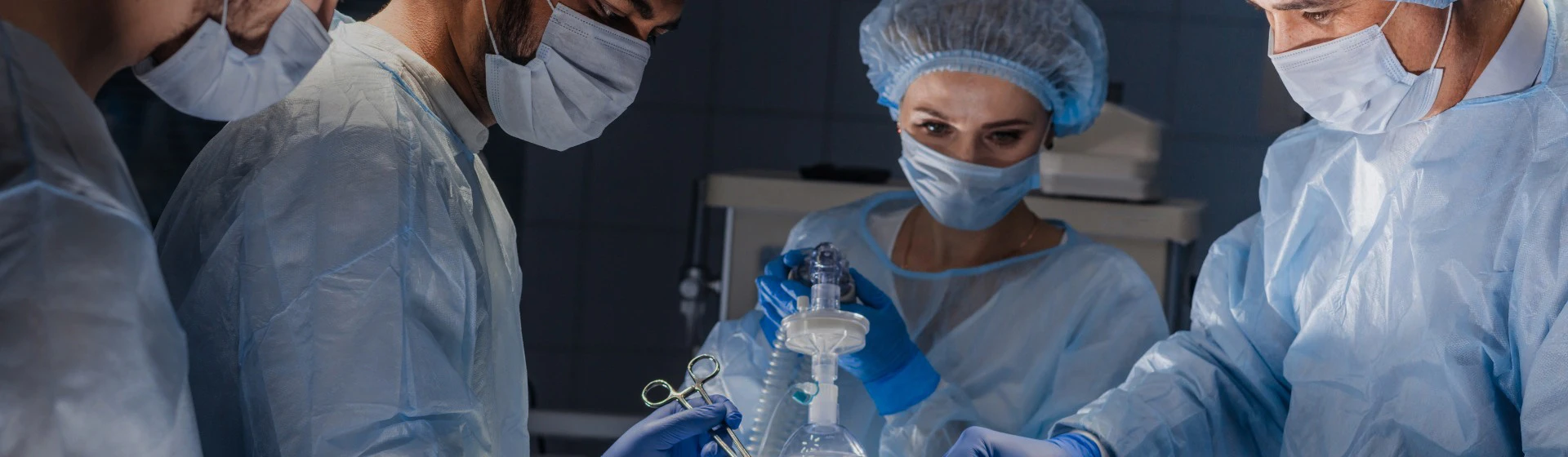
Removal of hernia
Surgical interventions in the inpatient department are covered by the loyalty program, which makes treatment even more affordable.
A hernia is a protrusion of an organ or part of it under the skin, into the intermuscular space, or into internal cavities. Surgeons at the «Oxford Medical» clinic remove inguinal, umbilical, femoral, inguinoscrotal, perineal, postoperative, and recurrent hernias. Hernias of the linea alba, xiphoid process, and Spigelian line are also successfully operated on.
Symptoms of hernias
Regardless of localization, the following manifestations are characteristic for most hernias:
-
Protrusion – internal organs go beyond the muscle walls and are externally visible as a palpable bulge.
-
Painfulness – the resulting swelling is often painful.
-
Digestive disorders – occur due to entrapment of the intestinal loops by the muscle wall, which disrupts the normal passage of digested food.
Most hernias can be diagnosed by external manifestations, but in the case of diaphragmatic hernia and some other pathologies, X-ray or other examinations may be required.
Removal of inguinal hernia
Inguinal hernia is the most common hernia of the abdominal wall, diagnosed mainly in men. It can be congenital, but more often it is acquired.
Patients with inguinal hernia complain of an elongated or pear-shaped protrusion, which may descend into the scrotum (oblique inguinal hernia). Direct inguinal hernia is often bilateral and has a spherical shape. At first, the hernia is painless, but later pain and gastrointestinal problems appear.
When an inguinal hernia is detected, surgical removal is indicated; conservative treatment with a bandage is used only if there are serious contraindications to surgery. The earlier the operation is performed, the lower the likelihood of hernia complications in the form of digestive disorders and congestive phenomena.
Removal of umbilical hernia
An umbilical hernia occurs when a part of the intestine protrudes through the umbilical ring. Such hernias are more often diagnosed in women due to stretching of the abdominal wall during pregnancy. Obesity also contributes to the appearance of an umbilical hernia.
An umbilical hernia manifests as a protrusion in the navel area, often painful (especially after physical exertion and meals). It can provoke digestive disorders, impaired blood circulation, and pinching of nerve endings.
An umbilical hernia is also treated only surgically, and modern approaches make it possible to remove umbilical hernias without recurrences. During the operation, the hernia is repositioned into the abdominal cavity, and the umbilical ring is strengthened by the surgeon.
Removal of inguinoscrotal hernias
In inguinoscrotal hernias, internal organs fall into the scrotum due to weakness of the inguinal rings (internal or external). In complex cases, under the pressure of protruding tissues, the scrotum stretches and enlarges. As a complication, gastrointestinal and genitourinary disorders may develop.
Treatment of inguinoscrotal hernias is also exclusively surgical, and the operation of these hernias often requires the use of more complex techniques.
Features of surgical treatment of hernias
Regardless of the localization of the hernia, the operation to eliminate it lasts no more than 1 hour, during which the doctor manages to reposition the protruding intestinal loops, strengthen the muscle wall, and suture the wound. A characteristic feature of this intervention is that the patient’s condition begins to improve immediately after the operation. Within up to a week (in most cases, from 3 to 5 days), any painful sensations disappear.
Modern equipment, proven technologies, and qualified surgeons allow hernias to be eliminated as quickly and effectively as possible. For rehabilitation and monitoring of patients in the postoperative period, comfortable inpatient wards are offered, where the patient remains under round-the-clock supervision.
Cost of hernia surgery at the «Oxford Medical» clinic
The cost of the operation depends on the type of hernia, the method of surgical intervention - open access or laparoscopic, as well as the complexity of the pathology. You can find out the prices for surgical treatment of hernias at «Oxford Medical» here. Only a surgeon can give a more accurate estimate of the price of the operation. To do this, it is necessary to take into account the diagnosis and other individual characteristics of the patient. Sign up for a consultation at a time convenient for you.
Frequently asked questions about surgical treatment of hernia
What is a hernia?
Where is a hernia located?
Hernias can develop in different areas of the body. Depending on the location, umbilical hernia, hernia of the linea alba, inguinal hernia, diaphragmatic hernia, and others are distinguished.
How to understand that you have a hernia?
A hernia manifests as a protrusion of internal organs beyond the peritoneum. Most often, it develops on the abdomen or in the inguinal region. At early stages, it appears as a small rounded formation that can be easily repositioned. Without treatment, it can increase in size over time and lead to complications. At the first signs of a hernia, you should consult a surgeon.
What tests are needed to remove an umbilical hernia?
Before the operation, an electrocardiogram (ECG), general blood and urine analysis, biochemical blood analysis, blood sugar tests, coagulogram and tests for common infections are performed. It is necessary to carry out tests according to the doctor's prescription. They are carried out a day before the operation.
What type of anesthesia is used for inguinal hernia removal?
Removal of an inguinal hernia is performed under general anesthesia (narcosis).
On what day are patients discharged after hernia removal?
The length of hospital stay depends on the procedure performed. Laparoscopic procedures are usually discharged sooner than open ones. Hernia repair takes about an hour, and the patient's condition improves immediately afterward. Pain also subsides within a week.
Surgical ward
General Surgery
Surgical removal of a hernia
Show more 
Our services
Consultations

Consultation with a surgeon
1100.00 ₴
Add Added 
General surgery services
Ultrasound-guided puncture of cystic formation of III complexity category
5389.00 ₴
Sign up by the call center
Operation of the II category of complexity performed by a doctor of medical sciences
59889.00 ₴
Sign up by the call center
Operation of the III category of complexity
59889.00 ₴
Sign up by the call center
Operation of the III category of complexity performed by a doctor of medical sciences
69889.00 ₴
Sign up by the call center
Hartmann's operation
46889.00 ₴
Sign up by the call center

Advantages of the General Surgery Department at Oxford Medical in Kyiv

Modern equipment. The latest technology ensures accurate diagnostics and safe surgeries.
Experienced surgeons. Doctors with many years of practice use advanced treatment methods.
Minimally invasive techniques. Laparoscopic surgery reduces trauma and speeds up recovery.
Comfortable conditions. Rehabilitation takes place in modern wards under staff supervision.
Loyalty program. Special offers make surgical treatment more affordable for patients.
Comprehensive approach. Patients receive full care: diagnostics, surgery, and rehabilitation.
Show more 
Our doctors

 4.9
4.9  47+
47+ 
Surgeon of the highest category, Doctor of Medical Sciences
 47+ Years of experience
 4.58 42+
 Surgeon-oncologist of the highest category, Candidate of Medical Sciences
42+ Years of experience Consultation 1989
 Kyiv, st. Bereznyakivska, 30b
  4.84 40+
  4.95 43+
 Surgeon of the highest category
Candidate of Medical Sciences
Candidate of Medical Sciences
43+ Years of experience Consultation 1100
Kyiv, st. Bereznyakivska, 30b 
Reviews
Альона 29.01.2026
Щиро дякую хірургу Фроловій Єлені Юріївні за суперово виконану операцію. Втручання було невелике, але для мене дуже важливе — і все пройшло швидко, акуратно та без ускладнень. Лікар уважна, спокіна, усе пояснив перед процедурою, так як я боялась- вона мене підтримувала та відволікала)) Загоєння проходило добре, шви зняла безболісно, результатом повністю задоволена. Дуже приємно мати справу з таким відповідальним і людяним спеціалістом. Рекомендую від щирого серця.

Яніна 18.01.2026
Хочу висловити подяку Мудрієвському Богдану Любомировичу. Моєму батьку було зроблено ургентно (15.12.2025) операцію по видаленню жовчного міхура. Поки я їхала в лікарню лікар і медперсонал підготували тата до операції. Велика подяка Богдану Любомировичу за Професіоналізм, за чітке пояснення і відповіді на всі питання. Цей лікар не тільки Професіонал своєї справи з великої літери, це ще і чудова людина!!! Бажаємо Богдану Любомировичу міцного здоров'я і завжди залишатися такою ж чудовою та розуміючою людиною
Current information

23 December 2025
Laparoscopy in gynecology: how modern methods are changing approaches to operations
27 July 2025
Removal of the Thyroid Gland: Consequences, Rehabilitation, and Life After Surgery
23 July 2025
Everything About Joint Replacement: Price, When, For Whom, and How Arthroplasty Can Be Performed
18 March 2025
What is uterine suturing and when is it performed?
Sign up for a consultation
 in the clinic
  online

 Hello!
Let's take care
about your health:
Sign up via call center 
