Sign up via call center
Department
Removal of the pancreas at the private clinic Oxford Medical Kyiv

Removal of the pancreas

Pancreatectomy in Kiev

A loyalty program is available for surgical interventions in the hospital, which makes treatment even more affordable.

Partial or complete removal of the pancreas is one of the stages of cancer treatment. At stages 1-2, radical removal of the tumor is possible, which significantly increases the chances of successful recovery.

If the tumor has significantly spread to neighboring organs and large vessels are affected, a more complex operation is required - pancreaticoduodenal resection, or Whipple's operation. During its implementation, part of the pancreas, stomach, duodenum and other surrounding tissues are removed. In Ukraine, it is performed in only a few clinics.

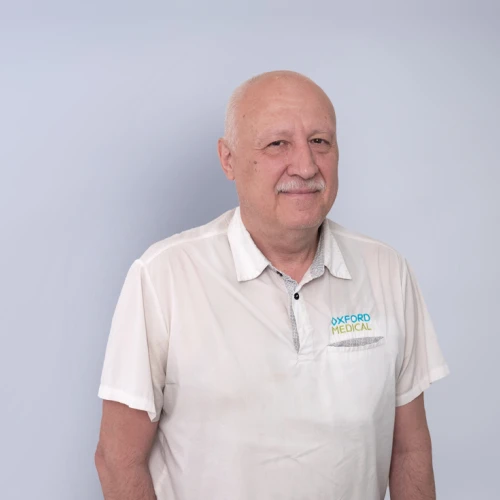
At «Oxford Medical», operations on the pancreas are performed by a team of surgeons led by a doctor of medical sciences, a surgeon of the highest category, who has undergone extensive training in Germany and has more than 30 years of experience. The clinic has new equipment and all conditions have been created for conducting the most accurate diagnostics and surgical operations of any complexity.

When should the pancreas be removed?

Resection (removal of part of the pancreas) or pancreatectomy (removal of the entire organ) may be prescribed for cancer, benign neoplasms, pseudocysts, chronic pancreatitis, trauma, or developmental anomalies.

Most often, such operations are performed for malignant processes. The possibility, method, and scope of surgical intervention are determined taking into account the stage of the disease. First of all, surgeons check the operability of the tumor using the international NCCN scale.

According to it, the following are distinguished:

  1. Resectable tumors – can be completely removed by resection or pancreatectomy.

  2. Relative operability – the tumor spreads to large vessels and adjacent tissues, which requires a more complex operation and high skill of the surgeon. In some cases, the tumor may be recognized as inoperable after the start of the operation and examination of the tissues.

  3. Unresectable– in this case, the patient may be recommended surgery to improve symptoms and prolong life, or palliative treatment may be prescribed.

Relative operability is a conditional term. If earlier vascular damage was considered an obstacle to surgical treatment, now such patients are successfully operated on in high-tech clinics. The main thing is thorough diagnostics, the availability of modern equipment in the clinic and high professionalism of surgeons.

How is the pancreas removed?

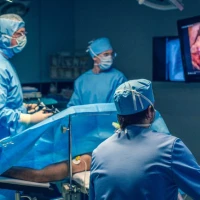
At «Oxford Medical», operations are performed mainly laparoscopically. Due to minimal damage to healthy tissues, blood loss and the risk of postoperative complications are reduced, and the rehabilitation period is easier and faster.

The operation is performed under general anesthesia. It takes from 2 to 7 hours. First, diagnostic laparoscopy is usually performed - endoscopic equipment with a miniature video camera is inserted into the abdominal cavity through several punctures. This allows you to clearly determine the scope of the work and the sequence of actions, as well as once again confirm the feasibility of the operation.

After the operation is completed, the patient is brought out of anesthesia. If necessary, he may be placed in an intensive care unit for a while to monitor vital signs, equipped with ventilators from the Swiss company Hamilton Medical and other equipment.

When the patient's condition is not a cause for concern, he is transferred to a comfortable single or double room with a private bathroom, air conditioning, TV, and everything necessary.

Methods of removing the pancreas

Pancreatectomy can be performed:

Laparoscopically

This is a minimally invasive technique that eliminates the need for an incision in the abdominal wall. Access to the organ being operated on is provided through several punctures up to 1 cm in diameter. A laparoscope equipped with a video camera is inserted into them, the image from which is transmitted to a monitor screen, and small endoscopic instruments. They allow the surgeon to perform the necessary manipulations with maximum precision.

Laparotomy

This is a traditional open surgery. A longitudinal incision is made in the abdominal wall, which provides a wide view, which is necessary for large and inconveniently located tumors, as well as in cases of acute conditions.

Types of operations

Depending on the size and location of the tumor, the patient may undergo one of the following surgeries:

Дистальна панкреатектомія

It is prescribed for the development of a neoplasm in the tail of the pancreas. It consists in the partial removal of the tail and body of the organ. It is also possible to remove the spleen and resect adjacent organs in cases of tumor growth.

Pancreatoduodenal resection, or Whipple procedure

It is prescribed when the tumor is localized in the head of the organ (occurs in more than 60% of cases) and has spread to the vessels and adjacent organs. It involves the removal of part of the pancreas, stomach, duodenum, and other surrounding tissues.

Total pancreatectomy

This is the most radical operation, which involves removing the entire organ. It is prescribed only in the most difficult cases. After the operation, patients need to take enzyme preparations and insulin for life.

Rehabilitation after pancreatic surgery

After the operation, the patient is transferred to a surgical hospital, where he remains under the constant supervision of medical personnel. He is given dressings and drug therapy for successful recovery after the operation and prevention of complications.

The postoperative period lasts about 10 days, but full rehabilitation may take up to 2 months. At this time, it is very important to follow all the doctor's instructions, in particular regarding dietary restrictions and physical activity.

On the first day, food intake is contraindicated, on the second day, water and some drinks are allowed. Nutrition is usually restored on the 3rd day. At the same time, a strict diet is prescribed, which is gradually expanded after some time.

As for physical activity, soon after the operation, doctors advise getting out of bed and moving around independently. The first time this should be done in the presence of clinic specialists. Heavy loads are contraindicated for 2-4 months until complete recovery.

The patient may also be prescribed long-term intake of enzyme preparations, and in the case of complete removal of the pancreas - insulin.

Rehabilitation after surgery on the pancreas

Diet after pancreatic surgery

Food intake is contraindicated on the first day. The patient is given special nutrient solutions intravenously.

The next day, he may be allowed to drink water a little, and the next day, eat liquid or semi-liquid foods.

Dietary rules may vary depending on the type of operation, so each patient is given individual recommendations.

The rules common to all are:

  • eating easily digestible foods in small portions 5-6 times a day;

  • preparing dishes by boiling, stewing or baking;

  • choosing protein foods and limiting fatty and high-carbohydrate foods;

  • avoiding fresh bread and pastries, seasonings, spicy foods, smoked foods, marinades, chocolate and other sweets, dairy products.

In the first weeks, the diet is stricter, but later, if you feel well, the diet can be expanded.

For normal digestion, most patients are prescribed enzyme preparations.

Potential complications after surgery

Both resection and removal of the pancreas are quite complex operations. To reduce the risk of complications, the patient undergoes a thorough examination and special preparation beforehand. It may include the withdrawal of certain medications, diet, etc.

As a result of the operation, there is a risk of:

  • internal bleeding;

  • development of postoperative infection;

  • digestive disorders;

  • the appearance of pain and discomfort in the stomach area;

  • gastroparesis (paralysis of the stomach);

  • the appearance of a pancreatic fistula;

  • development of diabetes mellitus, etc.

The development of complications is possible both in the first days after the operation and after a few weeks. If you experience any complaints, you should immediately consult a doctor.

At «Oxford Medical» operations are performed by highly qualified surgeons using new equipment. The use of modern surgical techniques, individual consumables and strict adherence to protocols significantly reduce the risks of surgical and postoperative complications.

Causes of pancreatic problems and methods of disease prevention

To reduce the risk of the disease, experts recommend leading a healthy lifestyle (exercising,
eating right, giving up bad habits), maintaining a normal weight, timely
treating all diseases and regularly undergoing preventive examinations.

Risk factors for pancreatic cancer are:

unbalanced diet (chronic deficiency of fresh vegetables and fruits is considered the leading cause of the disease in 20% of patients)

smoking (30% of carcinoma cases are associated with it)

diabetes (doubles the chance of cancer)

hereditary predisposition (is dominant in 10% of cases)

alcohol abuse

chronic pancreatitis (within 20 years, cancer is diagnosed in 4-8%)

colorectal cancer

adenomatous polyposis

Hippel-Lindau, Gardner syndromes

adiposity

List of diseases

Pancreatectomy: price at Oxford Medical Clinic

«Oxford Medical» has a high-tech surgery department. It is equipped with new equipment from leading manufacturers of medical equipment. This allows for the most accurate diagnosis and detection of neoplasms from 1 mm in size, as well as complex minimally invasive operations.

Resection and removal of the pancreas at «Oxford Medical» is performed by a team of experienced surgeons under the leadership of a Doctor of Medical Sciences, a surgeon of the highest category with 30 years of experience. Thanks to their knowledge and skills, as well as modern technical equipment, the clinic performs one of the most complex operations on the pancreas - pancreatoduodenal resection, or Whipple's operation. Recently, it was performed only abroad.

Various types of operations are performed on the pancreas, so only a surgeon can tell the patient the exact cost after studying the results of the examinations.

The price may vary depending on:

  • complexity of the operation - partial, total pancreatectomy or pancreaticoduodenal resection;

  • type of surgical intervention - laparoscopic surgery or open access.

Find out the cost of surgical treatment at «Oxford Medical» you can here.

To make an appointment with a surgeon at the «Oxford Medical» clinic, call our contact center or leave a request on the website.

Surgical ward
Our services
Consultations
Consultation with an oncologist
1100.00 ₴
Add Added
Consultation with a leading oncologist
1989.00 ₴
Add Added
Consultation with a leading surgeon-oncologist
1989.00 ₴
Add Added
Online consultation with an oncologist
1100.00 ₴
Add Added
Oncological surgery services
Pancreatoduodenal resection
94889.00 ₴
Sign up by the call center
Pancreatoduodenal resection with vascular plasty
129889.00 ₴
Sign up by the call center
Longitudinal pancreaticojejunostomy
79889.00 ₴
Sign up by the call center
Excisional biopsy of deep lesions
2889.00 ₴
Sign up by the call center
Sigmoid colon resection
64889.00 ₴
Sign up by the call center

Answers to popular questions about pancreas treatment

What is the cost of pancreatic cancer treatment?

The cost of pancreatic cancer treatment can vary significantly and depend on various factors. In particular, the stage of cancer, treatment methods, complexity of the operation, duration of therapy, etc. Only a doctor can more accurately guide the patient on this issue after studying the results of examinations and medical history.

( Rating: 4.61 , Votes: 38 )

Benefits of Pancreatectomy at Oxford Medical Clinic

Use of expert-grade surgical equipment

Operations performed by oncological surgeons with many years of experience

Availability of intensive care units equipped with equipment to support vital body functions

The possibility of comprehensive cancer treatment using chemotherapy, targeted therapy and immunotherapy

Comfortable single and double hotel-style rooms

Loyalty program for regular patients

Our doctors

Valetsky Valery Leontyevich
4.58
rating (24)
42+
Years of experience
Surgeon-oncologist of the highest category, Candidate of Medical Sciences
42+ Years of experience
Consultation 1989
Kyiv, st. Bereznyakivska, 30b
Make an appointment
All doctors
Reviews
Альона 29.01.2026
Щиро дякую хірургу Фроловій Єлені Юріївні за суперово виконану операцію. Втручання було невелике, але для мене дуже важливе — і все пройшло швидко, акуратно та без ускладнень. Лікар уважна, спокіна, усе пояснив перед процедурою, так як я боялась- вона мене підтримувала та відволікала)) Загоєння проходило добре, шви зняла безболісно, результатом повністю задоволена. Дуже приємно мати справу з таким відповідальним і людяним спеціалістом. Рекомендую від щирого серця.
Star Star Star Star Star
Яніна 18.01.2026
Хочу висловити подяку Мудрієвському Богдану Любомировичу. Моєму батьку було зроблено ургентно (15.12.2025) операцію по видаленню жовчного міхура. Поки я їхала в лікарню лікар і медперсонал підготували тата до операції. Велика подяка Богдану Любомировичу за Професіоналізм, за чітке пояснення і відповіді на всі питання. Цей лікар не тільки Професіонал своєї справи з великої літери, це ще і чудова людина!!! Бажаємо Богдану Любомировичу міцного здоров'я і завжди залишатися такою ж чудовою та розуміючою людиною
Star Star Star Star Star
Current information
All Articles
Sign up for a consultation
in the clinic
online
This site is protected by reCAPTCHA technology, and the Google Privacy Policy and Terms of Service apply.
Hello!
Let's take care
about your health:
Sign up via call center

We use cookies and other technologies to remember your preferences and find out exactly how you use and interact with the site.

By using our site, you also agree to the terms of the "User Agreement" and "Regulation on the processing and protection of personal data". By clicking "I AGREE", you consent to the processing of your data.