

 Adults Adults Adults Adults Adults Adults Adults Adults Adults
  Children Children Children Children


 Hotline:
 Adults Adults Adults Adults Adults Adults Adults Adults Adults Children Children Children Children


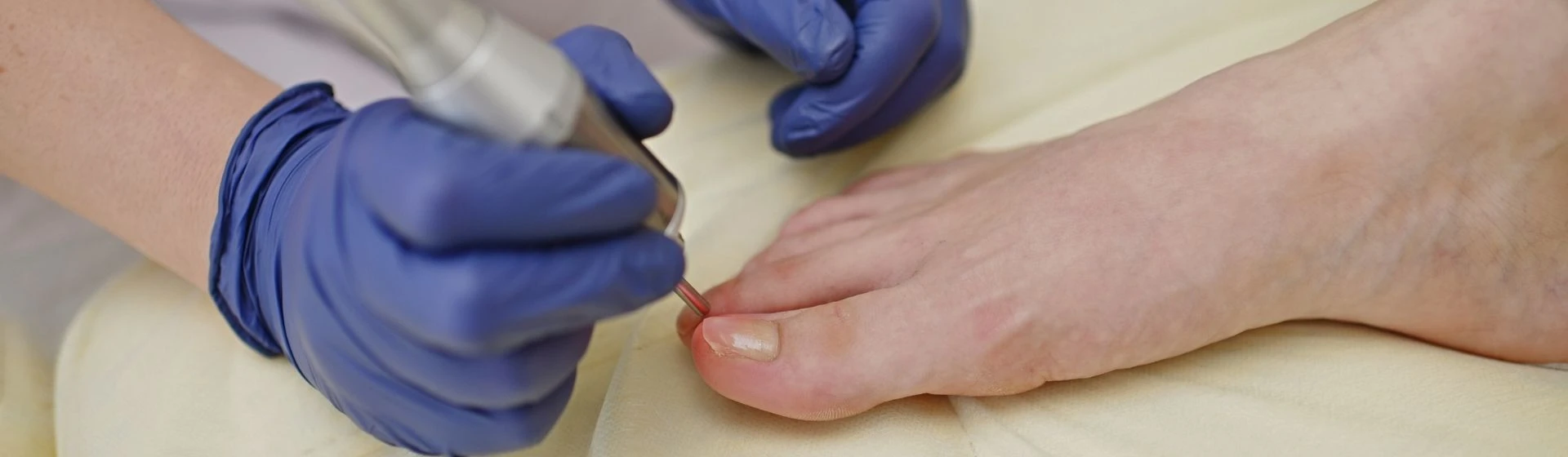
Laser treatment for onychomycosis
Laser treatment for nail fungus in Kyiv
Fast and safe elimination of nail fungus is now possible thanks to the Candela GentleMax Pro laser device. Onychomycosis (nail fungus) affects, according to various estimates, from 10% to 25% of people, mostly men. The disease is caused by dermatophytes—fungi capable of living on human skin—which, before the advent of laser therapy, required a long and complex treatment process.
Symptoms and causes of nail fungus
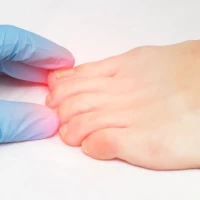
Initially, the fungus affects the skin around the nail, and later the fungal infection spreads to the nail bed, under the nail itself. In most cases, toenails are affected by nail fungus, although the disease can occasionally appear on the hands as well.
Onychomycosis can be suspected if:
-
the skin around the nail becomes inflamed;
-
the color and shape of the nail change;
-
the nail plate thickens and may become flaky;
-
whitish or yellowish spots appear on the nails;
-
the nail atrophies and may even detach from the nail bed.
Several factors contribute to the development of fungal infections: high humidity and temperature, wearing synthetic clothing, nail plate injuries, constant contact with water, and regular exposure to chemical agents. Excessive sweating, flat feet, poor hygiene practices, old age, and long-term use of antibiotics also indirectly create favorable conditions for the disease to develop.
Infection most often occurs in swimming pools, bathhouses, and any public places with high humidity where people's feet are not protected by footwear.
Nail fungus diagnosis
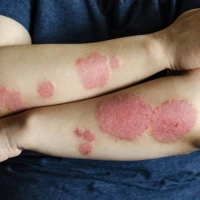
Accurate diagnosis is essential for effective treatment of onychomycosis. The symptoms of fungal nail infection may resemble other nail conditions, such as psoriasis or eczema, which is why it is crucial to confirm the presence of fungus using laboratory methods.
At Oxford Medical, nail fungus diagnosis includes several steps:
-
Dermatologist examination. The doctor assesses the condition of the nails, surrounding skin, and the extent of the infection.
-
Scraping of the affected area. A sample of nail or surrounding skin tissue is collected for analysis.
-
Microscopy. Fungal spores are identified under a microscope.
-
Culture testing. In some cases, the sample is placed on a growth medium to identify the specific type of fungus.
Determining the type of fungus allows for selecting the most effective treatment approach, including assessing the suitability of laser therapy. That is why a consultation and diagnostic assessment with a dermatologist are mandatory before starting treatment.
Laser treatment for nail fungus
Before the introduction of laser technologies, onychomycosis was treated with a combination of topical (creams, ointments) and systemic medications. The former were minimally effective because they barely penetrated under the nail plate, while the latter were effective but, due to their toxicity, had a negative impact on the entire body during prolonged use. For this reason, systemic drugs are not recommended for patients with liver or kidney diseases.
Laser treatment of nail fungus is both effective and safe. The neodymium laser used in the Candela GentleMax Pro device is capable of penetrating the nail plate to the nail bed, eliminating the fungal infection. On average, 4 to 6 sessions are required to destroy the fungus, each lasting only 15–20 minutes.
Laser treatment for fungus is painless and does not require anesthesia. After treatment, the affected nail gradually grows out and is replaced by a healthy nail plate.
Before starting treatment, it is necessary to consult a dermatologist, who will take a scraping for fungal analysis. This is essential to distinguish between a fungal infection and onychodystrophy—a nail condition caused by nutrient deficiency. For 5–7 days before the consultation, do not apply any creams or ointments to the nail, as this may distort the examination results, which are used to make an accurate diagnosis. Based on the findings, the doctor will prescribe a laser treatment course, the duration of which will depend on the severity of the condition.
Many patients with nail fungus seek medical help when the disease is already advanced. In such cases, traditional therapy methods require lengthy treatment courses, which many patients fail to complete. Laser treatment of nail fungus offers a fast, safe, and effective solution.
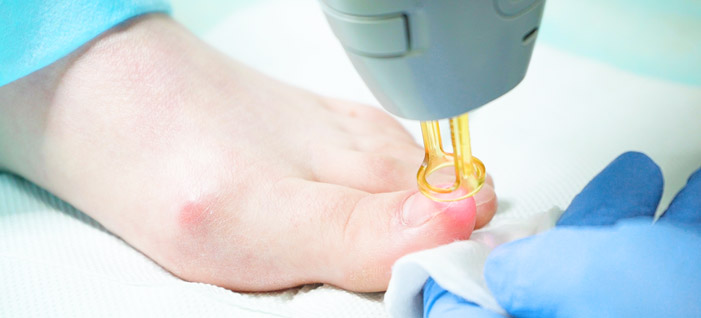
Recommendations after laser treatment of onychomycosis
To prevent reinfection with the fungus, it is important to follow several foot hygiene rules:
-
wash your feet daily with soap and dry them thoroughly;
-
trim your nails regularly;
-
wear breathable and spacious footwear;
-
rotate between several pairs of shoes;
-
if your shoes get wet, dry them thoroughly;
-
wear clean and dry socks;
-
do not walk barefoot, especially in baths, saunas, locker rooms, and gyms.
You can schedule a laser treatment for nail fungus at the dermatology department of the Oxford Medical clinic by phone or using the form on the website.


Advantages of Oxford Medical Dermatology in Kyiv

Comprehensive treatment approach. We treat not only symptoms but also eliminate the root cause of the disease.
Modern equipment. We use advanced technologies for accurate diagnosis and effective treatment.
Individual therapy programs. Treatment plans are developed considering the specifics of the disease course.
Experienced dermatologists. Consultations are provided by specialists with extensive clinical experience and high qualifications.

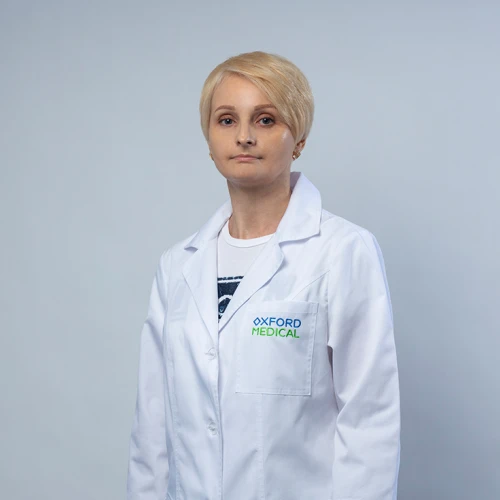
Our doctors
 4.92
4.92  18+
18+  18+ Years of experience
  Kyiv, Mykhayla Hryshka St., 1
 4.96 25+
  25+ Years of experience Kyiv, Knyaziv Ostrozkyh St., 46/2 Kyiv, Oleksandra Olesia St., 2
  4.95 16+ 16+ Years of experience Kyiv, Hlybochytska St., 40x
  4.95 20+ 20+ Years of experience Kyiv, Vasyl Lypkivskoho St., 38


 in the clinic
  online

 Hello!
Let's take care
about your health:

