


itching of varying intensity;
Atopic dermatitis on the face is often localized around the eyes, on the eyelids, on the lips or around the mouth, and it can also affect the neck and the area behind the ears.

 Adults Adults Adults Adults Adults Adults Adults Adults Adults
  Children Children Children Children


 Hotline:
 Adults Adults Adults Adults Adults Adults Adults Adults Adults Children Children Children Children
Atopic dermatitis (or atopic eczema) is a chronic inflammatory skin disease that most often has a relapsing course and can significantly affect quality of life. The condition manifests as dry skin, rashes, itching, and a tendency to flare under the influence of various external and internal factors. In adults, atopic dermatitis often has a prolonged course and requires a systematic approach to treatment.
At the Oxford Medical Center, dermatologists help not only reduce the manifestations of the disease, but also identify factors that trigger flare-ups and select an individualized treatment strategy.
If symptoms of atopic dermatitis persist for a long time or regularly return, it is worth scheduling a consultation to establish the diagnosis in a timely manner and begin effective treatment.
Atopic dermatitis has a multifactorial nature and develops as a result of a combination of genetic predisposition, immune response characteristics, and impairment of the skin’s protective function. That is why the disease often has a chronic course and tends to recur.
One of the key mechanisms in the development of the disease is disruption of the skin barrier. The skin loses its ability to retain moisture and to effectively protect itself from external irritants, which leads to dryness, increased sensitivity, and inflammation. Against this background, even common environmental factors can trigger flare-ups.
Heredity also plays an important role. If there are cases of allergic diseases in the family, the risk of developing atopic dermatitis increases. In such cases, the immune system reacts excessively, maintaining chronic skin inflammation.
In medical literature, atopic dermatitis is also described as atopic eczema, emphasizing the immune-inflammatory nature of the process and its association with an allergic predisposition.
Factors that may trigger or worsen the condition include:
Some patients have seasonal atopic dermatitis, when symptom flare-ups occur during certain times of the year. Most often, worsening is observed in the autumn-winter period, which is associated with lower air humidity and cold temperatures.
Typically, atopic dermatitis presents with the following symptoms:


itching of varying intensity;
dry skin with a feeling of tightness;
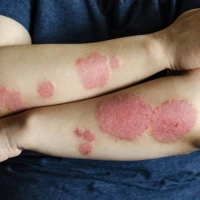
rashes in the form of redness or thickening of the skin;
periodic flare-ups, including seasonal ones.

In some cases, atopic dermatitis without itching is possible, when the main signs remain dryness and rashes.
Atopic dermatitis is a chronic inflammatory skin disease with a relapsing nature. It is classified by phases of development and by the extent of the pathological process. This approach makes it possible to more accurately assess and predict disease dynamics and choose the optimal treatment strategy.
By phases of the course, the following are distinguished:
By extent of involvement:
The nature of the course of atopic dermatitis affects the choice of therapeutic approach and the duration of treatment.
Atopic dermatitis can affect different parts of the body. Changes usually appear in areas with thin, sensitive skin or in regions exposed to friction and external impact.
The most common affected areas are:
Atopic dermatitis on the face is often localized around the eyes, on the eyelids, on the lips or around the mouth, and it can also affect the neck and the area behind the ears.
Changes can also appear on the scalp. In this case, the scalp becomes dry and may peel.
Atopic dermatitis is often observed on the hands, especially in the area of the hands and palms.
Lesions may spread to the abdomen and other parts of the body, and may also appear on the legs.
Diagnosis of atopic dermatitis is based primarily on a clinical examination and a detailed medical history. The doctor assesses the nature of skin changes, their localization, the presence of dryness, rashes, and itching, and уточняет the duration of symptoms and the frequency of flare-ups.
An important step is identifying hereditary predisposition and factors that may provoke worsening of the skin condition. Based on the combination of these data, a diagnosis of atopic dermatitis is established and further management tactics are determined.
If necessary, differential diagnosis is performed with other dermatological conditions that have similar manifestations. Additional tests are prescribed on an individual basis.
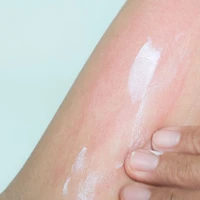
Treatment of atopic dermatitis in adults should be comprehensive. A dermatologist selects the therapy regimen individually, taking into account the affected area and the severity of symptoms.
The patient may be advised:
If the patient has chronic atopic dermatitis, treatment requires regular follow-up with a dermatologist and therapy adjustment depending on the skin condition and the course of the disease.
Without proper control and regular treatment, atopic dermatitis can lead to complications. They most often occur with a prolonged course of the disease, frequent flare-ups, or constant scratching of affected areas.
The most common complications include:
Timely consultation with a dermatologist and adherence to the recommended therapy are important not only for reducing symptoms, but also for preventing complications of atopic dermatitis.
The cost of treatment is determined individually and depends on the course of the disease, the severity of symptoms, the area of skin involvement, and the chosen treatment strategy. The final treatment program is determined by the doctor during the consultation after an examination and assessment of the clinical picture.
You can ознакомитися in advance with the price of a dermatologist consultation here.
Book an appointment at a time convenient for you to start effective treatment as soon as possible.
Flare-ups can be triggered by factors such as dry air, sudden temperature changes, contact with irritants, certain foods, hormonal fluctuations, нарушения in the skin-care routine, and stress. The impact of triggers is individual and may change over time.
Diet is selected individually. During flare-ups, products that may cause a reaction are usually limited: spicy foods, smoked foods, alcohol, and sweets. Preference is given to simple meals, adequate fluid intake, and foods that do not worsen the skin condition.
Atopic dermatitis is more often accompanied by dry skin and itching, has a wave-like course, and is associated with an allergic background. Psoriasis is characterized by dense plaques with a scaly surface. An accurate diagnosis is established by a dermatologist after examination and assessment of symptoms.
In most cases, the diagnosis is made clinically. If necessary, the doctor may order a complete blood count, testing of immunoglobulin E levels, or allergy tests. The scope of testing depends on the course of the disease and the presence of comorbid conditions.
Flare-ups often occur in the cold season, during stress, with dry air, after changing skin-care products, or when the doctor’s recommendations are not followed. Some patients may have a seasonal course with worsening in autumn and winter.
Atopic dermatitis is a chronic disease, so it cannot be completely cured. However, properly selected treatment and skin care can help achieve long-term remission, reduce symptoms, and control the course of the disease.
Atopic dermatitis is not contagious and is not transmitted through contact. It cannot be “caught” through touch or shared household items. Hereditary predisposition and the characteristics of the immune response play a role.


Individualized therapy programs. The regimen is selected with regard to the disease phase, lesion localization, and the patient’s skin characteristics.
Comprehensive approach. Treatment is aimed not only at reducing symptoms, but also at controlling the course of the disease and preventing exacerbations.
Modern clinical protocols. The work uses new dermatological recommendations and proven treatment methods.
Comfortable reception conditions. Consultations are held without queues, at a time convenient for the patient.

 4.91
4.91  23+
23+ 
 23+ Years of experience
 4.96 25+ 25+ Years of experience
  Kyiv, Knyaziv Ostrozkyh St., 46/2 Kyiv, Oleksandra Olesia St., 2
  4.92 18+ 18+ Years of experience Kyiv, Mykhayla Hryshka St., 1
  4.95 16+ 16+ Years of experience Kyiv, Hlybochytska St., 40x
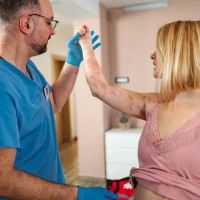

 in the clinic
  online
  Hello!


