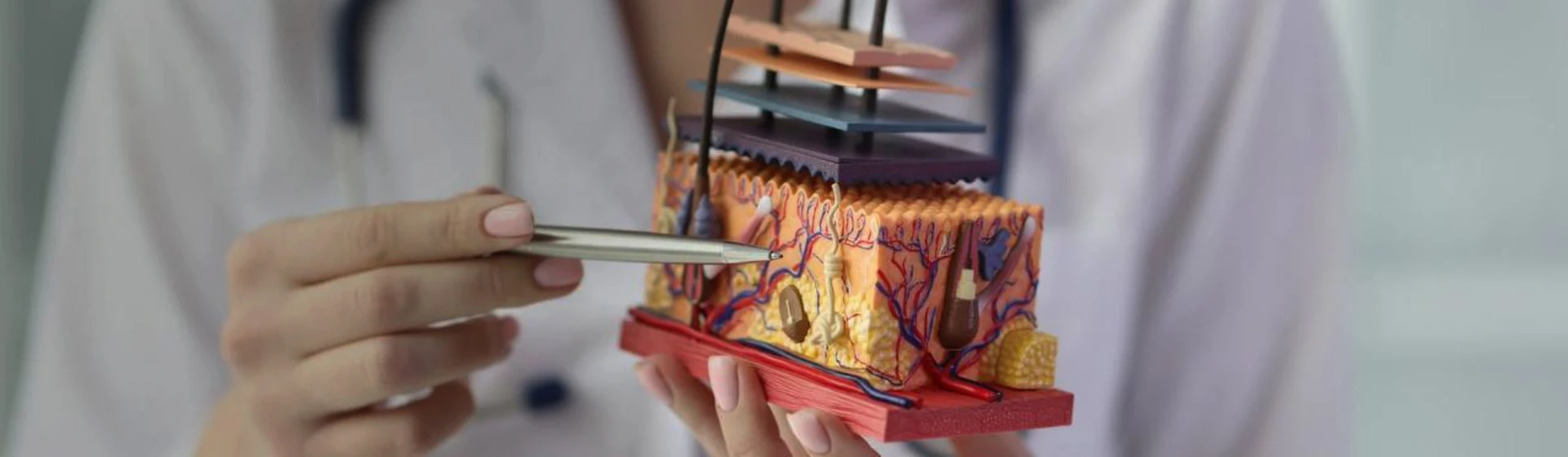
Diagnostics of xerosis begins with a careful conversation and examination. The doctor clarifies when the symptoms appeared, what exactly worsens or relieves the condition of the skin, and how it reacts to skin care and environmental factors. This information helps determine whether xerosis is an isolated condition or is associated with internal disorders or external influences. During diagnosis, the doctor also rules out other dermatological diseases, including psoriasis and eczema, which may have similar manifestations but require a different approach to treatment.
During the examination, the specialist assesses the level of dryness, the type of flaking, and the presence of cracks or irritated areas. For some patients, it is important to understand whether the dryness is related to lifestyle and the use of cosmetic products, or whether it has deeper causes — for example, hormonal changes or nutrient deficiencies.
If there is a suspicion that comorbid conditions affect the skin, the doctor may recommend additional tests. Comprehensive diagnostics allows not only to reduce symptoms, but also to identify the cause of dryness. This makes treatment more precise and the result more stable.
The patient may be prescribed:
- Complete blood count and biochemical tests. They allow assessment of the body's condition and help identify signs of inflammation, anaemia or metabolic disorders that may contribute to dryness.
- Tests for thyroid hormone levels. Hypothyroidism often presents with dryness, dullness and changes in skin texture, so evaluation of thyroid function is an important part of diagnostics.
- Assessment of vitamin and trace element levels. Deficiency of vitamin D, omega fatty acids, zinc or other nutrients can weaken the skin barrier and provoke xerosis.
- Allergy testing. Performed if there is a suspicion that dryness or irritation occurs in response to specific allergens, cosmetic ingredients or skin care products.