


Belching, regurgitation after eating
Sign up via call center 
 Adults Adults Adults Adults Adults Adults Adults Adults Adults
  Children Children Children Children
Department
Adults Outpatient department
Adults Outpatient department
Inpatient department
Adults Inpatient department
Aesthetic medicine
Adults Aesthetic medicine
Dentistry
Adults Dentistry
Plastic surgery
Adults Plastic surgery
Diagnostics
Adults Diagnostics
Analyzes
Adults Analyzes
Outbound services
Adults Outbound services
Children Outpatient department
Children Outpatient department
Dentistry
Children Dentistry
Diagnostics
Children Diagnostics

Kyiv


 Hotline:
 Request a call:


Department
Adults Outpatient department
Adults Outpatient department
Inpatient department
Adults Inpatient department
Aesthetic medicine
Adults Aesthetic medicine
Dentistry
Adults Dentistry
Plastic surgery
Adults Plastic surgery
Diagnostics
Adults Diagnostics
Analyzes
Adults Analyzes
Outbound services
Adults Outbound services
Children Outpatient department
Children Outpatient department
Dentistry
Children Dentistry
Diagnostics
Children Diagnostics
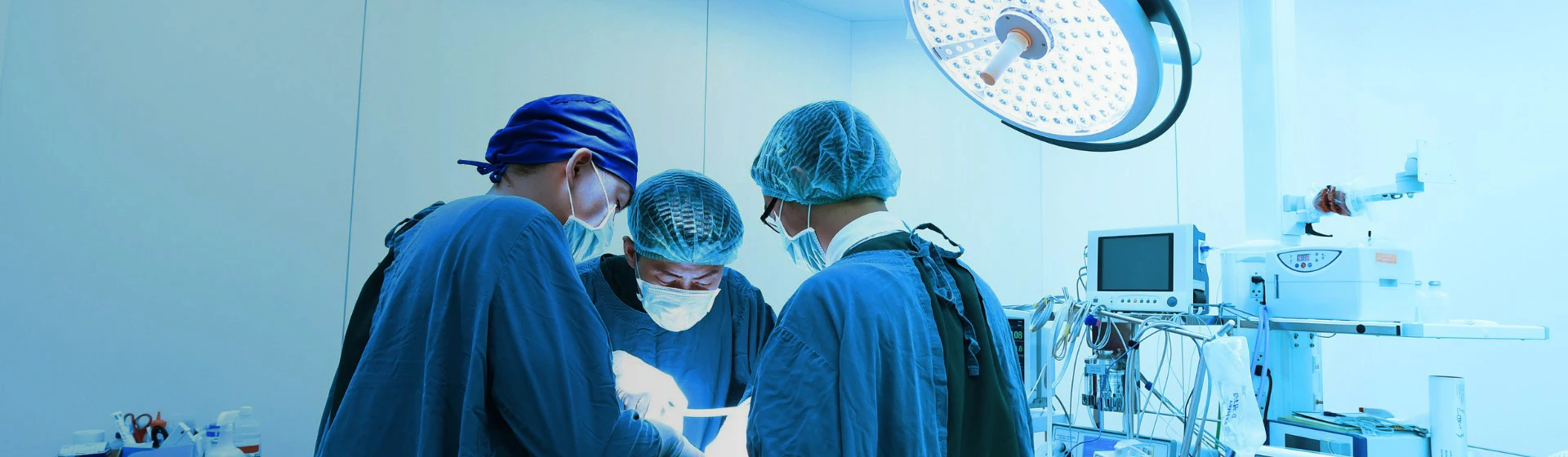
Surgery treatment of GERD
Please note! Hospitalization and surgery at the «Oxford Medical» clinic require mandatory PCR testing for coronavirus.
Diseases of the gastrointestinal tract are accompanied by severe pain and can significantly worsen the quality of life. The most common problems from this area are gastroesophageal reflux disease and diaphragmatic hernias.
Gastroesophageal reflux disease (GERD) is a pathology of the function of the oesophageal sphincter. It allows food to pass through the cardiac orifice into the stomach. The development of the disease leads to damaging of the esophageal mucosa and to complications which appear in the form of erosive-ulcerative esophagitis or «Barrett's esophagus», which are considered precancerous conditions.
Potential causes of GERD are:
- poor diet;
- obesity;
- stress;
- taking of certain medications.
Diaphragmatic hernia is a displacement of the abdominal organs into the chest. The following factors can provoke the development of diaphragmatic hernia:
- congenital weakness of the connective tissue of the diaphragm;
- injuries;
- physically demanding job;
- obesity;
- diseases accompanied by a persistent cough.
Signs of GERD and diaphragmatic hernias
The symptoms are triggered by physical activity, movement, coughing or other conditions
where intra-abdominal pressure increases.
Manifestations of GERD or diaphragmatic hernias can be:


Heartburn after eating
Retrosternal pain

Diagnosis of GERD and diaphragmatic hernias
Gastroscopy is usually performed to diagnose gastroesophageal reflux disease.
The diagnosis of a diaphragmatic hernia is based on chest x-ray data. To exclude the presence of concomitant pathologies, an abdominal x-ray with contrast and gastroscopy are prescribed. Sometimes to make an accurate diagnosis, specific studies may be required to assess functional disorders of the esophagus, such as manometry or daily monitoring of acidity.
Treatment of GERD and diaphragmatic hernias
Surgical intervention for gastroesophageal reflux disease is prescribed if conservative treatment has not yielded results. The main method of surgical treatment of GERD is fundoplication. This is an operation aimed at restoring the usefulness of the lower esophageal sphincter, the incorrect functioning of which makes the contents of the stomach constantly enter the esophagus.
Surgical treatment of diaphragmatic hernias is prescribed when the hernia interferes with the function of the chest organs, if conservative methods of treatment are ineffective and a risk of developing gastric ulcer, esophageal ulcer or other complications exists. During the operation the hernia orifice can be sutured, the esophageal ligaments can be strengthened, and the stomach can be fixed in the abdominal cavity.
You can make an appointment with a surgeon using the forms on the website.
Surgical ward
General Surgery
Surgical treatment of GERD
Show more 
Our services
Consultations

Consultation with a surgeon
1100.00 ₴
Add Added 
General surgery services
Ultrasound-guided puncture of cystic formation of III complexity category
5389.00 ₴
Sign up by the call center
Operation of the II category of complexity performed by a doctor of medical sciences
59889.00 ₴
Sign up by the call center
Operation of the III category of complexity
59889.00 ₴
Sign up by the call center
Operation of the III category of complexity performed by a doctor of medical sciences
69889.00 ₴
Sign up by the call center
Hartmann's operation
46889.00 ₴
Sign up by the call center

Advantages of the General Surgery Department at Oxford Medical in Kyiv

Modern equipment. The latest technology ensures accurate diagnostics and safe surgeries.
Experienced surgeons. Doctors with many years of practice use advanced treatment methods.
Minimally invasive techniques. Laparoscopic surgery reduces trauma and speeds up recovery.
Comfortable conditions. Rehabilitation takes place in modern wards under staff supervision.
Loyalty program. Special offers make surgical treatment more affordable for patients.
Comprehensive approach. Patients receive full care: diagnostics, surgery, and rehabilitation.
Show more 
Our doctors
 4.9
4.9  47+
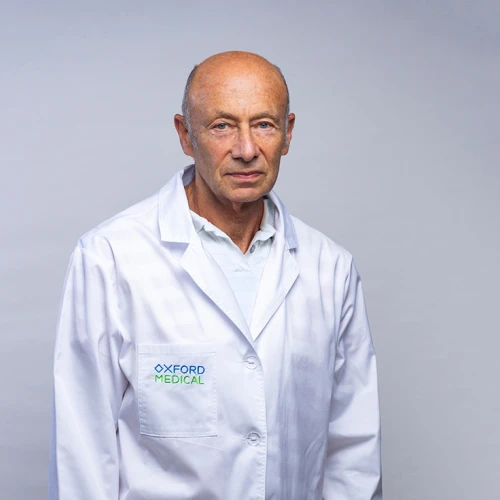
47+ Surgeon of the highest category, Doctor of Medical Sciences
 47+ Years of experience
 4.58 42+
 Surgeon-oncologist of the highest category, Candidate of Medical Sciences
42+ Years of experience Consultation 1989
Make an appointment  4.84 40+
 4.95 43+
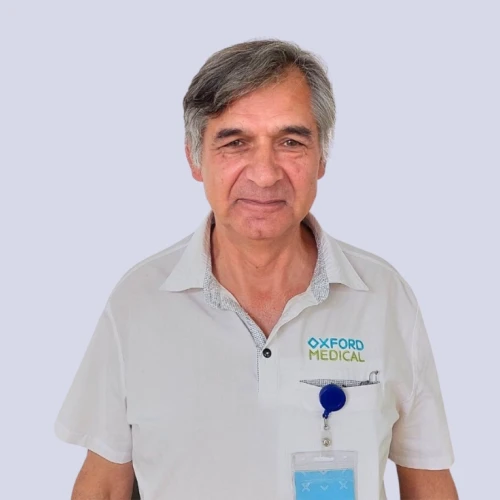
 Surgeon of the highest category
Candidate of Medical Sciences
Candidate of Medical Sciences
43+ Years of experience Consultation 1100
 Kyiv, st. Bereznyakivska, 30b
 Reviews
Анастасія Мічуда 14.04.2026
Приємно вражена цією представницею молодих лікарів — і стосовно вдалого підбору лікування пневмонії, і загальним емоційним настроєм Любові Миколаївни, і, головне, її інтересом до своєї справи: не відбуває обовʼязки, а має власну зацікавленість у успіху лікування. Таке ставлення надає надію на лікарську молодь, на яку можна буде покластися. Дякую від щирого серця!💕

Сергій 14.04.2026
Вважаю, мені пощастило, що звернувся за лікуванням до лікаря – уролога, онкохірурга Когут Віктора Вікторовича. Це поєднання високого професіоналізму у своїй справі та доброзичливого відношення до пацієнтів. Якісні, своєчасні консультації. Успішно проведені дві операції. Вирішено складні проблеми зі здоров’ям. Хочу висловити щиру вдячність. Рекомендую.
Current information

09 April 2026
What is a hygroma: can it go away on its own
23 December 2025
Laparoscopy in gynecology: how modern methods are changing approaches to operations
27 July 2025
Removal of the Thyroid Gland: Consequences, Rehabilitation, and Life After Surgery
23 July 2025
Everything About Joint Replacement: Price, When, For Whom, and How Arthroplasty Can Be Performed
Sign up for a consultation
 in the clinic
  online

 Hello!
Let's take care
about your health:
Sign up via call center 
