

 Adults Adults Adults Adults Adults Adults Adults Adults Adults
  Children Children Children Children


 Hotline:
 Adults Adults Adults Adults Adults Adults Adults Adults Adults Children Children Children Children


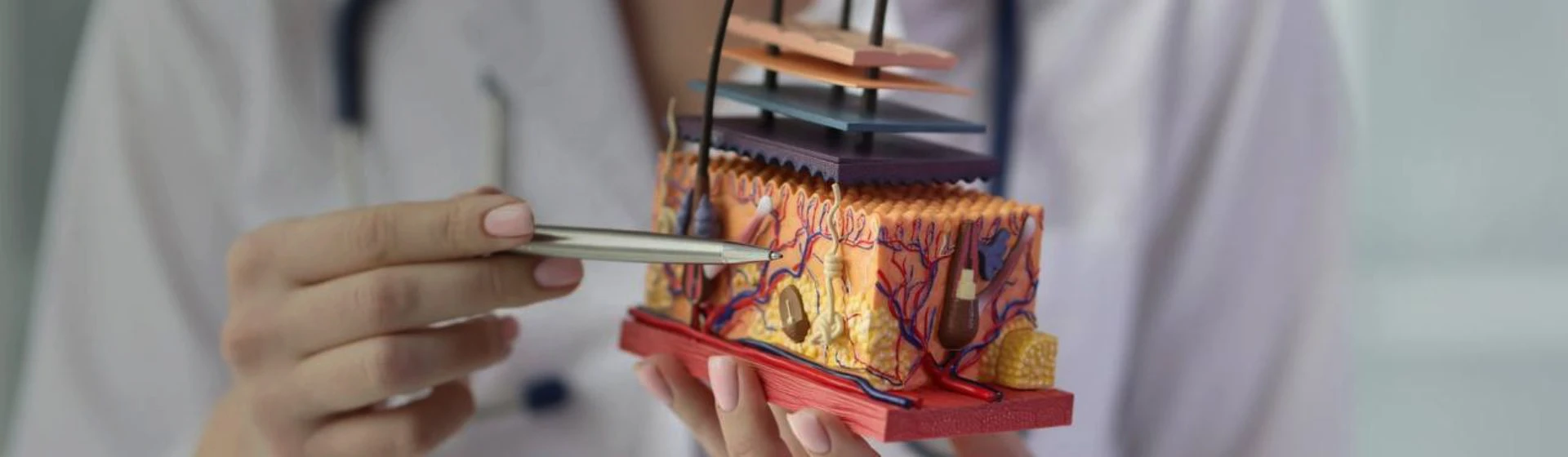
Photodermatosis treatment
Photodermatosis treatment in Kyiv
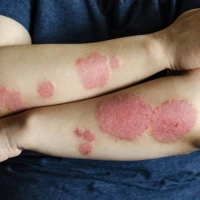
Photodermatosis, or photodermatitis, is a skin condition caused by increased sensitivity to sunlight. It is characterized by skin rashes, burning sensations, and persistent itching. People with fair, delicate skin, young women, children, and the elderly are more susceptible to photodermatosis. It is a relatively rare condition, usually occurring in individuals with weakened immune defenses. Sunlight itself does not cause an allergic reaction — it merely signals the presence of a deeper internal issue in the body.
Causes of photodermatosis
Various chemicals, as well as the products of their metabolism in the human body, accumulate in the skin and are the primary cause of photoallergic and phototoxic reactions in skin areas exposed to direct sunlight.
The causes of photodermatosis may include:
-
Use of perfumes and cosmetic products containing musk, bergamot oil, and sandalwood oil;
-
Contact of the skin with the sap of certain plants (such as wild angelica, some types of hogweed, etc.);
-
Application of disinfecting substances;
-
Intake of certain medications — specific types of antibiotics, tetracyclines, neuroleptics, immunosuppressants, some drugs used to treat diabetes, etc.
Symptoms of photodermatosis
Photodermatosis manifests with the following symptoms:
-
Redness of the skin;
-
Blisters;
-
Urticaria (hives);
-
Rashes;
-
Peeling;
-
Itching.
Photodermatosis usually appears on exposed areas of the skin: the face, ears, neck, décolleté area, hands, and shoulders. The first symptoms typically develop a few hours after direct exposure to sunlight. In the case of delayed-type photodermatosis, the reaction occurs approximately 18–72 hours later. In individuals with particularly heightened sensitivity, bronchospasm may develop, and lowered blood pressure or even loss of consciousness can be observed.
It is important to remember that each person has their own individual threshold of sensitivity to ultraviolet exposure. Note: if you want to achieve a beautiful tan, be sure to use reliable sun protection before going to the beach. Also, choose the right time for tanning — from 7 to 11 a.m. and after 5 p.m.
Diagnosis and treatment of photodermatosis
When treating patients with photodermatosis, the first step is to eliminate or reduce the effect of photosensitizers. Topical treatment is selected based on the severity of the inflammatory reaction and may include a range of products — from compresses to anti-inflammatory ointments, including corticosteroids. The primary goal of therapy for all types of photodermatosis is to reduce photosensitization, which is why first-line treatment includes drugs with a photodesensitizing effect (such as beta-carotene, para-aminobenzoic acid, etc.).
Comprehensive therapy for this condition includes the intake of vitamins A and E, which are natural antioxidants. Antioxidants may also be used in various cosmetic products, such as extracts of green tea, grape seeds, chamomile, maritime pine bark, cornflower blue, and others.


Advantages of Oxford Medical Dermatology in Kyiv

Comprehensive treatment approach. We treat not only symptoms but also eliminate the root cause of the disease.
Modern equipment. We use advanced technologies for accurate diagnosis and effective treatment.
Individual therapy programs. Treatment plans are developed considering the specifics of the disease course.
Experienced dermatologists. Consultations are provided by specialists with extensive clinical experience and high qualifications.

Our doctors
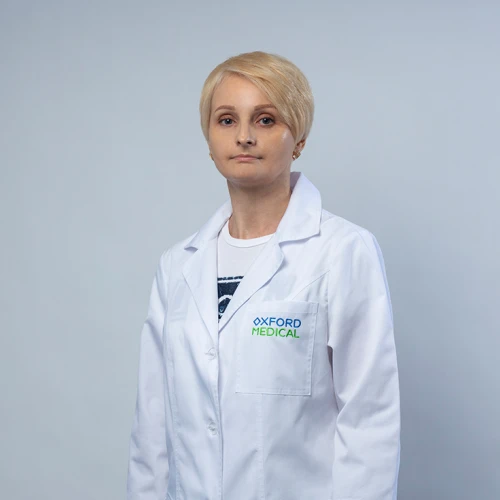
 4.92
4.92  18+
18+  18+ Years of experience
  Kyiv, Mykhayla Hryshka St., 1
 4.96 25+
  25+ Years of experience Kyiv, Knyaziv Ostrozkyh St., 46/2 Kyiv, Oleksandra Olesia St., 2
 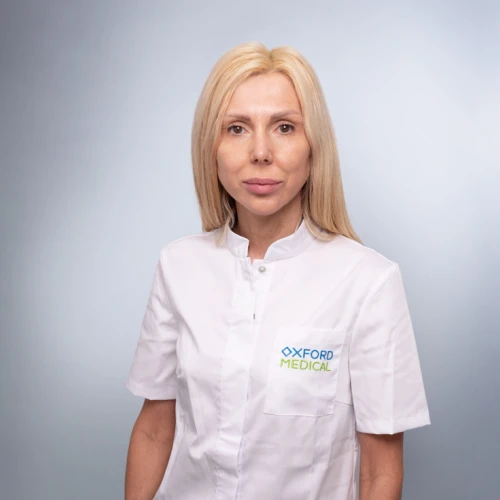 4.95 16+ 16+ Years of experience Kyiv, Hlybochytska St., 40x
 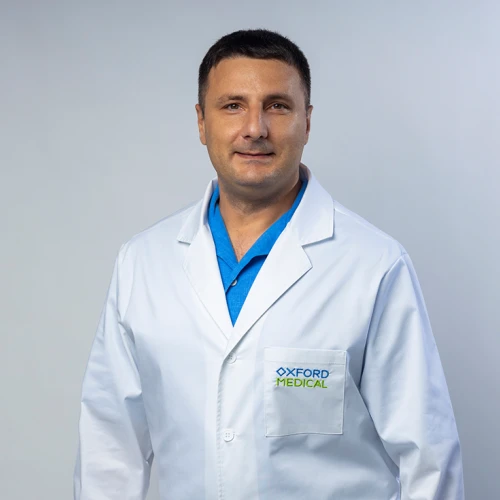 4.95 20+ 20+ Years of experience Kyiv, Vasyl Lypkivskoho St., 38


 in the clinic
  online

 Hello!
Let's take care
about your health:

