

 Adults Adults Adults Adults Adults Adults Adults Adults Adults
  Children Children Children Children


 Hotline:
 Adults Adults Adults Adults Adults Adults Adults Adults Adults Children Children Children Children


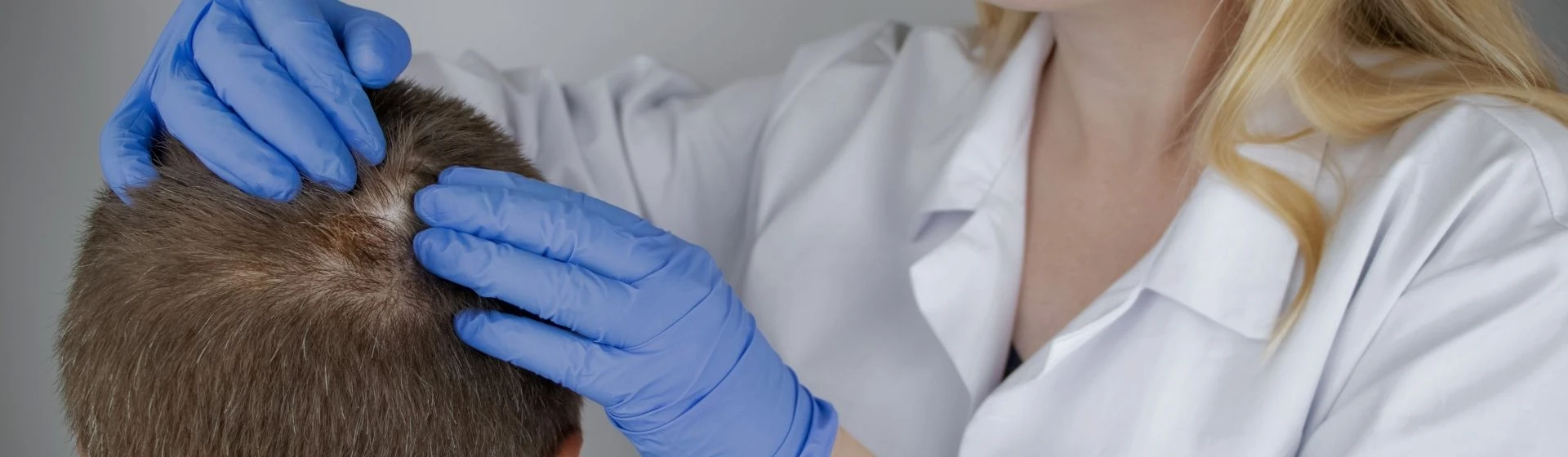
Seborrheic dermatitis treatment
Seborrhea treatment in Kyiv
Seborrhea is a fairly common chronic skin condition that affects areas of the body rich in sebaceous glands. In this condition, the sebaceous glands actively produce a large amount of sebum with a high content of free fatty acids. As a rule, such problems begin in adolescence and resolve by the age of 24–28.
Causes of seborrhea
Possible factors contributing to the development of seborrhea may include genetic and metabolic causes, as well as the impact of an unfavorable external environment. Under adverse conditions, the protective function of the skin and sebaceous glands is impaired, as a result of which the body loses the ability to control the growth of Pityrosporum fungi, and their number increases. The main factor triggering the activation of fungi is a change in the composition of sebum, which disrupts the skin's protective function. The causes of such changes may be neurogenic, hormonal, or immune. It has been proven that seborrhea worsens with nervous exhaustion and stress. Patients with nervous system disorders and diseases are especially susceptible to seborrhea.
Symptoms of seborrhea
Dermatologists distinguish between oily and dry forms of the disease.
Signs of oily seborrhea:
-
affected skin areas are moist, greasy, shiny;
-
sebaceous gland pores are enlarged and clogged with comedones;
-
the skin is thickened, has a dirty-gray tint;
-
the hair looks greasy, bald patches appear;
-
small yellow nodules (sebaceous cysts) are observed on the skin.
Dry seborrhea is characterized by dandruff and acne.
Diagnosis of seborrhea
This condition is diagnosed based on clinical manifestations during a consultation with a dermatologist or trichologist. The specialist identifies the cause of seborrhea by assessing hormonal levels. To establish an accurate diagnosis, the patient is also examined by a neurologist, and possible gastrointestinal pathologies and immunodeficiency conditions are ruled out.
Seborrhea treatment
Treatment of seborrhea involves correcting the underlying causes and local action on the scalp. The most appropriate approach is specific antifungal therapy. Maintaining a proper diet is mandatory. The use of medicinal lotions and shampoos alone is insufficient; therefore, it is necessary to rub medications containing zinc and tar into the scalp. In severe cases of the disease, keratolytic agents are used. Hormonal medications for seborrhea are prescribed by the doctor only in cases where antifungal therapy does not produce the desired effect. Seborrhea treatment also includes physiotherapy procedures that improve microcirculation and promote exfoliation of the epidermis, such as cryomassage and darsonvalization. Patients with seborrhea should change scalp care products with extreme caution.


Advantages of Oxford Medical Dermatology in Kyiv

Comprehensive treatment approach. We treat not only symptoms but also eliminate the root cause of the disease.
Modern equipment. We use advanced technologies for accurate diagnosis and effective treatment.
Individual therapy programs. Treatment plans are developed considering the specifics of the disease course.
Experienced dermatologists. Consultations are provided by specialists with extensive clinical experience and high qualifications.

Our doctors
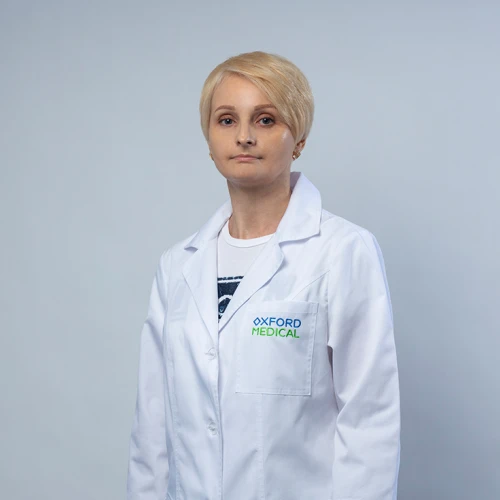
 4.92
4.92  18+
18+  18+ Years of experience
  Kyiv, Mykhayla Hryshka St., 1
 4.96 25+
  25+ Years of experience Kyiv, Knyaziv Ostrozkyh St., 46/2 Kyiv, Oleksandra Olesia St., 2
 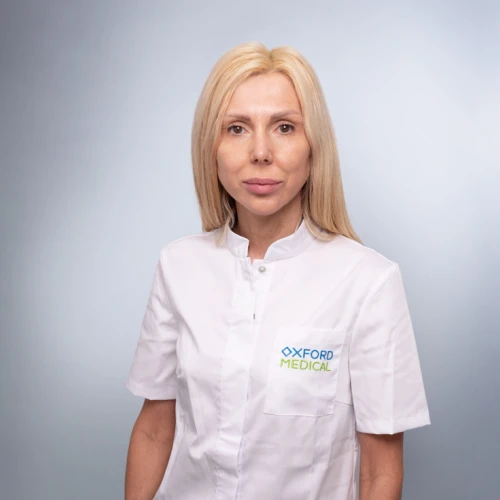 4.95 16+ 16+ Years of experience Kyiv, Hlybochytska St., 40x
 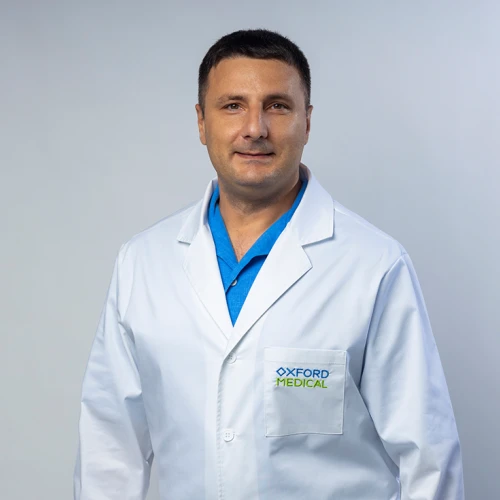 4.95 20+ 20+ Years of experience Kyiv, Vasyl Lypkivskoho St., 38


 in the clinic
  online

 Hello!
Let's take care
about your health:

