Sign up via call center
Department
Dermatologist in Osokorky

Angioma removal

Small red spots or nodules on the skin often do not cause concern and are perceived as an ordinary red mole. They may not change for a long time, not hurt and not create discomfort. However, even such formations require attention, since externally they may be similar to other skin diseases.

If such elements increase, bleed or appear in greater numbers, it is important to consult a doctor as soon as possible in order to assess their nature and determine whether treatment is needed. At the Oxford Medical medical center, you can undergo a dermatologist consultation, examination and, if necessary, removal of angiomas with laser or other modern methods. To make an appointment, call or use the online appointment form.

What Is Skin Angioma

Angioma is a benign vascular formation that forms from blood or lymphatic vessels in the superficial layers of the skin. Most often, skin angioma looks like a small red mole or a bright spot that may be flat or slightly raised above the surface.

Such vascular skin neoplasms usually have a size of up to 3–5 mm, but sometimes they may increase. They may be single or multiple, appear on any area of the body — more often on the trunk, arms, face.

Angiomas are often called “red moles,” however, unlike pigmented nevi, they are associated not with the accumulation of melanin, but with the proliferation of vessels. That is why their color may vary from bright red to dark burgundy or bluish.

Doctors of Oxford Medical recommend not ignoring even small changes in the skin. Although angiomas are benign and usually do not pose a danger, it is important to correctly determine the type of formation and exclude other conditions.

Skin Angioma: Causes of Red Moles

Angiomas form as a result of changes in the small vessels of the skin. The exact causes of their appearance cannot always be established. Red spots on the skin may appear even without an obvious external influence, including in people without complaints about their health condition.

According to the National Center for Biotechnology Information (NCBI), the development of cherry angiomas is associated with age-related changes, pregnancy and genetic mutations in vascular cells. This explains why such formations often occur spontaneously and may increase in number over time.

Additionally, it has been established that the frequency of angioma occurrence increases with age: according to DermNet New Zealand, after the age of 40 they occur significantly more often, and in people over 75 years old — in approximately 75% of cases.

Other factors that may affect the formation of angiomas include:

  • hereditary predisposition;
  • exposure to ultraviolet radiation;
  • hormonal imbalance;
  • individual features of the vascular system.

Specialists of Oxford Medical emphasize that it is necessary to consult a dermatologist if red moles on the skin change or their number increases significantly, in order to assess their nature in a timely manner and exclude other conditions.

Classification of Angiomas

Angiomas are classified depending on the structure of the vessels, depth of location and clinical appearance. This helps to assess the features of neoplasms and choose the optimal tactics of observation or treatment.

Type of angioma

What it looks like

Features

Cherry angioma

A small bright red or burgundy spot

The most common variant in adults, often appears multiply

Cavernous angioma

A soft formation of a red or bluish shade

May be located deeper and have a larger size

Capillary angioma

A flat or slightly raised red spot

A superficial vascular formation of small size

Venous angioma

A bluish or dark red nodule

May change color when pressed

Such angiomas on the body may differ not only in external appearance, but also in depth of location and growth features. That is why even with a typical appearance, it is important to have an examination by a doctor.

Indications for Removal of Red Moles

Removal of red moles may be performed for medical or aesthetic reasons. However,
not all angiomas require treatment — the decision is made individually after
examination by a doctor.

Main indications:

the neoplasm increases, changes color, shape;

bleeding appears;

discomfort, pain or a feeling of pulsation occurs;

small red spots appear on the skin.

List of diseases

Main Contraindications

Removal of angiomas is a minimally traumatic procedure, however, before it is performed, the doctor must assess the patient’s general state of health and the condition of the skin in the area of intervention. In some cases, the procedure may be temporarily postponed.

The main contraindications include:

  • acute infectious diseases or elevated temperature;
  • inflammation, irritation or rashes in the area where angioma removal is planned;
  • exacerbation of chronic diseases;
  • blood clotting disorders or taking medications that affect this process.

Doctors of Oxford Medical recommend that you обязательно report existing diseases and the use of medications before the procedure. This allows proper preparation for the intervention, choosing a safe treatment method and reducing the risk of complications.

Methods of Angioma Removal

After the examination, the doctor selects the optimal treatment method taking into account the type of formation, its size, depth and localization. Modern methods allow angioma removal to be performed as accurately as possible, with minimal tissue trauma and taking into account the aesthetic result.

Main methods:

  • Laser removal of angioma — one of the most common and effective methods. The laser acts directly on the vessels, coagulating and “sealing” them, which allows reducing bleeding and lowering the risk of complications. It is suitable for most superficial vascular formations.
  • Radio wave removal — a method in which tissues are dissected with high-frequency waves with simultaneous coagulation of vessels. It provides careful removal and control of bleeding.
  • Electrocoagulation — removal using electric current, which destroys the tissues of the neoplasm and simultaneously cauterizes the vessels. It is more often used for small formations.
  • Surgical excision — used less often, mainly for larger or deep angiomas, as well as in cases when histological examination is necessary.

According to MedlinePlus, US National Library of Medicine, cherry angiomas usually do not require treatment, but if they bleed or cause aesthetic discomfort, they may be removed using laser, electrocoagulation or other technologies.
At the Oxford Medical clinic, experienced doctors work and modern high-precision equipment is used, which allows applying different methods of angioma removal and choosing the most appropriate one in each specific case.

How the Angioma Removal Procedure Takes Place

The procedure usually takes little time and is performed on an outpatient basis. The specific tactics depend on the type of formation, its size and localization, but the general stages remain similar.

Main stages:

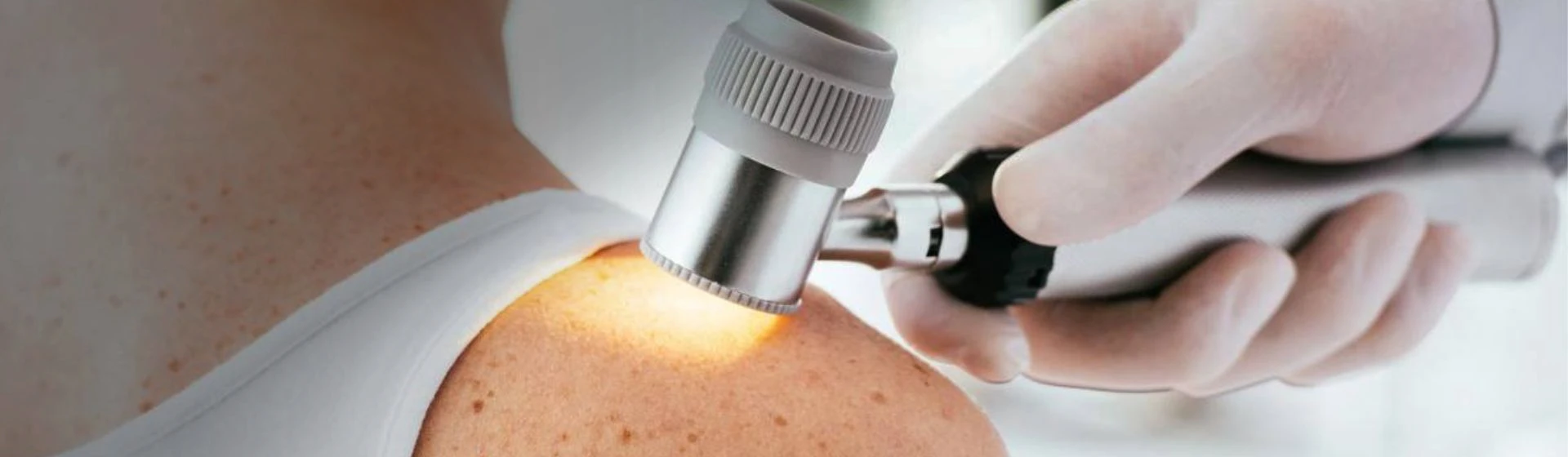
  • Consultation with a dermatologist. The doctor assesses the appearance of the formation, clarifies complaints and medical history, and, if necessary, performs dermatoscopy for a detailed examination.
  • Choice of method. Based on the examination, the optimal method by which angioma removal will be performed is determined.
  • Preparation for the procedure. The skin is treated with an antiseptic, and, if necessary, local anesthesia is used.
  • Performing the procedure. Removal takes from several to 10–15 minutes depending on the size and method.
  • Treatment after removal. The doctor treats the area and provides care recommendations.
  • Observation. In most cases, additional monitoring is not needed, but if necessary, a follow-up examination is scheduled.

Doctors of Oxford Medical warn against attempts to remove skin neoplasms at home. This may lead to bleeding or infection and complicate further treatment.

Skin Care After Angioma Removal

After the procedure, a small wound or crust forms at the removal site, which gradually heals. The speed of recovery depends on the size of the formation, the chosen method and the individual features of the skin, but usually takes from several days to 2-3 weeks.

In order for healing to take place without complications, it is important to follow the doctor’s recommendations:

  • treat the skin with the products prescribed by the doctor;
  • avoid contact with water in the first hours or day — depending on the removal method;
  • do not tear off the crust and do not injure the area — this may lead to the formation of a scar;
  • do not visit the sauna, swimming pool and do not take hot baths until complete healing;
  • protect the area from the sun, especially if it is open, and use products with SPF;
  • refrain from applying decorative cosmetics to the area of intervention until complete recovery.

It is important to follow individual recommendations after the procedure, since proper care helps to avoid complications and ensures a better aesthetic result. If pronounced redness, pain, swelling or discharge appears, it is worth consulting a doctor.

Price of Angioma Removal in Kyiv at the Private Clinic Oxford Medical

The cost of the procedure depends on the size of the neoplasm, its localization, the number of elements, as well as the chosen removal method. You can preliminarily familiarize yourself with prices for medical services here.

If you need a dermatologist in Pozniaky, Osokorky, Obolon, Pechersk, Zhytomyrska or another district of Kyiv, choose a convenient location and make an appointment. You can make an appointment by phone or through the online appointment form on the website.

Frequently asked questions

Which Doctor Treats Angiomas?

Treatment and removal of skin neoplasms are performed by a dermatologist. It is this doctor who assesses the type of formation, its size, localization and determines whether removal is needed. If necessary, the patient may be referred to a surgeon if surgical removal specifically is needed.

Can Angiomas Be Removed?

Yes, they can be removed if they are injured, bleed, increase or cause aesthetic discomfort. In most cases, this is a safe procedure that is performed on an outpatient basis. The removal method is selected by the doctor after an examination, taking into account the type of formation and the features of the skin, in order to ensure a good result.

Can There Be Complications With Angioma?

In most cases, these neoplasms do not cause complications and have a benign nature. However, when injured, they may bleed or become inflamed. In rare cases, rapid growth or a change in appearance is possible, which requires a doctor’s examination. Timely diagnostics helps to avoid complications and correctly determine treatment tactics.

Angioma and Hemangioma: What Is the Difference?

Angioma is a general name for vascular formations, whereas hemangioma is their type, which forms specifically from blood vessels. Hemangiomas more often occur in childhood and may change over time, whereas other types, for example cherry ones, usually appear in adults and have a stable course.

( Rating: 4.98 , Votes: 65 )
Our services
Consultations
Consultation with a dermatologist
1100.00 ₴
Add Added
Consultation with a leading dermatovenereologist
1989.00 ₴
Add Added
Online consultation with a dermatovenereologist
1100.00 ₴
Add Added

Advantages of angioma removal at the Oxford Medical clinic

Qualified doctors. Consultations are conducted by experienced dermatologists who work according to modern clinical recommendations.

Accurate diagnostics. Before the procedure, an examination is performed and, if necessary, dermatoscopy, which allows assessing the structure of the formation.

Modern methods. Minimally traumatic technologies are used, which allow angioma removal to be performed effectively.

Comfort and safety. Procedures are performed in sterile conditions with the use of local anesthesia.

Our doctors

Malapura Maryna Viktorovna
4.91
rating (35)
23+
Years of experience
Online consultation
Dermatologist of the highest category, head of the aesthetic cosmetology department
23+ Years of experience
Consultation 1100
Make an appointment
Vaslauh Igor Vitaliyovych
4.96
rating (27)
25+
Years of experience
Online consultation
Dermatologist of the highest category
25+ Years of experience
Consultation 1100
Kyiv, Oleksandra Olesia St., 2
Kyiv, Knyaziv Ostrozkyh St., 46/2
Make an appointment
Perepelova Valentina Vasylivna
4.92
rating (13)
18+
Years of experience
Dermatovenereologist of the highest category
18+ Years of experience
Consultation 1100
Kyiv, Mykhayla Hryshka St., 1
Make an appointment
Potapchuk Irina Stanislavovna
4.95
rating (20)
16+
Years of experience
Dermatovenereologist, cosmetologist of the 1st category
16+ Years of experience
Consultation 1100
Kyiv, Hlybochytska St., 40x
Make an appointment
All doctors
Reviews
Сергій 26.04.2026
Щиро вдячний лікарю дерматологу Карповій М.А.за ретельно проведений огляд та професійні детальні рекомендації що до лікувального процесу.
Star Star Star Star Star
Олена 02.04.2026
Найкращий лікар.
Star Star Star Star Star
Current information
All Articles
Sign up via call center
in the clinic
online
This site is protected by reCAPTCHA technology, and the Google Privacy Policy and Terms of Service apply.
Hello!
Let's take care
about your health:
Sign up via call center

We use cookies and other technologies to remember your preferences and find out exactly how you use and interact with the site.

By using our site, you also agree to the terms of the "User Agreement" and "Regulation on the processing and protection of personal data". By clicking "I AGREE", you consent to the processing of your data.