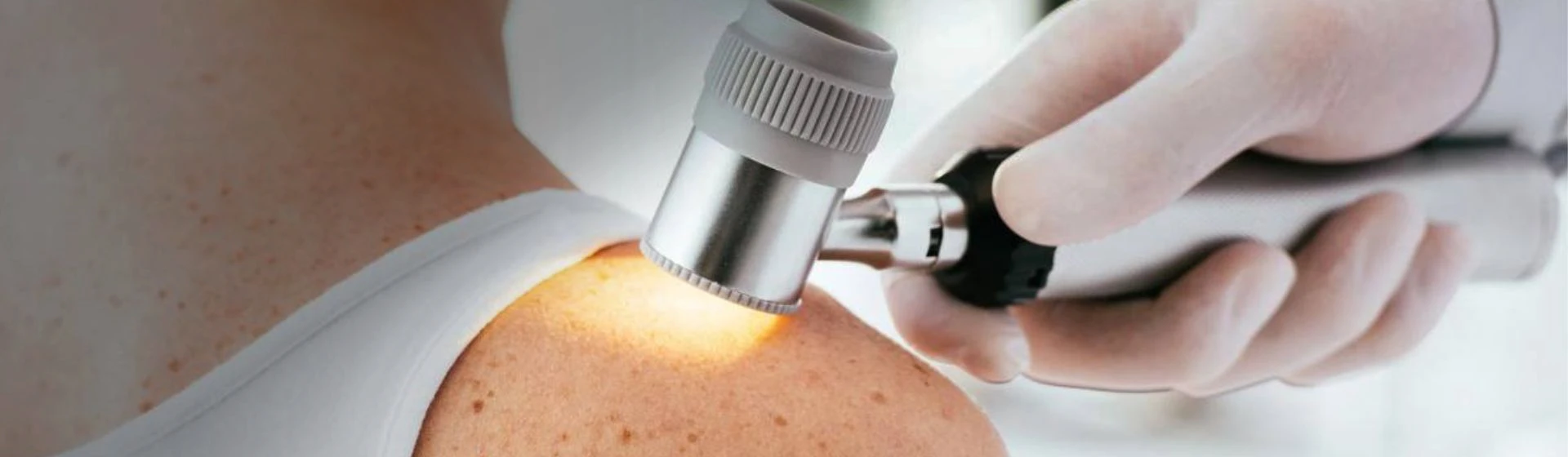
The only effective way to get rid of an acrochordon — is its removal. After the examination, the doctor selects the method depending on the size of the formation, its location, number, and skin characteristics. Modern technologies allow removal to be performed precisely, with minimal tissue damage and a good cosmetic result.
Therefore, if an acrochordon is concerning, removal can be performed using the following methods:
- Laser removal — one of the most commonly used methods for small acrochordons. The laser acts precisely, vaporizes the tissues of the formation and simultaneously coagulates the vessels, which reduces the risk of bleeding.
- Radio wave removal — involves dissection of tissues with high-frequency waves with simultaneous coagulation. The method allows the formation to be carefully removed with minimal impact on the surrounding tissues.
- Electrocoagulation — removal using electric current, which destroys the tissues of the formation and simultaneously «seals» the vessels. It is used mainly for small elements.
- Cryotherapy — a method of exposure to low temperatures, which can be used for separate small formations, however cryotherapy requires caution in delicate areas.
- Surgical excision — is used less often, usually in cases of larger or atypical formations, when it is important to completely remove the tissues and, if necessary, perform a histological examination.
According to NCBI Bookshelf, acrochordons are benign formations, and their removal is usually performed for cosmetic reasons or in cases of traumatization. For this, methods of physical impact are used, in particular electrocoagulation, cryotherapy, or surgical removal, depending on the clinical situation.
Doctors of «Oxford Medical» recommend not removing such formations independently. Without a preliminary examination, it is difficult to accurately determine their type, and attempts at mechanical or chemical impact may lead to bleeding, infection, or the formation of a noticeable scar.