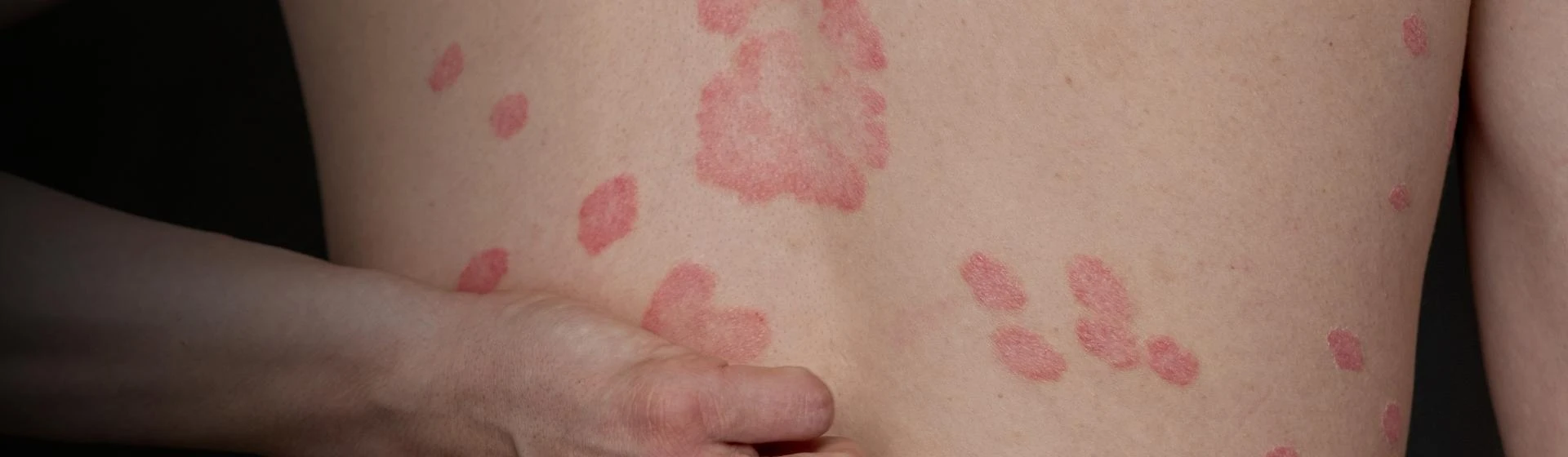
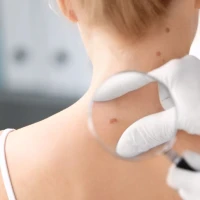
Diagnosis of lichen planus begins with an examination of the skin, mucous membranes, nails, and the hairy part of the head. In typical cases, a dermatologist may suspect lichen planus already during the examination. To clarify the diagnosis, dermatoscopy may be performed — examination of the skin using a special device with multiple magnification and illumination. This helps to better examine the structure of the elements, the borders of the rashes, scaling, and other signs that are important for differential diagnosis.
According to the American Academy of Dermatology, diagnosis of lichen planus usually begins with an examination of the skin, mucous membranes, nails, or the hairy part of the head. If the diagnosis needs clarification, the doctor may prescribe a biopsy — taking a small tissue sample for laboratory testing.
Additional tests are prescribed not for all patients, but only according to indications. These may include:
- biopsy of the skin or mucous membrane with histological examination — if the clinical picture is atypical and the diagnosis needs to be confirmed;
- mycological examination — if there is a need to exclude a fungal lesion;
- blood tests — if the doctor suspects concomitant diseases or a possible connection between the rashes and the general condition of the body.
If there is a lesion of the mucous membrane of the mouth, genital organs, nails, or the hairy part of the head, the dermatologist may recommend a consultation with the relevant specialist — a dentist, gynecologist, urologist, or trichologist. This is needed to assess the specific affected area and choose safe treatment tactics.
Doctors of Oxford Medical explain: lichen planus may be similar to psoriasis, eczema, candidiasis, fungal lesions, leukoplakia, lupus erythematosus, and other conditions. Therefore, diagnosis must be consistent: first a clinical examination, if necessary — dermatoscopy, and in case of an uncertain picture — biopsy with histological examination.