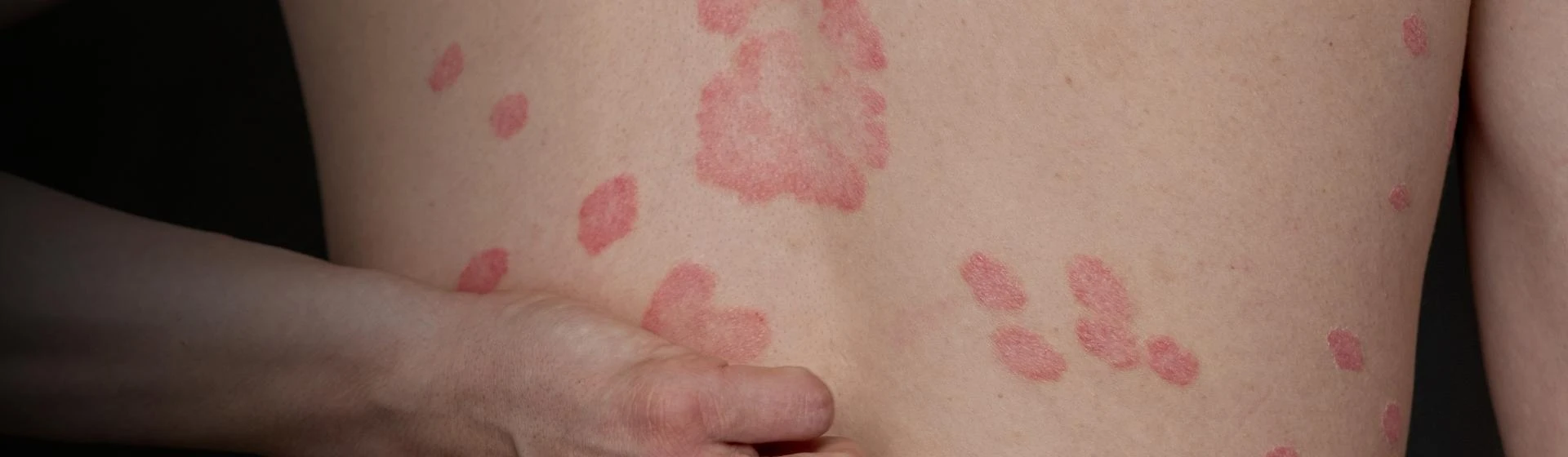
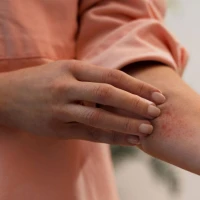
Diagnosis of pityriasis rosea usually begins with an examination by a dermatologist. The doctor assesses the appearance of the rash, its location, the presence of a herald patch, peeling, itching and other symptoms. In typical cases, these signs are sufficient to suspect Gibert’s lichen in a person and determine the further tactics.
It is important to distinguish pityriasis rosea from other skin diseases that may have similar manifestations: fungal lesions, psoriasis, eczema, allergic dermatitis, secondary syphilis and some viral rashes.
If necessary, the doctor may prescribe additional examinations:
- dermatoscopy — helps examine the structure of the rashes in more detail and exclude other dermatological conditions;
- skin scraping — may be performed if it is necessary to distinguish pityriasis rosea from a fungal infection;
- blood tests — are prescribed according to indications if the rash has an atypical appearance or differential diagnosis is needed.
This allows not only to confirm the diagnosis, but also to select safe tactics for managing the disease.