


a small rash in the form of blisters, spots, or nodules;
Manifests as small transparent blisters that resemble drops of water on the skin. Usually, it is not accompanied by inflammation or itching and may disappear on its own after cooling the skin.

 Adults Adults Adults Adults Adults Adults Adults Adults Adults
  Children Children Children Children


 Hotline:
 Adults Adults Adults Adults Adults Adults Adults Adults Adults Children Children Children Children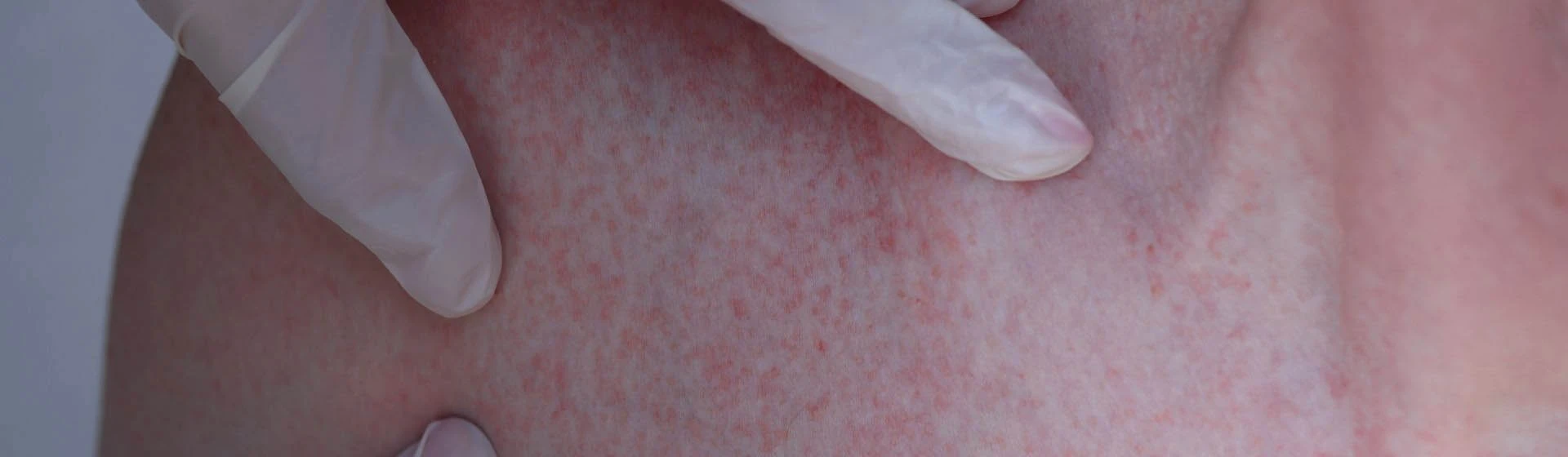

Heat rash — is skin irritation that occurs when sweat is retained in the ducts of the sweat glands and cannot normally come out onto the surface. Most often, heat rash in adults appears in hot weather, after intense sweating, due to wearing tight clothing or in areas of friction, manifesting as a small rash, itching, or burning.
Usually, such a rash is not dangerous, but it can cause noticeable discomfort. Also, similar external manifestations can be present in other skin diseases. Therefore, it is important not to self-medicate, especially if the rash does not go away, spreads, hurts, or is accompanied by redness and inflammation.
At the department of dermatology of «Oxford Medical», appointments are conducted by experienced doctors who work according to modern clinical protocols. During the consultation, the specialist will assess the condition of the skin, help determine the possible cause of the rash and select treatment aimed at reducing irritation, itching, and the risk of recurrence of symptoms. Make an appointment at a time convenient for you through the contact center or the online appointment form on the website.
The rash may look like small transparent blisters, red spots, or small nodules. Sometimes the skin in this area becomes more sensitive, itching, slight burning, or a tingling sensation appears, especially after physical exertion or staying in the heat.
Most often, the rash occurs in the natural folds of the skin, under the breasts, in the armpits, groin area, on the back, neck, abdomen, or inner surface of the thighs. Heat rash on the face is also possible, especially if the skin sweats actively and cosmetic products with a dense texture have been applied to it.
By external manifestations, heat rash is sometimes similar to irritation, contact dermatitis, folliculitis, or a rash that may be perceived as allergy. Therefore, it is important to pay attention not only to the appearance of the skin, but also to what the symptoms appeared after: heat, increased sweating, friction, wearing tight clothing, or using new care products.
Doctors of «Oxford Medical» note: if the rash decreases after cooling the skin and eliminating the irritating factor, this may be characteristic of heat rash. If redness intensifies, pain, oozing, pustules appear, or the rash spreads, it is worth consulting a dermatologist to clarify the diagnosis and select the correct care or treatment.
Several main forms are distinguished:
Manifests as small transparent blisters that resemble drops of water on the skin. Usually, it is not accompanied by inflammation or itching and may disappear on its own after cooling the skin.
The most common form in adults. The rash has the appearance of small red elements, is often accompanied by itching, burning, or tingling, and can cause noticeable discomfort.
Occurs less often, usually with prolonged or repeated overheating. It is characterized by the appearance of denser flesh-colored nodules, sometimes accompanied by dryness and skin irritation.
Определение типа сыпи помогает врачу точнее оценить состояние кожи и предоставить пациенту оптимальные рекомендации по уходу за кожей или лечению, особенно если симптомы не проходят или повторяются.
Most often, heat rash occurs in conditions when the skin overheats and the sweat glands work more actively than usual. In such situations, sweat does not have time to evaporate, is retained in the ducts and irritates the skin.
The main causes of heat rash in adults include:
Separate areas of the body are more prone to the appearance of heat rash due to local conditions of overheating and increased humidity. In particular, heat rash on the legs often occurs with prolonged wearing of closed shoes or synthetic socks, and heat rash on the hands — when wearing gloves or in conditions of increased humidity.
Individual characteristics of the skin, a tendency to increased sweating, or working conditions associated with high temperature and humidity can play a separate role. Understanding the causes helps not only to eliminate symptoms, but also to reduce the risk of recurrence of heat rash.
The main symptoms include:


a small rash in the form of blisters, spots, or nodules;
redness and increased skin sensitivity;
itching, burning, or a tingling sensation;
worsening of the rash in hot weather or after physical exertion.

Usually, symptoms decrease after cooling the skin and eliminating provoking factors. If the rash does not go away, intensifies, or is accompanied by pain, oozing, or the appearance of pustules, it is worth consulting a dermatologist to clarify the diagnosis and select treatment.
In most cases, diagnosis of heat rash does not cause difficulties and is carried out during an examination of the skin by a dermatologist. The doctor assesses the appearance of the rash, its localization, prevalence, and also clarifies under what circumstances the symptoms appeared.
Despite the fact that the rash may resemble another disease, heat rash has a characteristic connection with overheating, increased sweating, and friction of the skin. That is why during diagnosis it is important to take into account provoking factors and exclude other conditions with similar manifestations.
Additional examinations are usually not needed. However, with an atypical course or doubts about the diagnosis, the doctor may recommend:
Timely consultation with a dermatologist allows confirming the diagnosis and receiving recommendations regarding care and treatment, which helps eliminate symptoms faster and prevent their recurrence.
The features of treating heat rash depend on the form of the rash, the severity of symptoms, and the general condition of the skin.
The main methods include:
Treatment of heat rash in adults and children also involves eliminating provoking factors — overheating, increased humidity, friction of the skin, and the use of dense cosmetic products. This helps reduce symptoms faster and prevent their recurrence.
In most cases, heat rash has a mild course and does not lead to serious consequences. However, in the absence of proper care or with the constant influence of provoking factors, the development of complications is possible.
These include:
Most often, complications are associated with scratching the rash, constant overheating, or improper skin care. In such cases, it is important to consult a doctor in a timely manner to prevent worsening of the condition and select appropriate treatment.
Prevention of heat rash is aimed at reducing overheating of the skin, normalizing sweating, and preventing irritation. Following simple recommendations helps reduce the risk of the appearance of a rash, especially in a hot period or with increased physical activity.
The main prevention measures:
If heat rash occurs often or has a tendency to recur, it is worth consulting a dermatologist to determine individual causes and receive recommendations regarding skin care.
The cost of treatment of heat rash in adults depends on the severity of symptoms. In most cases, a consultation with a dermatologist and basic recommendations regarding skin care are sufficient, however, in case of complications, an expanded approach to treatment may be required.
You can preliminarily ознакомиться with the price for doctor consultations and other medical services here. More detailed information about the possibilities, program, and cost of treatment will be provided by the doctor during the initial consultation. To make an appointment, contact the contact center or use the online appointment form on the website.
The information is for informational purposes and does not replace a consultation with a doctor.
Sources:
Yes, heat rash may be accompanied by itching, but its intensity depends on the form of the rash. Most often, itching occurs with red heat rash, when there is inflammation of the skin. Burning or tingling may also occur. If the itching is severe, pain or pustules appear, it is worth consulting a doctor to rule out complications.
First of all, it is important to eliminate overheating: move to a cool room, wear loose clothing made of «breathable» fabrics, keep the skin dry. A light shower without aggressive products and refusal of dense cosmetics are recommended. If the rash does not go away or intensifies, it is worth consulting a doctor.
Heat rash is approximately distinguished from other rashes by its connection with overheating and sweating. It more often appears in skin folds, under clothing, after heat or physical exertion, and may decrease after cooling. Allergic, infectious, fungal rash, or dermatitis may have a similar appearance, so the exact diagnosis is established by a dermatologist after an examination.


Qualified doctors. Appointments are conducted by experienced dermatologists who work according to modern clinical recommendations.
Accurate diagnosis. The doctor assesses the nature of the rash and helps distinguish heat rash from other skin diseases.
Individual approach. Recommendations are formed taking into account the localization of the rash, lifestyle, and factors that may provoke symptoms.
Convenient location. «Oxford Medical» clinics operate in most districts of Kyiv on the right and left banks, as well as in Irpin.


 4.91
4.91  35+
35+  4.96 25+
 25+ Years of experience
  Kyiv, Oleksandra Olesia St., 2 Kyiv, Knyaziv Ostrozkyh St., 46/2
 4.92 23+ 23+ Years of experience Kyiv, Hlybochytska St., 40x
  4.92 18+ 18+ Years of experience Kyiv, Mykhayla Hryshka St., 1

 in the clinic
  online
  Hello!


